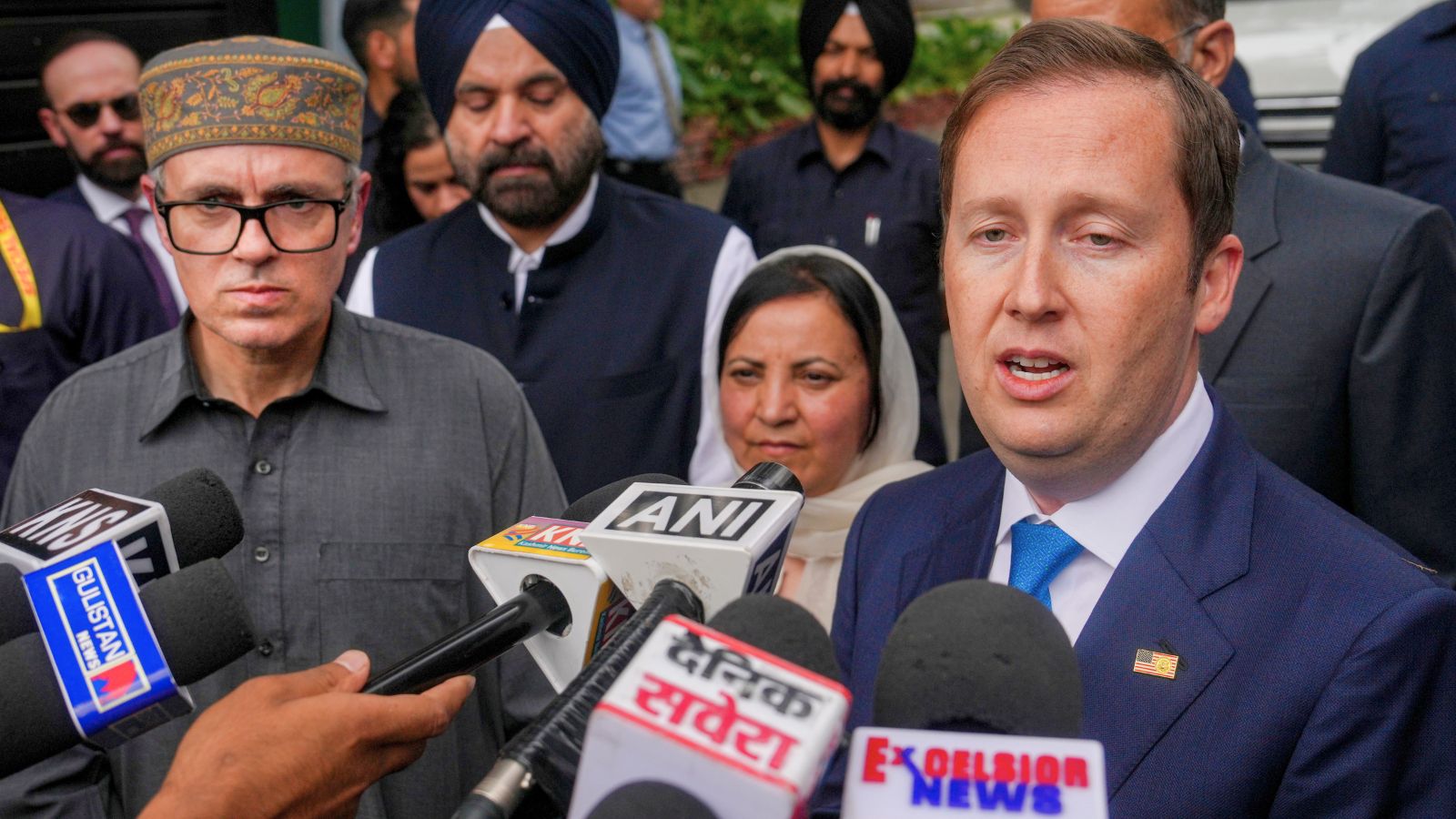
The phone rings in an ordinary suburban kitchen in Caledon, Ontario. Outside, the Canadian summer breeze rustles through maple leaves, carrying the hum of distant traffic. Inside, a man picks up the receiver. On the other end, the voice belongs to the Royal Canadian Mounted Police.
They do not call to chat. They call to deliver an administrative phrase that carries the weight of a death sentence: a duty to warn. Expanding on this theme, you can find more in: Why Everything You Know About the Strait of Hormuz Blockade is Complete Fiction.
For Inderjeet Singh Gosal, and miles away in Abbotsford, British Columbia, for Manjinder Singh, that phone call flattened the boundary between mundane daily life and geopolitical warfare. The message was stripped of comforting ambiguities. Police intelligence had picked up signals across encrypted channels, intercepted communications, and underworld whispers. The threat was not theoretical. It was credible, serious, and imminent.
Consider what happens next when you advocate for a homeland thousands of miles away. You become a target. Experts at Reuters have also weighed in on this matter.
The mechanism of modern political violence rarely arrives with marching armies. Instead, it moves like a ghost through transnational networks, fueled by old grievances and modern transnational crime syndicates. For years, the diaspora communities scattered across North America have wrestled with ghosts of the past. The demand for an independent Sikh state called Khalistan—a homeland rooted in historical trauma, unfulfilled promises, and deep-seated longing—is an idea that refuses to die. For its organizers, it is a peaceful crusade of referendums and ballots. For its adversaries, it is an existential threat worth silencing by any means necessary.
And the police know how this story ends if they stay silent.
They remember Surrey, British Columbia, 2023. They remember Hardeep Singh Nijjar, gunned down in the parking lot of a Sikh temple—a predecessor who walked these exact streets before an assassin's bullet rewrote the headlines. History does not just repeat itself; it rhymes in the quiet panic of police handlers issuing formal threat notifications to modern activists.
The duty to warn letter is a chilling bureaucratic artifact. It offers no elaborate protection detail, no map of the shadows, no name of the person pulling the trigger. It simply tells a citizen that someone wants them dead. It advises caution. It warns that spending time around places frequented by the criminal underworld might bring sudden, lethal collateral damage. It asks the recipient to sign a slip acknowledging the danger, offering a stark choice between police assistance or navigating the crosshairs alone.
For the families living in those houses, the atmosphere shifts overnight. The kitchen table becomes a place of calculation. While police notes suggest immediate family members are not the primary targets, the chilling caveat remains: collateral harm is entirely possible when an executioner strikes. A driveway. A grocery run. A neighborhood park. Every routine is suddenly underlined with risk.
Yet, reaction breeds defiance.
When faced with the ultimate intimidation, the response from the ground is rarely retreat. Gosal, stepping into the organizational footprint left behind by fallen figures, made his stance clear to journalists. Running and hiding is not the plan. Referendums are scheduled to march forward, including upcoming votes in places like Edmonton. The belief system, whether viewed from afar as a pipe dream or a passionate civic right, is treated by its adherents as non-negotiable.
This is the hidden cost of modern diaspora politics. Borders are porous to ideas, but they are equally porous to violence. When local grievances in Punjab collide with the vast, quiet suburbs of Canada, the fallout lands on ordinary streets where postal workers deliver mail and children ride bikes. Intelligence agencies scramble to map connections stretching from South Asia through North American crime rings, trying to untangle state-backed operatives from hired guns.
The warning letters have been delivered. The ink on the police notices is dry.
Out on the pavement, life resumes its ordinary rhythm, masking a terrifying tension. The mail carrier arrives. A car idles down the lane. And somewhere in the quiet spaces between heartbeats, two men wait to see if the shadow closing in around them will manifest into steel.