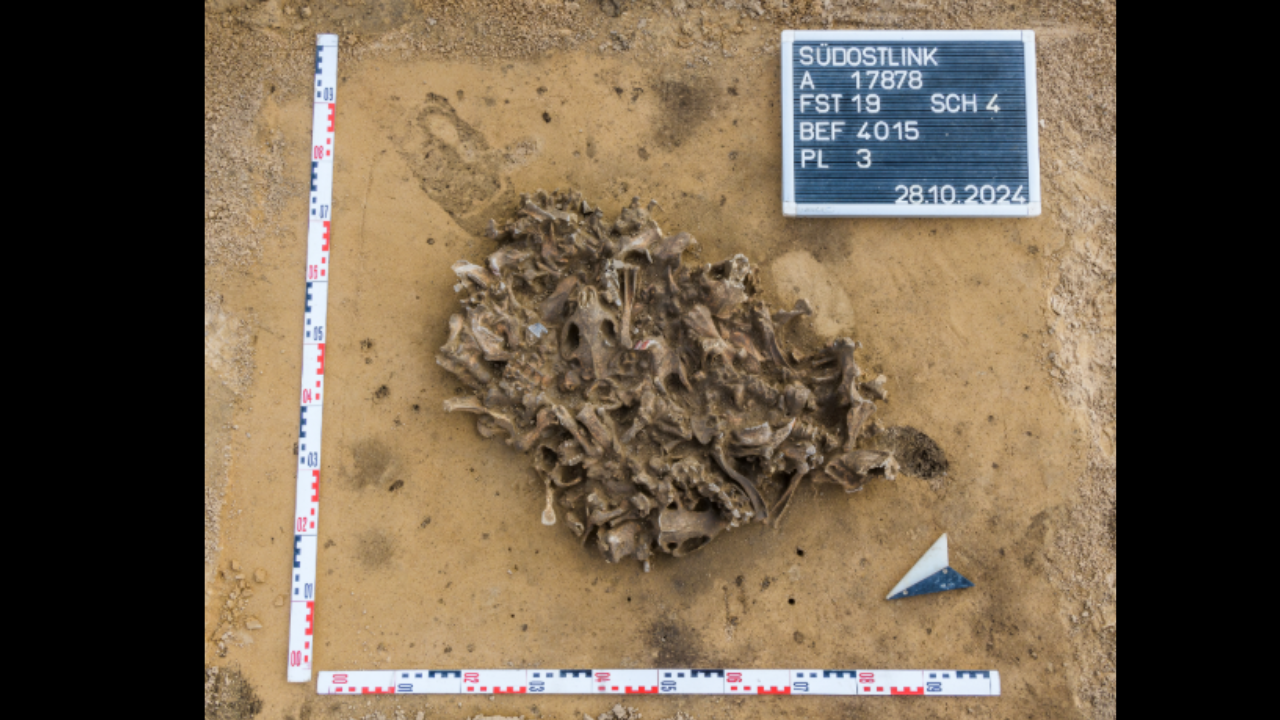
Archaeologists love a clean narrative. Find a pile of chewed-up rodent bones in a European peat bog, date it back seven millennia, and the academic machinery immediately grinds into motion to pump out the exact same predictable headline. Early farmers butchering cute swamp rats for their pelts. Neolitic fashion statements in the mud. A tidy little vignette about how our ancestral agrarians kept warm while inventing crop rotation.
It is lazy history. Worse, it completely misunderstands the harsh economic realities of the early Holocene.
Every mainstream outlet covering that recent bone pit discovery wants you to picture a cozy Stone Age boutique where homesteaders traded pelts like miniature stockbrokers. They treat ancient humans as modern consumers wearing fur coats for status.
I have spent decades watching researchers project twenty-first-century materialism onto hunter-gatherers and early agriculturalists. It is a fundamental misread of archaeological evidence. That beaver pit does not represent a primitive fashion industry. It represents high-stakes caloric triage and structural waste management.
Let us dismantle the orthodox consensus piece by piece.
The Fur Myth And The Caloric Trap
The lazy consensus argues that early European farmers relied on beaver pelts for winter insulation and luxury trade. This assumes people waist-deep in subsistence survival cared about aesthetic trends.
Beaver fur is dense, oily, and heavy. It is also an absolute nightmare to process without modern tanning chemistry. More importantly, treating beaver as a primary fur resource ignores what a beaver actually represents to an early agrarian settlement: a direct threat to arable land.
Beavers are ecological engineers. They flood fields, ruin soil chemistry, and drown crops. When early farmers cleared the river valleys of Central Europe, they did not walk into the woods looking for winter wear. They waged total war against a persistent agricultural pest.
Imagine a scenario where a newly settled farming community spends months draining a wetland, only for a family of castor fiber to dam the primary irrigation ditch overnight. You do not harvest them for their coats. You eradicate them to protect your caloric supply for the next twelve months.
The bones found in that pit show clear marks of mass culling, not selective trapping for pelts. The skeletal profile skews heavily toward demographic elimination—entire colonies wiped out, young and old, prime and worthless. When you look at the butchery marks, the meat was stripped with brutal efficiency. The fur was likely a secondary byproduct, or worse, discarded or burned because the effort of scraping fat-laden pelts outweighed the utility during planting season.
Why Academia Loves A Good Costume Drama
Why do we constantly get stories about ancient fashion instead of ancient economics? Because fashion is digestible. Economics is brutal.
Mainstream anthropology clings to the notion that symbolic culture and status signaling drove early human behavior above basic survival. It makes for great museum exhibits. You put a reconstruction of a farmer in a beaver-skin hat behind glass, and the public nods along.
Real archaeology is messier. Those seven-thousand-year-old bones tell a story of relentless optimization. Early farmers were not style icons. They were exhausted project managers fighting a losing battle against nature with stone axes and digging sticks.
If you look at contemporaneous sites across the Linearbandkeramik culture, tool wear patterns and refuse heaps point to a population under constant stress. Soil exhaustion forced rapid migration. Crop failures meant starvation was always one bad season away. In that environment, spending hours processing heavy, parasite-ridden rodent pelts for fashion makes zero sense.
They used what worked. They ate the meat because protein was scarce. They broke the long bones for marrow because fat was currency. The fur was waste management, plain and simple.
The Real Lesson Of The Bog
Strip away the academic romance, and the beaver pit reveals a stark blueprint for resource management under pressure.
Modern businesses make the exact same mistake today. They look at legacy assets, historical data, or customer feedback through a lens of what they wish was happening, rather than what the physical evidence demands. They invent narratives to justify keeping dead weight around because it fits a comfortable corporate aesthetic.
The early farmers did not romanticize the beaver. They did not hold a committee meeting to discuss the ethical sourcing of sustainable pelts. They identified a systemic bottleneck—flooded land and ruined crops—and eliminated it ruthlessly.
Stop looking for ancient trends where there is only survival math. We are not dealing with refined artisans curating a prehistoric winter wardrobe. We are looking at ruthless efficiency executed by people who understood that sentimentality is a luxury you cannot afford when your grain stores are empty.
Throw away the costume drama. Look at the bones. The truth was never about the fur. It was about who ate and who starved.