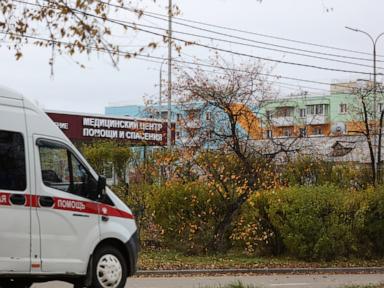
When a 28-year-old laboratory worker at an anti-plague research institute near Irkutsk died under mysterious circumstances, international alarms instantly went off. Russia's public health watchdog, Rospotrebnadzor, rushed to control the narrative. They officially denied any secondary transmission, flatly dismissing reports of a second person falling ill as fake news. But official denials don't erase the panic caused by sprawling quarantine measures and conflicting statements from regional officials.
If you're trying to figure out what actually happened in Siberia, you have to look past the bureaucratic PR. The opacity of Russian state channels has left global health bodies scrambling for basic answers.
The Anatomy of a Laboratory Tragedy
The incident began quietly when a young female technician was admitted to a hospital near Irkutsk with severe pneumonia in both lungs. She was placed on a ventilator almost immediately, yet deteriorated rapidly, dying just days later. Local independent outlets and regional politicians quickly pointed toward an accidental exposure involving Yersinia pestis—the bacterium responsible for plague.
While Rospotrebnadzor insisted that extensive diagnostic panels showed no trace of the specific pathogens she handled, the state's actions contradicted its words. Authorities threw a strict quarantine around the medical facility and placed nearly 200 close contacts under active medical surveillance. That's not the response you deploy for a routine case of community-acquired pneumonia.
Why the World Health Organization is Asking Hard Questions
The World Health Organization (WHO) hasn't stayed quiet about the blackout. Officials from the U.N. health agency noted they simply don't know how the technician was infected or what exactly killed her.
Pneumonic plague is the most dangerous form of the disease because it spreads directly through respiratory droplets. Unlike bubonic plague, which requires a flea vector, pneumonic variants boast a short incubation period and high fatality rates if treatment is delayed. When a high-containment facility experiences a fatality with respiratory symptoms, the public deserves transparency, not defensive denials.
Cutting Through the Biosecurity Panic
Independent infectious disease experts have pointed out two glaring possibilities. On one hand, accidental lab exposures happen. Researchers working with dangerous agents occasionally suffer minor breaches in containment. Ordinarily, early antibiotic administration neutralizes the risk entirely, meaning a death points to either an unusually massive exposure or a delayed response.
On the other hand, high-level biosecurity concerns have reignited debates about dormant or active research programs. When transparency is replaced by state-enforced silence, speculation fills the void. Rospotrebnadzor's aggressive stance against secondary infection rumors might be entirely accurate, but their refusal to share baseline epidemiological data guarantees that suspicion will linger.
Stop expecting full disclosure from systems designed to protect their own reputation above public safety. Keep an eye on how international scientific bodies continue to pressure Moscow for verifiable genetic sequencing data. That is the only metric that matters.
This is for informational purposes only. For medical advice or diagnosis, consult a professional.