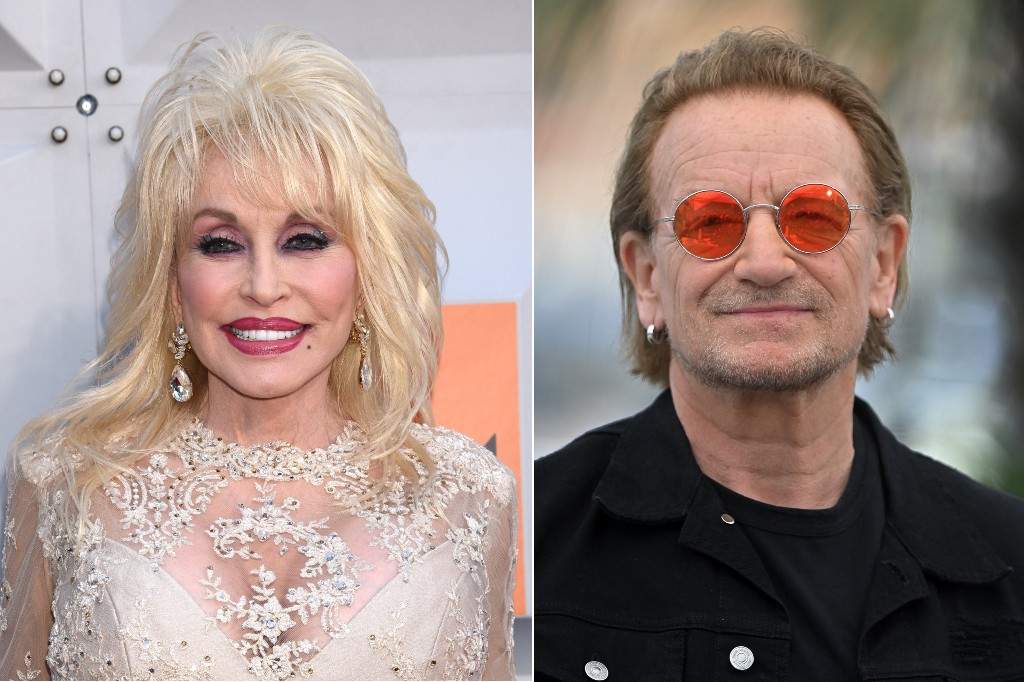
Rumors claiming Dolly Parton and U2 released a duet titled "Torn" as Parton’s final recorded song are false. Neither Parton nor U2 has released a collaborative track under that name, and Parton has not retired from recording music.
Fake headlines like this thrive on a specific formula. They combine two massive legacy acts, attach a familiar hit song title, and add the emotional hook of a "final" goodbye. For anyone tracking the music industry over the last few decades, this pattern is unmistakable. Click-driven content farms routinely manufacture emotional milestones around aging superstars to capture search traffic and social media shares before fact-checkers can catch up.
Anatomy of a Manufactured Music Hoax
To understand why a headline about Dolly Parton and U2 recording "Torn" spreads so quickly, you have to look at how algorithmic outrage and nostalgia operate. Algorithms reward engagement. Nothing drives shares faster than the perceived end of an era involving a universally beloved figure.
Consider the components of this specific claim. First, you have Dolly Parton, an artist whose work ethic and cross-genre appeal make her a constant subject of public affection. Second, you have U2, a band whose global stadium status guarantees instant name recognition. Third, you have the song title "Torn," which most listeners immediately associate with Natalie Imbruglia’s 1997 cover of the Ednaswap original.
When an aggregator site with a broken or undefined URL publishes a story claiming these elements collided for a farewell single, it triggers an immediate emotional reflex. Fans click out of shock or grief. They share the link before listening to the audio, largely because no legitimate audio exists.
How Content Farms Exploit Legacy Artists
The mechanics behind these fabricated stories are straightforward. Automated or low-cost content operations monitor trending search terms. When an artist crosses a milestone birthday, announces a hiatus from touring, or releases a collaborative album, the scrapers go to work.
Parton’s career moves over the last few years inadvertently laid the groundwork for this exact type of misinformation. In 2022, she was inducted into the Rock & Roll Hall of Fame. Initially hesitant because she did not consider herself a rock artist, she accepted the honor and subsequently recorded Rockstar, a massive 2023 studio album packed with high-profile collaborations. That record featured duets with Paul McCartney, Ringo Starr, Elton John, Stevie Nicks, and Rob Halford.
Because Parton actually did record dozens of unexpected rock duets during that cycle, a claim that she teamed up with Bono and U2 sounds plausible on the surface. Hoaxers rely on that thin veneer of credibility. If she sang "Let It Be" with McCartney and "Purple Rain" with guest vocalists, why wouldn't she sing "Torn" with U2?
The "final recorded song" angle stems from another misinterpretation of public statements. Parton has stated openly that she no longer intends to mount full-scale global tours. Touring requires months away from home, grueling travel schedules, and immense physical stamina. Stepping off the road, however, is completely different from stepping away from the microphone. Parton has repeatedly emphasized that she intends to keep recording, writing, and releasing music indefinitely, famously joking that she hopes to drop dead in the middle of a song on stage or in the studio.
The History of Unreleased and AI-Generated Duets
When listeners go hunting for a rumored track like "Torn" by Dolly Parton and U2, they rarely come up completely empty-handed. Instead, they run straight into the modern music industry's biggest headache: unauthorized artificial intelligence voice cloning.
Search for almost any improbable pairing on video-sharing platforms today and you will find dozens of convincing fakes. Creators use neural networks trained on isolated vocal stems from Parton’s 1970s country catalog and Bono’s 1980s rock recordings to synthesize covers of pop hits. To the casual listener scrolling on a phone speaker, a well-mixed AI cover of "Torn" might pass a five-second sniff test.
This creates a feedback loop that validates the fake news article. A user reads a bogus headline, searches for the track, clicks an AI-generated fan upload, and assumes the story is real. The uploaders rarely label their creations clearly, or they bury the disclaimer deep in the video description to maximize ad revenue before rights holders issue a takedown notice.
Real Collaborations That Actually Happened
Separating fact from fiction requires looking at the verified discographies of both acts. While Parton and U2 have never released a duet called "Torn," both have extensive histories of high-profile, documented collaborations that offer plenty of real music for fans to explore.
- Dolly Parton’s Verified Rock Collaborations: Beyond her 2023 Rockstar album, Parton’s most famous duets remain rooted in country and Americana, including her landmark Trio albums with Emmylou Harris and Linda Ronstadt, and her iconic partnership with Kenny Rogers on "Islands in the Stream." Her genuine rock and pop crossovers include tracks with Melissa Etheridge, Norah Jones, and Miley Cyrus.
- U2’s Verified Duets: Bono and U2 have collaborated with a wide range of artists across genres. Notable official releases include "One" with Mary J. Blige, "The Saints Are Coming" with Green Day, "When Love Comes to Town" with B.B. King, and Bono’s solo vocal appearances alongside Frank Sinatra on "I've Got You Under My Skin" and Johnny Cash on "The Wanderer."
Notice the pattern in those real releases. Every single one involved major label press campaigns, clear songwriting credits, official music videos, and placement on verified streaming profiles. Major legacy artists do not quietly drop career-ending singles onto obscure websites without a coordinated rollout from Universal Music Group, Sony, or their respective management teams.
Why "Final Song" Narratives Keep Working
The music press and the public share an obsession with swan songs. We want neat narrative arcs. We want a legendary artist to step up to the mic one last time, deliver a poignant farewell performance, and walk away into the sunset.
Reality in the recording business is far messier. Very few artists know when they are cutting their final vocal track. Johnny Cash’s American IV: The Man Comes Around is often framed as his deliberate farewell, particularly his cover of Nine Inch Nails' "Hurt." Yet Cash continued recording right up until his death in September 2003, leaving behind enough material for American V and American VI to be released posthumously.
David Bowie’s Blackstar stands as the rare exception—an album consciously constructed as a parting gift while the artist battled terminal cancer in private. Because Bowie executed that farewell with such precision, the public now projects that template onto every aging icon.
Dolly Parton operates under a completely different philosophy. Her business model relies on perpetual output. Between Dollywood theme park expansions, her Imagination Library literacy program, television production deals, baked goods lines, and ongoing studio sessions in Nashville, Parton treats retirement as a foreign concept. Even when she slows down one vertical of her empire, three others accelerate.
The Financial Incentive Behind Music Misinformation
Why do websites publish articles with broken URLs and fabricated premises about celebrity retirements? The answer is programmatic advertising.
Digital ad networks pay based on impressions and clicks. A small group of operators can spin up dozens of domains, feed trending celebrity names into text generators, and blast the resulting headlines across social media groups dedicated to classic rock or country music. These groups often have hundreds of thousands of members who engage heavily with emotional posts.
If a headline claims Dolly Parton just released her final song with U2, thousands of people will comment "God bless Dolly" or "End of an era" within minutes. The algorithm sees high engagement and pushes the post to millions more feeds. By the time a music journalist or a representative from Nashville or Dublin bothers to debunk the claim, the ad revenue has already been collected and the site operators have moved on to a fake story about Willie Nelson or Mick Jagger.
How to Verify Legacy Artist Releases in Seconds
You do not need industry connections to spot a fabricated music story. The modern streaming infrastructure leaves a clear paper trail for every legitimate release.
- Check the Official Discography on Major Platforms: Open Spotify, Apple Music, or Tidal and navigate to the artist’s verified page. Go to the "Appears On" or "Singles and EPs" section. Because mechanical royalties and copyright splits require formal registration through distributors like DistroKid, TuneCore, or major label portals, legitimate duets appear on both artists' profiles simultaneously on release day.
- Verify ISRC Codes and Publishing Credits: Every commercial recording is assigned an International Standard Recording Code. On platforms that display song credits, a real U2 track will list Universal Music Group or Island Records alongside publishing entities like Universal Music Publishing International. A real Dolly Parton track will reference Velvet Apple Music or Butterfly Records. If those corporate entities are absent, the track is either a bootleg or an AI fabrication.
- Cross-Reference Trade Publications: Legitimate blockbuster collaborations are always covered by Billboard, Rolling Stone, Variety, or MusicRow. These outlets receive embargoed press releases days or weeks in advance. If a major duet exists only on an unverified blog with a broken link, it does not exist at all.
The Reality of Parton and U2 Today
Both Dolly Parton and U2 remain active forces in the entertainment business, operating on their own terms rather than winding down for a quiet exit.
U2 spent months headlining the Sphere in Las Vegas, redefining live residency production values while continuing to work on new studio material in Dublin and the South of France. Bono and The Edge have spoken openly in interviews about writing new rock songs and preparing for their next album cycle, dismissing any notion that their decades-long run is nearing a close.
Parton, meanwhile, continues to leverage her massive catalog and business ventures in Tennessee while stepping into the studio whenever a project sparks her interest. She has left the door open for future singles, charity recordings, and film soundtracks, refusing to put an expiration date on her voice.
When Dolly Parton eventually records her final song, you will not learn about it from a dead link or an automated content farm. It will arrive with the full weight of Nashville behind it, verified credits across every streaming platform on earth, and the unmistakable sound of an artist who never needed a fake headline to command the room.