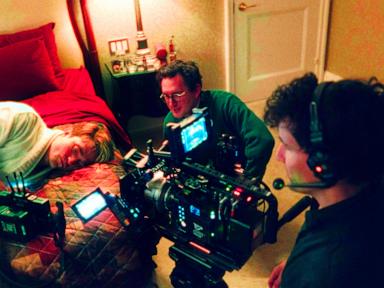
Robert Pattinson is slipping into another skin, and the internet is predictably losing its collective mind. The trades are already churning out breathless copy about his upcoming role in Primetime, drawing immediate, lazy parallels to internet vigilantes, Dateline specials, and Chris Hansen’s iconic kitchen stool.
The lazy consensus is that Pattinson is pivoting toward edgy, morally repugnant shock value, leaning into the zeitgeist of true crime obsession to deliver a gritty, high-wire act of cinematic provocation.
It is completely wrong.
Pattinson is not pushing boundaries by playing a predator. He is doing the exact opposite. He is taking the safest, most sanitized route available to an A-list actor who wants to look dangerous without actually risking his Q-rating. True provocation requires ambiguity. Playing a modern monster in a ripped-from-the-headlines procedural offers zero ambiguity. It is a cinematic petting zoo. You get to pet the tiger, but it is heavily sedated, behind triple-paned glass, with a zookeeper holding a cattle prod just off-screen.
The Illusion of Transgression
Let us dispense with the fiction that Hollywood knows how to handle transgressive art anymore. The studio system operates like an insurance conglomerate. Every edge is sanded down, every moral gray area is flooded with neon floodlights so the audience never has to strain their eyes or their ethics.
When an actor of Pattinson’s caliber—a man who spent the post-Twilight decade deliberately burning down his teen idol aesthetic with feral, sweaty, incomprehensible art-house choices like Good Time and The Lighthouse—signs on to a project about online predators, people call it brave.
That is not bravery. That is brand maintenance masquerading as grit.
Look at the mechanics of how these projects get greenlit. A script lands on a desk. It deals with a socially toxic, universally despised phenomenon. The moral alignment of the audience is pre-programmed before the opening credits roll. You do not have to wonder who you are rooting for. You do not have to wrestle with your own complicity as a viewer. You simply sit back and watch a certified movie star embody a universally agreed-upon evil, allowing everyone in the theater to leave feeling morally superior to the fictional creep on screen.
True cinematic danger does not comfort the afflicted or punch down at cartoonish pariahs. It makes you uncomfortable in your own skin. It forces you to look at behavior you participate in, rationalize, or ignore on a daily basis. A predator is a narrative punching bag. There is no risk in playing a villain that society has already unanimously executed in the court of public opinion.
Why We Crave the Monster-of-the-Week
Why do audiences and critics fall for this bait every single time? Because nuance is exhausting.
We live in an era that demands moral binary codes. We want our heroes pristine and our villains irredeemable, with a thick, impenetrable wall between the two. When an actor tackles a role ripped from a true-crime YouTube deep-dive, they are feeding a public hooked on outrage loops.
I have watched studios greenlight dozens of projects under the guise of "examining the dark underbelly of modern communication," only for the final product to be a toothless moral lecture. It functions as cinematic fast food. It satisfies a craving for darkness without any of the nutritional value of actual psychological excavation.
Pattinson knows this game. He is brilliant at subverting expectations, which makes his choice here so fascinatingly conservative. In Good Time, he played Connie Nikas—a desperate, pathetic, magnetic low-level criminal whose worst crimes were born of sheer, chaotic stupidity and a twisted, suffocating love for his brother. You hated him, you pitied him, and most uncomfortably, you understood the frantic momentum of his terrible decisions. That was risky. That was a character study that left dirt under your fingernails.
Playing a literal online predator? That is a closed loop. There is no psychological mystery to unpack. The pathology is a straight line. You start at predatory, you end at monstrous, and the credits roll while the audience claps for their own righteousness.
The Safe Rebellion of A-Listers
Let’s talk about the economics of modern celebrity rebellion.
When you reach the tier of stardom where you can command twenty million dollars a picture, your biggest enemy is not failure. It is irrelevance. But true rebellion—truly alienating your core audience, destroying your marketability, or making art that actively repels the people who pay your bills—is a luxury only broke artists or complete sociopaths can afford.
Pattinson navigated the transition from teen fantasy to indie darling with surgical precision. He worked with Cronenberg, Claire Denis, and the Safdie brothers. He chose directors who treated narrative like a jagged piece of glass.
So why retreat to the slick, high-concept true-crime thriller space now?
Because the ecosystem has changed. The mid-budget adult drama is on life support. If you want to make a movie that gets talked about on social media for more than forty-eight hours, you have to attach yourself to a cultural hot-button issue. You have to weaponize a pre-existing social panic.
By stepping into Primetime, Pattinson guarantees a specific kind of cultural oxygen. The discourse is built into the premise. Articles will be written, panels will be convened, and think pieces will dissect the "darkness of the digital age."
Notice how none of those discussions require the movie itself to be good. The topic does the heavy lifting. The subject matter acts as a force multiplier for attention, shielding the filmmakers from the burden of having to say anything genuinely original about human nature.
What Actual Risk Looks Like
If Hollywood actually wanted to explore the rot at the intersection of technology, isolation, and predatory behavior, they would stop making movies about the monsters hiding in the dark corners of chat rooms.
The real horror isn't the cartoonish deviant operating in the shadows. The real horror is the frictionless, gamified architecture of modern connection that incentivizes exploitation as a baseline business model. It is the algorithms that reward outrage, the platforms that monetize loneliness, and the ways in which ordinary, respectable people compromise their ethics daily for a hit of dopamine or social validation.
Imagine a film that traces how a normal, well-adjusted person slowly corrodes their own moral compass through the quiet rationalizations of everyday digital life. No masked monsters. No dramatic stings on a hidden camera. Just the slow, agonizing erosion of empathy in high-definition.
No studio would touch it. It’s too close to home. It doesn't let the audience point a finger at the screen and whisper, "At least I'm not that guy."
The Verdict on Primetime
Robert Pattinson will undoubtedly turn in a technically proficient, physically committed performance in Primetime. He is incapable of sleepwalking through a role. He will likely look gaunt, speak in a gravelly cadence, and twitch with the nervous energy of a man living on the margins of polite society.
And it will not matter, because the script will trap him in a cage of pre-fab moral certainty.
We are celebrating a step backward disguised as a leap forward. We are calling an actor brave for playing the most universally reviled archetype in modern culture, as if staring into the abyss requires courage when the abyss has a neon sign pointing directly at it.
Stop pretending this is edge. It is pandering with an A-list budget.
The next time an actor takes a role designed to shock your conscience, ask yourself a simple question: does this film challenge your worldview, or does it exist entirely to confirm everything you already believe while charging you twenty bucks for the privilege?
Until Hollywood starts casting monsters that look like the people buying the tickets, keep your applause in your pocket.


