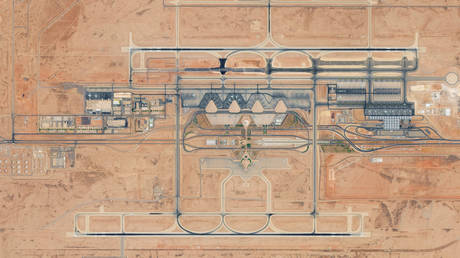
Airports aren't supposed to be frontlines. When ballistic missiles or explosive-laden drones cross international borders to target civilian aviation hubs like King Khalid International Airport in Riyadh, the rules of modern conflict shift entirely. You're looking at a dangerous escalation that turns commercial transit zones into geopolitical bargaining chips, and the fallout affects far more than just flight schedules.
Let's break down what's actually happening behind the headlines when the Houthis claim strikes on Riyadh airport, why these attacks keep happening, and what they mean for regional stability.
The Reality of Cross-Border Drone Warfare
The conflict in Yemen stopped being a localized civil war years ago. It transformed into a complex proxy theatre where asymmetric warfare meets advanced military technology. When armed groups hundreds of miles away manage to target high-profile infrastructure in Saudi Arabia's capital, it exposes massive vulnerabilities in regional air defense networks.
Anti-missile batteries like Patriot systems catch the vast majority of these incoming threats. Still, intercepting a low-flying drone or a ballistic projectile over a sprawling urban area carries its own risks. Falling debris can damage neighborhoods, spark fires, and terrorize civilians who live miles away from the actual conflict zone.
Intercept rates don't tell the whole story. Every time an interception happens over Riyadh, it costs millions of dollars in defensive ordnance to stop a weapon that might have cost a fraction of that to build. That asymmetry is the entire point. It's a war of attrition designed to drain economic resources and shake investor confidence.
Why Riyadh Airport Remains a Prime Target
Striking an international airport isn't just about military impact. It's about optics, economics, and international pressure.
King Khalid International Airport serves millions of passengers and acts as a central economic artery for Saudi Arabia's ambitions. When flights get delayed, diverted, or canceled due to incoming threats, global media takes notice immediately. Business leaders hesitate. Insurance rates for carriers flying into the region skyrocket.
The strategy relies on psychological pressure. By targeting civil aviation infrastructure, the senders of these drones hope to force political concessions by weaponizing international economic anxiety. It's a high-stakes game where civilian safety becomes secondary to political signaling.
The Regional Ripple Effects
You can't look at these attacks in isolation. They connect directly to shifting alliances, backchannel diplomacy between regional heavyweights like Saudi Arabia and Iran, and the ongoing humanitarian crisis in Yemen.
Every time a strike hits near Riyadh, diplomatic peace talks take a step backward. Trust is fragile in this part of the world. When a capital city faces incoming fire while peace envoys are trying to broker permanent ceasefires, it proves how difficult it is to control all the armed factions on the ground.
International partners also react strongly. Western governments supply defense systems and intelligence sharing to help protect Saudi airspace, but they also apply constant pressure to find a political settlement rather than a military stalemate. The economic cost of perpetual defense adds up quickly for everyone involved.
What to Watch Next
Stop expecting a quick fix to cross-border aerial attacks. Traditional military deterrence has limits when dealing with asymmetric threats launched from rugged terrain.
Instead, watch the intelligence reports and diplomatic channels. The real battle isn't just fought with interceptor missiles in the night sky over Riyadh. It happens in closed-door negotiation rooms where regional powers try to figure out how to de-escalate before a single lucky shot turns a defensive interception into a catastrophic civilian tragedy. Security analysts will keep tracking air defense upgrades and radar technology improvements, but the permanent solution has to be political, not kinetic.