Water does not knock. It arrives as a thief in the night, carrying the weight of ancient glaciers, pulverized stone, and the entire history of an unyielding geography.
When the cloudburst broke over the high peaks of the Nepal-Tibet border, the inhabitants of the valleys below did not hear it coming. They felt it first. A low, subterranean shudder that rattled the tea kettles on earthen stoves. Then came the smell—not of fresh rain, but of crushed shale, ancient mud, and the terrifying metallic tang of an overflowing mountain.
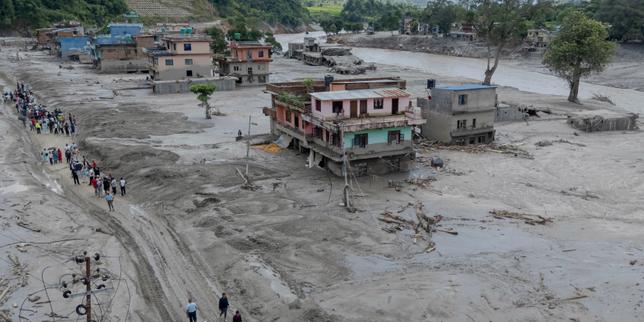
By morning, the riverbeds had vanished. In their place rushed an apocalyptic brown tide, thick as wet concrete, devouring suspension bridges, centuries-old stone homes, and the fragile ribbons of highway that tethered remote high-altitude communities to the rest of the world.
To look at a satellite map of the region is to see a web of delicate blue lines threading through towering white peaks. But maps lie. They suggest permanence where there is only perpetual motion. The floods that paralyzed the frontier zone were not merely acts of seasonal weather; they were violent reminders of a shifting rooftop of the world, where rising temperatures melt glacial lakes faster than the earth can absorb the tears.
Consider the plight of Karma, a fictional porter whose boots have worn the paths between Kathmandu and the Tibetan border for thirty years. Karma does not study climate reports. He knows the river by its pitch. When the water sings high and clear, the crossing is safe. When it gurgles low and thick with silt, you stay put. But last season, the river did not sing. It roared, tore through the valley floor, and erased the very path Karma had walked a thousand times. His livelihood, carved into the stone trails of the Himalayas, vanished overnight under twenty feet of boulders and debris.
Behind the dramatic footage broadcast on evening news screens lies an infinitely more grueling reality. For the rescue crews deployed to the disaster zones, the crisis is a logistical nightmare wrapped in a vertical labyrinth. Heavy machinery cannot scale vertical cliffs. Helicopters are frequently grounded by sudden, violent mountain squalls and thick valley fogs. Rescuers grapple daily with a mountain of challenges that defy standard disaster relief playbooks.
Every bridge is gone. Every power line is a tangled skein of copper wire half-buried in silt. Communications are severed, turning search-and-rescue operations into blind maneuvers through a landscape that has literally rearranged its own features. Teams of local volunteers and national disaster response personnel must navigate this chaos on foot, carrying emergency rations, medical supplies, and portable water filtration systems strapped to their backs.
The physical toll is staggering. At altitudes where every breath feels like inhaling thin glass, digging through landslide debris requires superhuman endurance. Hypothermia stalks the survivors and the rescuers alike, as glacial runoff chills the mountain air to the bone even in the height of summer. Yet, the human impulse to mend what is broken remains stubbornly resilient. Neighbors pull neighbors from the mud. Strangers share the last handful of dried yak meat.
The international community watches these remote valleys from afar, often reducing human tragedy to casualty statistics and economic loss estimates. But the true cost cannot be tallied in cracked asphalt or destroyed concrete bridges alone. It lives in the quiet despair of families whose ancestral farmlands are now sterile gravel flats. It breathes in the uncertainty of traders whose supply routes have been sliced to ribbons.
We tend to view nature as a backdrop to human enterprise, a picturesque stage set for our ambitions. The Nepal-Tibet floods shatter that illusion with brutal finality. The mountains are alive, shifting, and profoundly indifferent to our borders, our highways, and our maps.
When the muddy waters finally recede and the frantic search operations wind down, the hardest part of the story begins. The cameras leave. The headlines fade. The people who remain must pick up pieces of slate and timber, looking up at unstable slopes where the next storm is already gathering its breath.
Listen closely to the wind whistling through the high passes tonight. It carries the sound of grinding stones and the quiet, fierce determination of those who refuse to let the mountain win.