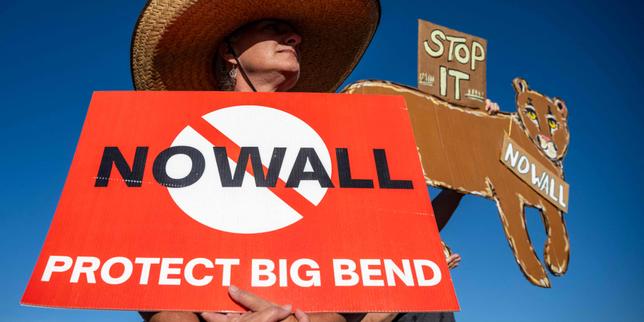
The desert does not care about lines drawn on paper. It swallows them.
Stand on the banks of the Rio Grande within the jagged, ancient folds of the Big Bend, and you will understand the futility of human geometry. Here, the river cuts through towering canyons of limestone, painting the stone in shades of ochre and rust, moving silently beneath a vast, indifferent Texas sky. For generations, this stark landscape has existed in a delicate balance between untamed wilderness and international border. It is a place where wildlife wanders freely across invisible boundaries, and where the silence of the canyons is broken only by the wind and the rush of water.
Then comes the quiet intrusion of policy.
Somewhere in a sterile conference room thousands of miles away, maps are spread across mahogany tables. Decisions are hammered out. Budgets are allocated. And suddenly, the remote expanse of a national park finds itself caught in the machinery of federal infrastructure. Projects take root. Heavy machinery rumbles into places where only coyotes and canyon wrens belong.
Consider what happens next.
The ground shifts. Concrete foundations are poured. Steel bollards rise against the backdrop of pristine wilderness, altering a view that has remained unchanged for millennia. Visitors who come to Big Bend seeking solitude instead find the stark silhouette of security barriers interrupting the horizon. The wilderness resists, but construction presses forward. Millions of dollars flow into contracts, contractors mobilize, and the landscape transforms to reflect a changing political mandate.
Then, just as quickly as the machinery arrived, the gears grind to a halt.
A sudden reversal. An executive order signed. A project suspended.
The heavy trucks idle, then turn around. The dust settles back over the caliche roads. The steel pillars stand half-assembled, or the cleared earth lies bare, waiting to be reclaimed by creosote and prickly pear. For the park rangers, the local residents, and the travelers who cherish this remote corner of the American southwest, the suspension brings a strange, quiet disorientation.
This is not merely a story about halted construction or bureaucratic delays. It is a narrative about the invisible stakes that define modern borders. When a border project is frozen in a national park, the consequences ripple outward in ways that rarely make the evening news. Local economies that adjusted to an influx of temporary workers must pivot again. Ecosystems fractured by preliminary clearing are left to heal in fragments. The psychological weight of the border—half-built and half-forgotten—lingers in the minds of the people who call this region home.
Walk through the small gateway communities near the park. Talk to the owners of motels, outfitters, and diners. They live in the shadow of a debate that is perpetually undecided. To them, the border is not a talking point on a cable news broadcast; it is the daily reality of fluctuating tourism, heightened patrols, and the constant hum of federal presence. When a project is suspended, they do not feel a sense of permanent resolution. They feel the holding pattern. They know that policies change with the political winds, but the desert remains, enduring the scars left by each successive administration.
The ironies of the Big Bend border are uniquely profound. This is one of the most geographically challenging terrains on the continent. Building massive physical barriers through sheer mountain ranges and winding riverbeds is an engineering nightmare, carrying immense financial and environmental costs. The decision to halt construction here is a recognition of those barriers—both physical and political. Yet, leaving the infrastructure incomplete creates its own peculiar landscape of limbo.
Look closely at the scarred earth. Nature is remarkably resilient. Given time, the desert will cover its wounds. Seeds carried by flash floods will take root in the disturbed soil. Lizards will sun themselves on abandoned concrete pads. But the human element remains unsettled.
We build walls to create certainty, yet we often end up with monuments to our own indecision. The suspended project in Big Bend National Park stands as a testament to the complex tug-of-war between national security and the preservation of natural wonders. It forces us to ask uncomfortable questions about what we value more: the rigid enforcement of physical divisions or the preservation of the earth's wildest, most transcendent spaces.
The sun dips below the Chisos Mountains, casting long, bruised shadows across the canyon floor. The river keeps flowing, indifferent to the steel that was meant to stop it, and indifferent to the orders that told the builders to stop. In the deepening twilight, the border is just a dark ribbon of water, whispering secrets to the stone.


