Donald Trump frames his foreign policy through the lens of a dealmaker who keeps the United States out of "stupid" wars. He campaigns on the promise of immediate de-escalation in Ukraine and a hard-line deterrence that supposedly makes adversaries tremble into submission without a shot being fired. This persona of the ultimate peacemaker is the cornerstone of his current political identity. Yet, an investigation into his past administration and his current policy blueprints reveals a stark contradiction. While the language focuses on ending conflicts, the actual mechanisms of his policy—maximum pressure campaigns, the erosion of diplomatic norms, and the expansion of the military-industrial complex—frequently set the stage for the very instability he claims to prevent.
The disconnect is not a matter of accidental oversight. It is a fundamental feature of a "transactional" worldview that prioritizes short-term leverage over long-term regional stability.
The Mirage of Maximum Pressure
The "maximum pressure" campaign against Iran serves as the primary case study for how Trump's peace-through-strength strategy operates in practice. By withdrawing from the Joint Comprehensive Plan of Action (JCPOA) in 2018, the administration argued that crippling sanctions would force Tehran back to the table for a "better deal."
The result was the opposite. Instead of a more restrictive nuclear agreement, the world witnessed an emboldened Iranian regime. Enrichment levels spiked. Attacks on shipping in the Strait of Hormuz became frequent. The assassination of Qasem Soleimani brought the two nations to the precipice of direct kinetic warfare. This is the central paradox of the Trump doctrine. By removing the guardrails of existing international agreements, the administration created a vacuum that was filled not by American dominance, but by chaos.
Analysts often mistake Trump’s hesitation to deploy large-scale ground forces for pacifism. It isn't. It is a preference for standoff power—economic warfare and targeted strikes—that often triggers more complex, asymmetrical escalations that are harder to de-escalate than traditional military engagements.
Tactical Wins and Strategic Deficits
The Abraham Accords are frequently cited by the former president as his greatest achievement in Middle Eastern peace. On the surface, the normalization of ties between Israel and several Arab nations was a historic shift. It broke the long-standing "land for peace" paradigm.
However, seasoned diplomats argue that these were essentially arms deals wrapped in the flag of diplomacy. By bypassing the Palestinian issue entirely, the administration did not solve the root cause of regional tension; it merely suppressed it. This "outside-in" approach assumed that economic ties and shared opposition to Iran would render the Palestinian conflict irrelevant. The events of recent years have proven that assumption to be a catastrophic miscalculation. Real peace requires addressing the grievances of all stakeholders, not just the ones with the largest sovereign wealth funds.
Ukraine and the Logic of Abandonment
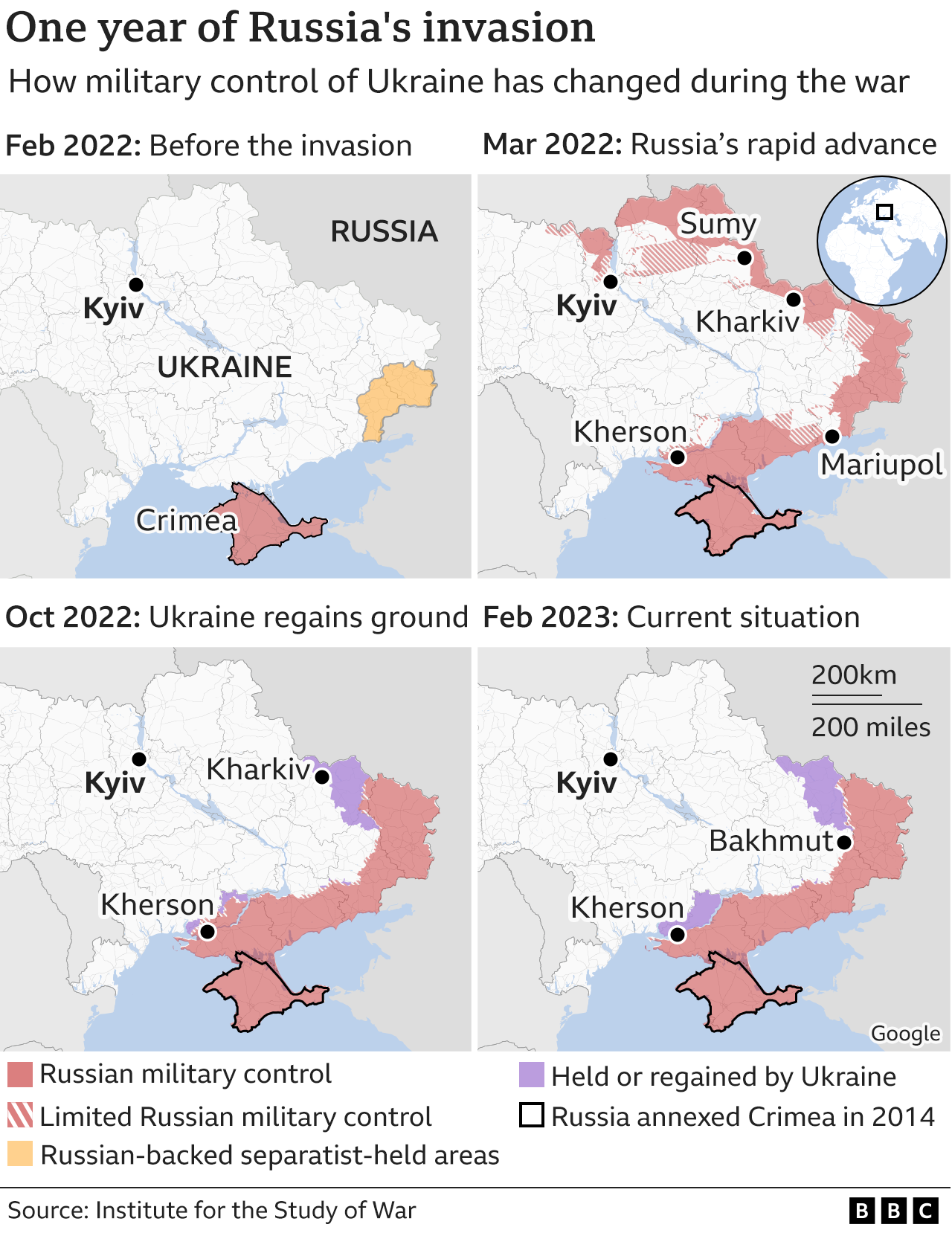
Trump’s recent claims that he could end the war in Ukraine "in 24 hours" rely on a specific type of coercive diplomacy. The strategy involves threatening to cut off military aid to Kyiv to force them to the negotiating table, while simultaneously threatening Moscow with increased support for Ukraine if they don't comply.
This logic ignores the reality of ideological warfare. For Vladimir Putin, Ukraine is not a mere territorial dispute; it is a quest for historical restoration. For Volodymyr Zelenskyy, it is an existential fight for survival. Thinking that a "deal" can be brokered through simple leverage assumes that both parties are rational economic actors looking for a middle ground. They are not.
If Trump were to force a ceasefire that allows Russia to keep seized territories, it would not be a peace. It would be a temporary freeze. It would signal to every revisionist power in the world that borders can be redrawn through force, provided you can outlast the attention span of the American electorate. This isn't peacemaking; it's the management of a strategic retreat that invites future aggression.
The Military Budget Contradiction
One cannot claim to be a peacemaker while presiding over one of the largest expansions of military spending in modern history. During his term, Trump pushed for "total dominance," pouring billions into the modernization of the nuclear triad and the creation of the Space Force.
The Nuclear Arms Race Reborn
By withdrawing from the Intermediate-Range Nuclear Forces (INF) Treaty, the U.S. effectively signaled the end of the Cold War-era arms control framework. The administration argued that Russia was already violating the treaty, which was true. But rather than seeking to repair the framework, the U.S. chose to exit it entirely.
This move triggered a new arms race. It removed the legal barriers for developing new classes of missiles that lower the threshold for nuclear conflict. When the rhetoric of peace is backed by the production of "low-yield" tactical nuclear weapons, the message sent to the world is not one of restraint. It is a message that the U.S. is preparing for the possibility of a "winnable" nuclear exchange.
Economic Warfare as the New Front Line
The use of tariffs and trade wars is a central pillar of Trump's version of international relations. He views the trade deficit as a scoreboard and uses the American consumer market as a weapon. While this is framed as protecting domestic interests, it functions as a form of low-grade global conflict.
When the U.S. engages in aggressive decoupling from China, it doesn't just impact the price of electronics. It disrupts global supply chains and forces third-party nations to choose sides. This bipolarity is the exact environment that leads to cold wars. By treating trade as a zero-sum game where one party must "win" and the other must "lose," the administration erodes the very economic interdependence that has historically prevented major power conflicts.
The Erosion of Multilateralism
Trump’s "America First" policy is, by definition, an isolationist stance toward international institutions. He has frequently criticized NATO, the World Health Organization, and the United Nations as drains on American resources.
Peace is not maintained by a single superpower acting in a vacuum. It is maintained through a web of alliances, treaties, and international norms that provide a predictable environment for state behavior. When the U.S. signals that it may not honor Article 5 of the NATO treaty or that it will withdraw from international climate agreements, it shatters the trust that underpins the global order.
Adversaries like China and Russia do not see this as a call for peace. They see it as an invitation to fill the power void. In the Pacific, the rhetoric of "putting America first" has led allies like Japan and South Korea to question the reliability of the American nuclear umbrella, potentially prompting a nuclear proliferation race in East Asia.
The Populist Trap
The appeal of the "peacemaker" narrative lies in its simplicity. To a public weary of twenty years of conflict in the Middle East, the promise of "bringing the boys home" is incredibly potent. Trump taps into this genuine exhaustion.
But there is a difference between ending a war and simply leaving. A chaotic withdrawal—as seen in the early stages of the plan for Afghanistan which the subsequent administration had to execute—creates more problems than it solves. True peacemaking requires the tedious, unglamorous work of building institutions, fostering civil society, and maintaining a consistent presence that deters bad actors. Trump’s approach is a series of "grand gestures"—the summits with Kim Jong Un, the tweets directed at world leaders—that provide great television but rarely result in signed, verifiable treaties.
Weaponizing Uncertainty
The "Madman Theory" of international relations suggests that if your enemies think you are unpredictable and capable of anything, they will be too afraid to provoke you. Trump has embraced this theory fully.
The problem with unpredictability is that it also terrifies your friends. Alliances are built on the expectation of consistent behavior. When a president suggests he might abandon allies or launch "fire and fury" on a whim, he creates a world where every nation feels the need to re-arm. A world where everyone is armed to the teeth because they don't know what the leader of the free world will do next is not a peaceful world. It is a powder keg.
The Institutional Guardrails
During his first term, several "adults in the room"—experienced generals and career diplomats—managed to blunt the most radical impulses of the Trump foreign policy. They navigated the tension between the president’s tweets and the reality of troop deployments.
In a second term, those guardrails are likely to be absent. The policy blueprints currently being circulated by aligned think tanks suggest a much more aggressive purging of the "deep state." This would replace career experts with loyalists who share the president's transactional view of global affairs. Without the internal resistance that characterized 2017-2021, the gap between the "peacemaker" rhetoric and the reality of aggressive, unilateral action will only widen.
The Cost of the Performance
To understand why the "peacemaker" label is a misnomer, one must look at the results rather than the rallies. North Korea has more nuclear weapons now than it did in 2016. Iran is closer to a breakout capacity than ever before. The global arms trade is booming.
The strategy is not about peace; it is about the optics of strength. It is about a leader who wants to be seen standing alone on the world stage, dictating terms. But in the 21st century, the world is too interconnected for any one person to dictate peace through sheer force of personality.
Peace is a process of constant maintenance, not a single deal signed with a gold Sharpie. By focusing on the performance of the deal rather than the stability of the system, the Trump approach ensures that even when the guns are silent, the threat of conflict is louder than ever. The international community is left navigating a landscape where the rules are rewritten daily, and the only constant is the demand for total loyalty to a vision that prioritizes the headline over the outcome.
This isn't the work of a peacemaker. It is the work of a disruptor who mistakes the absence of a large-scale ground invasion for the presence of stability. True stability requires a commitment to a shared reality that this brand of politics is designed to dismantle.
The choice facing the electorate isn't between war and peace. It is between a predictable, if flawed, international order and a future where "peace" is just another branding exercise in a series of escalating global gambles.
The bill for this brand of diplomacy always comes due. It is usually paid in the currency of long-term security, forfeited for a moment’s applause at a podium.