The radiator in Elena’s crown heights apartment does not whisper. It screams. Every winter, it bangs like a trapped prisoner demanding release, a metallic clanking that has sound-tracked her daughter’s childhood. For nine years, Elena has tolerated the screaming pipe, the peeling plaster by the window, and the soft, distinct sag in the kitchen floorboards. She tolerated them because the rent was stable. She tolerated them because her paycheck from the local health clinic was not.
But every June, a specific kind of dread settles over the five boroughs. It arrives with the heat. It is the annual anxiety of the Rent Guidelines Board vote, the night a group of mayoral appointees decides exactly how much more expensive it will be to exist in New York City. For the one million families living in rent-stabilized apartments, that vote is not an abstract exercise in urban policy. It is a math problem calculated in groceries, medication, and pairs of school shoes.
This year, the script changed.
The Rent Guidelines Board delivered a decision that reverberated from the tenements of the Bronx to the brownstones of Brooklyn: a zero percent increase on one-year leases. A absolute freeze.
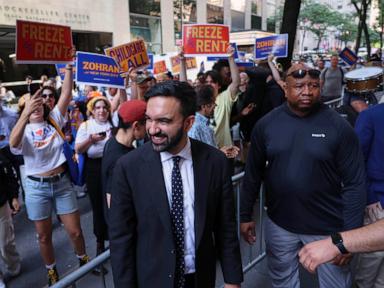
The freeze is being hailed as the direct fulfillment of a fierce political campaign led by Assemblymember Zohran Mamdani, who made capping housing costs the centerpiece of his platform. For tenants like Elena, the news did not bring celebration. Celebration implies a luxury. It brought something far scarcer in New York City.
Relief.
The Arithmetic of Survival
To understand what a rent freeze means, you have to look at the numbers that define a life on the margins of the city. Consider a hypothetical but deeply representative scenario: a family making fifty thousand dollars a year, living in a stabilized two-bedroom apartment priced at eighteen hundred dollars a month.
Under standard annual increases of three or four percent, that rent climbs by roughly sixty dollars a month, every single year. Sixty dollars sounds trivial to a policy analyst. To a family, that is a week’s worth of fresh produce, or the cost of a monthly transit pass, or the difference between keeping the lights on and receiving a shut-off notice from the utility company. Over three years, those compounding ticks of the ledger pull families under water.
The Rent Guidelines Board is historically a battleground of incremental concessions. Landlords present ledgers tracking rising fuel costs, skyrocketing property insurance, and the increasing price of maintenance. Tenants counter with stories of stagnant wages, mold that goes unaddressed, and the predatory pressure to vacate. Usually, the board splits the difference, leaving both sides embittered.
But political momentum has shifted. The push for housing justice has transformed from a series of scattered neighborhood protests into a coordinated, policy-driven machine. Mamdani and his allies framed the issue not as a debate over real estate yields, but as a public health emergency. When one million apartments are stabilized, you are not just regulating properties. You are stabilizing the lives of nearly two and a half million people. That is more than the entire population of Houston, Texas, all relying on a single board's decision to stay rooted in their neighborhoods.
The Quiet War in the Hallways
Walk down any block in Astoria or Bushwick and you will see the physical manifestation of this struggle. New York is a city built on layers of migration and survival, but those layers are thinning. Longtime residents speak of their neighborhoods the way survivors speak of a flood zone, watching the water line creep higher up the wall every year.
There is a distinct psychological weight to knowing your home has an expiration date determined by someone else's profit margin. It alters how you live. You do not paint the walls. You do not get to know the neighbors. You keep your boxes half-packed in the back of the closet, because investing emotionally in a space that might priced out of reach in twelve months feels like a form of self-sabotage.
The arguments against the freeze from property owners are loud and persistent. They argue that a zero percent increase starves small property owners of the capital needed to maintain aging buildings. They warn of a slow decline into disrepair, a future where roofs leak and boilers fail because the math of building ownership no longer pencils out.
That friction is real. The cost of oil, electricity, and structural timber does not freeze just because a board mandates it. Small landlords—often immigrants who plowed their life savings into a single multi-family building as a retirement plan—find themselves squeezed between rising city taxes and frozen revenues.
Yet, tenants counter that the alternative is a human catastrophe. The city's shelter system is already strained to its breaking point. Every dollar added to a stabilized lease pushes a few more families off the ledge of precarious tenancy into the abyss of homelessness. In the calculus of city survival, human displacement carries a far higher societal cost than a frozen dividend.
The Mechanics of a Promise
Political promises in New York are usually written in disappearing ink. They are spoken on flatbed trucks during campaign rallies in Jackson Heights, then diluted through the legislative filters of Albany and City Hall until they are unrecognizable.
Mamdani’s strategy was different. By tethering his political capital directly to the explicit metric of a rent freeze, he turned a complex policy debate into a binary test of accountability. The achievement of this freeze represents a rare moment where grassroots agitation successfully captured the regulatory levers of the city.
But the real problem lies elsewhere, buried beneath the immediate relief of the headline. A one-year freeze is a pause button, not a cure. It provides a twelve-month sanctuary, a brief window where Elena can look at her budget without her chest tightening.
Consider what happens next: the underlying economic pressures of the city remain entirely unchanged. The cost of groceries continues to climb. Healthcare premiums do not freeze. The structural shortage of affordable housing keeps the vacancy rate at historic lows, meaning tenants have zero leverage if they choose to leave. They are protected within their stabilized walls, but those walls can begin to feel like a fortress under siege.
The End of the June Dread
On the night of the vote, the air inside the public auditorium was thick, vibrating with the chants of activists and the tense murmurs of property representatives. When the final tally was read, confirming the zero percent increase, there were no triumphant cheers that echoed into the street. There was just a collective exhalation.
Elena heard the news on a late-night text thread while sitting at her kitchen table. She looked across the room at her daughter, asleep on the couch with a school textbook open on her chest. For the next twelve months, the rent would remain exactly what it was. The math worked for another year.
Outside her window, the sounds of the city moved through the dark—the hiss of air brakes, the distant siren, the hum of a metropolis that never stops demanding more from the people who build it. The crown heights apartment remained small, the kitchen floor still sagged, and come December, the radiator would undoubtedly begin its violent, metallic screaming again. But for now, the air felt a little lighter. The roots held.