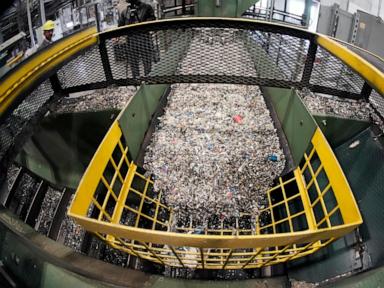
The Environmental Protection Agency’s potential reclassification of "advanced recycling"—specifically pyrolysis and gasification—from solid waste incineration to manufacturing represents a fundamental pivot in the capital structure of the North American plastics industry. This is not a mere bureaucratic adjustment; it is a shift in the regulatory cost function that determines the commercial viability of circular polymer economies. By removing the stringent Clean Air Act Section 129 requirements associated with waste incineration, the EPA would lower the barrier to entry for petrochemical firms to integrate chemical recycling into their existing supply chains.
The Bifurcation of Plastic Recovery Methods
To analyze the implications of this shift, the technology must be separated into its two distinct operational pathways: mechanical and chemical recovery. Mechanical recycling operates on a physical degradation model where polymers are washed and shredded, maintaining the original molecular chain but losing structural integrity with each cycle. Chemical recycling (advanced recycling) operates on a molecular decomposition model.
The Pyrolysis Mechanism
Pyrolysis involves the thermal degradation of organic material in the absence of oxygen. The process breaks long-chain plastic polymers down into simpler hydrocarbons, such as pyrolysis oil or "pyoil." This liquid feedstock can theoretically replace virgin naphtha in steam crackers to produce new plastics.
The regulatory friction arises because pyrolysis creates emissions. Under current waste incineration rules, facilities face intense monitoring, specific scrubbers, and high reporting overhead. Reclassifying these sites as manufacturing facilities subjects them to Section 112 or Section 111 rules, which are generally less restrictive regarding the specific types of feedstock-to-emissions ratios required for waste-to-energy plants.
The Economic Drivers of Regulatory Arbitrage
The push for reclassification is driven by the internal rate of return (IRR) on advanced recycling infrastructure. Under waste incineration status, the CAPEX required for compliance often renders mid-scale pyrolysis plants non-bankable. The transition to a "manufacturing" designation changes three critical variables:
- Permitting Lead Times: Moving from a solid waste permit to a standard industrial air permit can reduce project timelines by 12 to 24 months.
- Asset Utilization: Manufacturing plants have higher flexibility in feedstock blending compared to waste incinerators, which are often locked into rigid volume and composition mandates.
- Tax Incentives: Manufacturing status opens doors to R&D tax credits and industrial investment grants that are unavailable to the waste management sector.
This creates a logic where the EPA is effectively choosing between two competing priorities: the strict control of localized air pollutants and the broad-scale reduction of plastic leakage into the environment.
The Core Contention: Definition of Waste vs. Feedstock
The legal battleground centers on the "legitimacy" of the recycling process. Environmental advocates argue that if a process produces hazardous byproducts and consumes significant energy, it remains a form of waste treatment. Industry stakeholders counter that the output (pyoil) is a valuable commodity, and therefore the input (plastic waste) is a raw material, not waste.
This distinction is the hinge upon which the "Circular Economy" swings. If the EPA treats plastic scrap as a feedstock, the plastic becomes a tradeable asset with a floor price. If it remains waste, the plastic is a liability subject to a tipping fee.
The Mass Balance Paradox
A significant technical hurdle in this transition is the "Mass Balance" accounting method. Because pyoil is mixed with virgin petroleum in massive refinery crackers, it is physically impossible to track which specific molecule in a new detergent bottle came from a recycled source.
Industry seeks a regulatory framework that allows for "book and claim" accounting, similar to the green energy grid. Critics view this as a lack of transparency, arguing that the actual recycled content in a specific product might be zero, even if the facility processed tons of waste. The EPA’s decision on reclassification will likely dictate whether Mass Balance becomes the national standard for labeling "recycled content."
Environmental Externalities and the Toxicological Gap
The shift in regulation faces a significant data deficit regarding the long-term toxicological profile of chemical recycling facilities. While the industry emphasizes the reduction in landfill volumes, the process of cracking complex polymers (especially those contaminated with PVC or PFAS) produces a concentrated stream of heavy metals, dioxins, and furans.
The "incineration" classification was designed specifically to catch these persistent organic pollutants. By moving to a manufacturing designation, the monitoring frequency for these specific compounds often drops. The risk is a geographic concentration of "manufacturing" plants in industrial zones that already face high cumulative impacts, creating an environmental justice bottleneck.
Energy Intensity and Net Carbon Logic
The carbon footprint of chemical recycling is higher than that of mechanical recycling due to the heat required for molecular cleavage. However, proponents argue it is significantly lower than the carbon cost of extracting and refining virgin crude. The missing link in the current debate is a standardized Life Cycle Assessment (LCA) that accounts for:
- The carbon cost of pre-sorting and cleaning "dirty" plastic.
- The energy loss during thermal conversion.
- The transportation of low-density plastic waste to centralized pyrolysis hubs.
Structural Implications for the Waste Management Hierarchy
The EPA's potential move threatens to disrupt the traditional waste management hierarchy, which prioritizes reduction and reuse over recycling. By subsidizing the viability of chemical recycling through regulatory easing, there is a risk of creating a "demand pull" for plastic waste.
If massive pyrolysis plants require a steady stream of thousands of tons of plastic to remain solvent, the incentive for brands to reduce packaging or switch to reusable systems diminishes. The technology effectively "locks in" high-volume plastic consumption by creating an industrial appetite for the waste. This creates a feedback loop where the solution to plastic pollution becomes dependent on the continued generation of plastic waste.
The Petrochemical Integration Strategy
Large-scale energy firms are not viewing advanced recycling as a standalone service, but as a defensive integration strategy. As global fuel demand potentially peaks due to EV adoption, these firms are pivoting to chemicals and plastics to preserve their value chains.
The ability to categorize a pyrolysis plant as a "manufacturing facility" allows these firms to colocate recycling units within existing refinery complexes. This creates a vertical integration that eliminates the need for separate waste-handling permits for what would otherwise be considered a "refinery-adjacent incinerator." The operational synergy here is massive, allowing for the sharing of steam, heat, and safety infrastructure.
The Yield Problem
The final technical constraint is the yield of usable hydrocarbons. Not all plastic translates 1:1 into pyoil. A typical pyrolysis run of mixed plastic (PE, PP, PS) might yield:
- 60-70% Liquid oil (Pyoil)
- 10-15% Synthetic gas (Syngas, often burned to power the reactor)
- 5-10% Char (Solid waste)
The regulatory debate often ignores the "Char" and "Syngas" portions. If the EPA classifies the entire process as manufacturing, the handling of the toxic char becomes a standard industrial waste issue rather than a hazardous waste incineration issue. This distinction significantly alters the OpEx of the facility.
Strategic Forecast for Market Participants
The move toward manufacturing status is likely to trigger a wave of Final Investment Decisions (FIDs) for dormant chemical recycling projects. However, the regulatory relief will be met with immediate litigation from environmental NGOs, creating a period of high "policy volatility."
Organizations should prepare for a bifurcated market. High-purity mechanical recycling will continue to command a premium for food-grade applications where molecular traceability is required. Chemical recycling will dominate the "hard-to-recycle" segments (films, pouches, multi-layer plastics) provided the Mass Balance protocols are codified alongside the EPA's reclassification.
The critical path for the industry is the development of localized "Pre-Processing Hubs." The primary failure point for advanced recycling is not the chemistry, but the logistics of waste contamination. The firms that succeed will be those that integrate optical sorting technology at the front end to reduce the "Char" yield and increase the quality of the pyoil, regardless of how the EPA chooses to label the stack.
The ultimate play for stakeholders is the decoupling of "Recycling" from "Waste Management." If the EPA proceeds, the plastics industry will successfully rebrand plastic as "Above-Ground Oil." This transition requires a total overhaul of corporate ESG reporting, moving away from simple "tonnage diverted from landfill" toward "molecular circularity index." The risk remains that if the technology fails to scale or the emissions prove too high, the industry will have built a massive infrastructure for a process that the next administration could easily re-regulate back into the incineration category, creating billions in stranded assets.