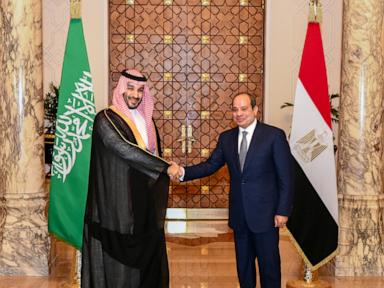
Geopolitics often creates strange bedfellows, but few modern partnerships carry the historical baggage of the relationship between Saudi Arabia and Egypt. For decades, Riyadh and Cairo have competed for ideological and political leadership of the Arab world. Saudi capital has frequently acted as a financial lifeline for Egypt’s treasury, while Egyptian military doctrine and labor have provided historical security backstops for the Gulf monarchy. Yet beneath the surface of diplomatic pleasantries lies a persistent undercurrent of rivalry.
That rivalry is currently being tested by fire over the waters of the Red Sea.
Continuous drone and missile campaigns launched by the Houthi movement in Yemen have transformed one of the world's most critical maritime chokepoints into a zone of high risk. Because roughly twelve percent of global trade and a significant portion of Middle Eastern energy exports transit the Bab el-Mandeb strait, the security implications extend far beyond regional skirmishes. When commercial shipping lanes face persistent threats, the economic pillars of both Saudi Arabia's Vision 2030 and Egypt's Suez Canal revenues face immediate danger.
To understand why the Saudi crown prince is currently seeking firmer security alignment and tactical backing from Cairo, one must look at the math of modern economic vulnerability. Riyadh has staked its future on post-oil diversification projects along the Red Sea coast, including mega-developments like NEOM. A burning oil tanker or a disrupted shipping route just off these nascent economic hubs presents an existential threat to foreign direct investment. Meanwhile, Egypt's state budget relies heavily on transit fees collected from vessels passing through the Suez Canal. When shipping lines reroute around the southern tip of Africa to avoid the danger zone, Cairo loses hundreds of millions of dollars in vital foreign currency reserves almost overnight.
The geopolitical mechanics here are straightforward. Saudi Arabia possesses unmatched financial resources and air power, but its military intervention in Yemen yielded a stalemate, leaving its southern flank exposed to persistent asymmetric threats. Egypt boasts the largest standing army in the Arab world and a strategic geographic position guarding the northern mouth of the Red Sea, yet Cairo faces severe domestic economic strains that limit its foreign policy adventures.
Aligning the two powers forms a logical counterweight, but executing it requires overcoming years of diplomatic friction.
The Economic Costs of Maritime Paralysis
Shipping companies do not panic easily, but they calculate risk with ruthless efficiency. Insurance premiums for vessels transiting the Red Sea skyrocketed the moment commercial vessels became targets. Higher insurance costs translate into inflated consumer prices worldwide, but the localized impact hits the regional economies hardest.
Egypt has watched its Suez Canal revenue take a direct hit as traffic dropped substantially. For an economy already grappling with inflation, foreign debt obligations, and a shortage of hard currency, every diverted container ship represents a measurable loss of national income.
Saudi Arabia faces a different kind of pressure. The kingdom spent billions branding the Red Sea coast as a secure playground for global tourism and high-tech urban centers. Investors want stability above all else. When ballistic trajectories intersect with commercial sea lanes near Saudi territorial waters, the narrative of a secure investment destination begins to fracture.
Riyadh needs a stable maritime perimeter. Cairo needs financial backing and secure trade routes. The convergence of these interests should make an alliance automatic, but strategic mistrust runs deep.
Historical Friction and Strategic Divergence
Historically, Cairo and Riyadh have viewed regional crises through distinct lenses. Egypt tends to prioritize traditional state security, border defense, and the preservation of central authority across the Middle East. Saudi Arabia, particularly under its current leadership, pursues an aggressive, transformative foreign policy aimed at containing rival regional influences and aggressively modernizing its domestic economy.
During past conflicts, Egyptian leadership resisted deploying ground troops into lengthy foreign entanglements, remembering the heavy political and human costs of past interventions in Yemen during the nineteen-sixties. While Egyptian naval forces routinely participate in joint security patrols and maritime exercises in the Red Sea, Cairo has been cautious about getting drawn into a permanent offensive posture against the Houthis alongside Riyadh.
Furthermore, economic aid from the Gulf to Egypt has shifted in recent years. Riyadh has moved away from unconditional cash deposits toward performance-based investments and privatization deals. This transactional approach has occasionally caused friction in Cairo, where leaders expect historic political solidarity to translate into unconditional financial support.
Despite these underlying tensions, the reality of missiles flying near vital shipping lanes leaves little room for diplomatic stubbornness.
The Mechanics of Joint Security
Securing a body of water as expansive as the Red Sea requires more than just goodwill. It demands integrated radar systems, rapid-response naval patrols, intelligence sharing, and synchronized rules of engagement.
Saudi naval modernization has brought advanced corvettes and missile defense systems into service, but maritime defense is inherently collaborative. Egypt brings decades of experience managing Suez traffic, securing the northern approaches, and operating large naval fleets. A coordinated security framework between the two nations creates a formidable deterrent against asymmetric attacks.
Yet, building this framework involves navigating complex command structures. Neither country is historically inclined to subordinate its military command to a regional partner. Joint operations require delicate compromises, where both capitals must feel they retain sovereign control while benefiting from shared intelligence and mutual defense guarantees.
The diplomatic outreach from Riyadh to Cairo is therefore designed to institutionalize this cooperation before external powers dictate the security architecture of the region. Western navies have maintained a presence in the area to protect international shipping, but neither Saudi Arabia nor Egypt wants external actors permanently managing the security of an Arab waterway.
Looking Beyond the Immediate Horizon
The pressure on Red Sea trade routes is unlikely to vanish overnight. Even if formal ceasefires or political settlements take root in Yemen, the infrastructure of asymmetric warfare—drones, small boats, and anti-ship missiles—remains widely accessible to non-state actors.
This permanence of threat forces a permanent shift in strategy. Saudi Arabia and Egypt are learning that regional stability cannot be outsourced to distant allies or managed through temporary ad-hoc coalitions. It requires a durable, indigenous security architecture built on shared economic survival.
The crown prince's push for Egyptian backing is not merely a reaction to current missile strikes. It is an acknowledgment that the future of Middle Eastern prosperity depends entirely on who controls the narrow straits where global trade intersects with regional ambition. If Riyadh and Cairo can bridge their historical divides, they might secure the waters that feed their economies. If they fail, the economic fallout will reshape the domestic fortunes of both nations for generations.



