The wind does not blow in the Sahel; it accuses. It strips the paint from old Toyota Land Cruisers, scours the mortar of forgotten mud-brick forts, and carries the dry, alkaline taste of salt across flat horizons that stretch until the eye simply surrenders.
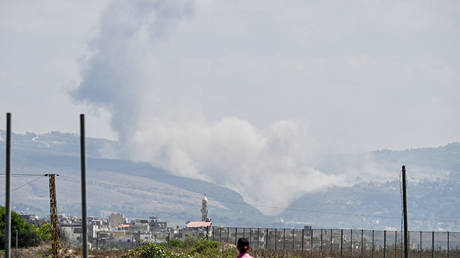
Stand at the perimeter of the military base outside Ayorou as the sun begins its steep, brutal descent, and the air feels less like oxygen and more like an invisible weight pressing down on your chest. You can smell the diesel fumes mixing with the dust. You can hear the dry rustle of thornbushes scraping against rusted perimeter wire. And then, cutting through the silence of the scrubland, comes the low, guttural vibration of an approaching transport helicopter—a foreign machine, painted in colors that do not belong to the Sahel, manned by men who speak a language foreign to the villages below.
This is not a movie set. This is Niger, late 2024, and the red earth has become the chessboard for a quiet, high-stakes collision between domestic rebellion and the expanding reach of Moscow.
To understand what happened when the junta’s forces, backed by Russian military specialists, clawed back a critical desert base from mutinous soldiers, you have to abandon the sanitized distance of a wire-service map. You have to look at it through the eyes of Captain Ibrahim, a fictionalized officer whose loyalties have been stretched thin by three coups in four years, or through the dry, blistered lips of a herder three kilometers away who watched the armored columns roll north under a copper sky.
For months, the base—a strategic anchor near the turbulent tri-border region where Mali, Niger, and Burkina Faso bleed into one another—had slipped from central control. Mutineers, disillusioned by shifting political winds and the chaotic fracturing of military command following the ouster of President Mohamed Bazoum, had turned the compound into an armed stronghold. In a landscape where military outposts are the only things standing between regional stability and total collapse, losing a base isn’t just a tactical setback. It is a hemorrhage of sovereignty.
The junta in Niamey knew it. They also knew their own ranks were frayed, exhausted by years of fighting jihadist insurgencies that seemed to multiply like shadows under the harsh midday sun.
So they turned outward.
Enter the men in unmarked uniforms. Russian military contractors, successors to the Wagner apparatus now operating under the banner of the Africa Corps, did not arrive with fanfare. They arrived quietly, moving through the logistics hubs of Niamey before pushing forward into the operational zones.
Consider the mechanics of the assault. Modern desert warfare is an exercise in brutal geometry. You do not storm a fortified compound with a romantic cavalry charge; you blind it, you freeze it, and then you crush it with overwhelming, concentrated violence. Drones hummed overhead, tracing thermal signatures against the cooling sand. The mutineers, dug into concrete bunkers designed to withstand insurgent mortars, suddenly found themselves outmatched not just in numbers, but in the cold, algorithmic efficiency of electronic warfare and precision targeting.
When the dust finally settled over the red earth, the flag above the gate had changed, but the underlying anxiety remained entirely unmoored.
The junta claimed victory, broadcasting footage of triumphant soldiers standing beside armored personnel carriers. State television heralded the operation as a triumphant reclaiming of national dignity. But dignity, like water in this part of the world, is scarce and difficult to hold onto.
Behind the official press releases lies a much more complicated, fragile reality. When you invite foreign security forces into your sovereign territory to settle internal domestic mutinies, you are not just securing a base. You are leasing a piece of your nation's independence. The Russian instructors bring night-vision gear, tactical drones, and combat muscle, but they also bring a hidden ledger—one that will be paid in mining concessions, diplomatic alignment, and a shifting geopolitical gravity that pulls Niamey further and further away from its traditional Western partners in Paris and Washington.
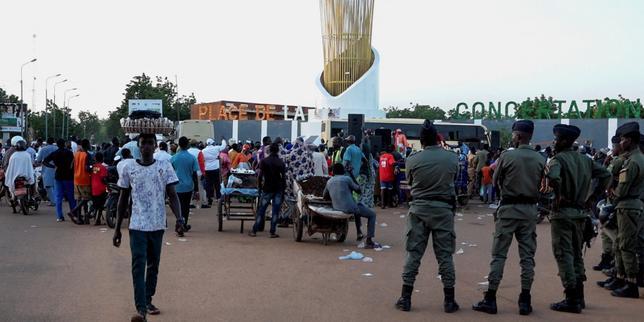
Walk through the market in a nearby town the morning after the retaking of the base. The merchants do not talk about geopolitics in grand, sweeping terms. They talk about the price of millet. They talk about whether the supply roads are safe enough to travel next Tuesday. They look at the shifting alignments of men with guns the way sailors look at the sky before a squall—not with ideological fervor, but with a primal, desperate instinct for survival.
For the ordinary citizen, the return of the base to government hands means very little if the roads remain choked by bandits and the night remains haunted by extremist raids. The state has proven it can defeat its own mutinous soldiers when backed by foreign firepower. That is a display of force, yes. But force is not governance.
The sun dips below the horizon, plunging the Sahel into an ink-black darkness pierced only by the sweep of searchlights from the newly secured perimeter. Somewhere out in the vast, empty expanse, the wind keeps shifting, carrying the dust of a hundred forgotten empires across the sand, waiting to see who owns the morning.