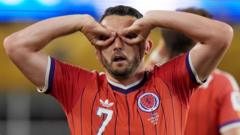
John McGinn wheels away toward the corner flag, hooks his thumbs and index fingers into tight circles, and presses them firmly to his eyes. To the uninitiated, the Scotland and Aston Villa midfielder is just another elite footballer showcasing a quirky, pre-planned trademark for the cameras. The gesture looks like a standard bit of modern branding. It is anything but.
McGinn performs his signature goggles celebration as a direct message of solidarity for his young nephew, Jack, who was diagnosed with severe vision impairment at four years old and must wear protective sports goggles to play the game.
   John McGinn Scores
           │
           ▼
   Fingers to Eyes ──► Direct Message to Nephew (Jack)
           │
           ▼
   Normalizes Protective Sports Eyewear globally
The gesture serves a dual purpose. It offers a highly public shield against the cruel social isolation that frequently targets children who look different on the pitch. Behind this simple, recurring piece of post-goal choreography lies a much harsher truth about youth sports. We are currently facing a quiet crisis of confidence and safety in grassroots football, driven by outdated stigmas surrounding protective eyewear.
The Weight of Looking Different on the Pitch
Football culture can be brutal for a child who stands out for the wrong reasons. When Jack first received his diagnosis, the anxiety was not about the physical limitations of his eyesight. It was about the social cost. He did not want to be the only kid on the pitch wearing bulky, fogging plastic straps while everyone else mirrored their favorite unblemished heroes.
McGinn understood that anxiety instantly. Having grown up in the rough-and-tumble environment of Scottish youth football, the midfielder recalls exactly how children wearing glasses were treated by opponents, and occasionally by their own teammates. They were sidelined. They were mocked. Often, they simply quit playing altogether to avoid the scrutiny.
The numbers backing this up are stark. Grassroots sporting initiatives regularly note a sharp drop-off in athletic participation among pre-teen children who require specialized medical gear. It is not a lack of talent or desire that drives them away. It is the crushing weight of childhood self-consciousness.
By taking this specific vulnerability and flashing it on the world stage, McGinn altered the social dynamic for his nephew. Suddenly, the kids at Jack’s youth club, Glenvale, were not laughing at the goggles. They were actively copying them. The protective gear ceased to be a symbol of weakness and instead became a badge of elite association.
The Dangerous Reality of Grassroots Optometry
The problem stretches far beyond the psychological. There is a glaring, dangerous gap in how youth sports leagues handle physical safety regarding vision. Every week, thousands of children across the country step onto pitches wearing ordinary, everyday prescription glasses.
This is an accident waiting to happen. Standard eyewear is completely unsuited for a high-impact sport like football. A stray elbow, a heavily struck ball to the face, or a clumsy collision can shatter a metal or acetate frame in an instant. The resulting shards do not just cause superficial cuts. They can cause catastrophic, irreversible ocular trauma.
[Standard Glasses] ──► Impact ──► Fractures Shards ──► Risk of Ocular Trauma
[Sports Goggles]   ──► Impact ──► Deflects Force    ──► Complete Eye Protection
Despite the clear dangers, parents frequently resist buying proper sports goggles. The reasons are a mix of financial strain and aesthetic stubbornness. Specialized polycarbonate sports goggles are expensive, often costing hundreds of pounds for a single prescription change. When a child's eyesight is shifting every six to twelve months, that cost becomes unsustainable for working-class families.
Furthermore, many coaches at the local level simply lack the education to intervene. They treat glasses as a minor inconvenience rather than a significant health and safety hazard. They allow kids to play with regular spectacles because they want to ensure inclusion, completely unaware that they are risking the child's long-term sight.
Moving Past the Ghost of Edgar Davids
Whenever a professional player dons eyewear, the footballing world immediately reaches for the same lazy historical comparison. Edgar Davids. The iconic Dutch midfielder became a global fashion icon in the 1990s and 2000s due to his tinted Oakley goggles.
Yet, using Davids as the sole benchmark for eyewear in football actually highlights how stagnant the sport has been. Davids wore his goggles out of absolute medical necessity after undergoing surgery for glaucoma. His look was celebrated as a stylistic anomaly, a cool piece of cyberpunk flair that belonged exclusively to an eccentric world-class superstar. It did not spark a widespread movement to protect the eyes of schoolyard players.
For decades after Davids retired, the elite game remained completely devoid of visible eye protection. This lack of representation created a massive cultural vacuum. Children looking up at the Premier League or the Champions League saw a flawless aesthetic of perfectly visioned athletes.
The tide is beginning to turn, but the change is slow. Young players like Andrew Tod in the Scottish Championship have started wearing sports goggles during competitive matches, openly normalizing the equipment at the professional level. It is a vital step forward. If children do not see adults wearing this gear during televised matches, they will continue to view it as a punishment rather than standard athletic equipment.
Changing the Infrastructure of Youth Sport
Resolving this issue requires a fundamental shift in how grassroots sports organizations view protective gear. We treat shin guards as mandatory equipment. A child cannot step onto a pitch in an organized league without plastic guards protecting their lower legs. Yet, a child can routinely walk into a competitive match wearing a fragile pair of designer glasses that could blind them upon impact.
Governing bodies need to establish uniform rules regarding eye safety. This does not mean banning visually impaired children from playing. It means mandating that any necessary corrective lenses must meet strict athletic safety standards.
To achieve this without pricing lower-income families out of the sport, football associations must partner directly with high-street opticians. High-profile corporate sponsorships are routinely funneled into training kits and tournament trophies. A portion of that capital needs to be redirected toward subsidizing prescription sports goggles for youth players.
The Lasting Impact of the Hands Around the Eyes
What John McGinn achieved by making his gesture global goes far beyond typical charity work or standard ambassador roles. He did not just sign a check or film a brief public service announcement. He altered the physical culture of the sport on the ground level.
The true success of the movement is visible on the muddy pitches of local parks every weekend. It is found in the confidence of children who no longer hesitate to strap on their protective eyewear before crossing the white line. They are no longer hiding their condition. They are celebrating it.
The ending of this story will not be written in a boardroom or an optometry clinic. It will be written when a generation of visually impaired children grow up believing the pitch belongs to them just as much as anyone else.