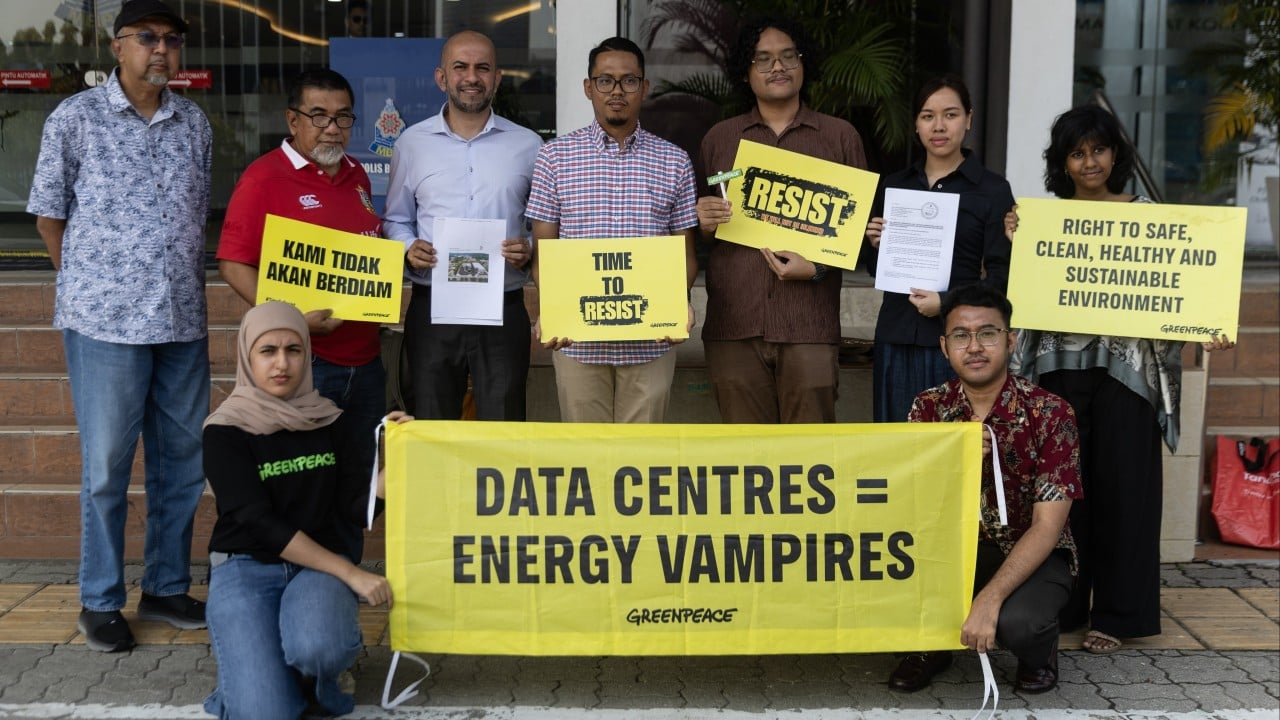
The physical footprint of the artificial intelligence revolution looks remarkably mundane from fifty yards away. In places like Johor, Malaysia, or the outskirts of Manila, it resembles gray windowless boxes wrapped in razor wire, ringed by heavy-duty electrical substations, and flanked by humming cooling towers. These concrete monoliths are rising at a dizzying pace to capture billions in foreign direct investment. Yet behind the ribbon-cutting ceremonies and soaring macroeconomic projections, a profound friction is tearing at the fabric of local communities. Citizens are no longer willing to trade their immediate quality of life for abstract digital promises.
When residents in towns like Kota Damansara or Oton discovered that multi-megawatt computing facilities were slated for construction yards away from their front doors, they did not reach for corporate whitepapers. They organized protests, filed hundreds of formal administrative objections, and forced municipal planners to halt projects that had already cleared initial bureaucratic hurdles. This grassroots pushback exposes an uncomfortable reality for regional leaders who pinned their economic futures on the digital economy. The bottleneck throttling the region is no longer just a shortage of microchips or venture capital. It is a severe social and infrastructural disconnect between the architects of the hyper-connected economy and the people who live under its humming transmission lines.
The Grid Crisis Beneath the Concrete
Capital is abundant. Regional pipelines for digital infrastructure across the Asia-Pacific have ballooned past twenty-six gigawatts, driven by hyperscalers seeking alternatives to land-constrained hubs like Singapore. But money cannot bend the laws of thermodynamics or accelerate a state-managed electrical grid upgrade scheduled years into the future.
Consider a hypothetical scenario illustrating the mechanical strain: a single enterprise training large language models can demand continuous power loads equivalent to a mid-sized manufacturing plant, packed into a footprint the size of a supermarket. When dozens of these facilities cluster near urban peripheries to maintain low-latency connections, they swallow regional power capacity whole. State utilities find themselves caught between honoring lucrative power purchase agreements with foreign tech giants and keeping lights on for residential neighborhoods prone to brownouts.
Grid gatekeepers are now the ultimate arbiters of the market. Transmission networks built for twentieth-century industrial use are buckling under twenty-first-century compute densities. Upgrading transformers, laying high-voltage lines, and constructing substations requires years of heavy engineering work. Meanwhile, artificial intelligence startups and cloud operators expect instantaneous hookups. This temporal mismatch creates a dangerous vulnerability. Billions of dollars in announced investments risk becoming stranded assets, plugged into a grid that simply cannot deliver the current.
The Resource Drain on Local Ecosystems
Electricity is only the primary vector of consumption. The secondary crisis is water. Liquid cooling systems thirsty for millions of gallons daily place immense strain on municipal reservoirs and agricultural irrigation networks, particularly during prolonged dry seasons.
In tropical climates, cooling overhead demands constant optimization. Operators frequently rely on resource-intensive mechanical chillers that dump massive plumes of heat into adjacent neighborhoods, elevating ambient temperatures in densely populated sectors. When local communities bear the environmental externalities—auditory pollution from heavy industrial generators, road degradation from continuous heavy truck traffic, and particulate dust coating residential properties—the political calculus shifts dramatically.
Governments promised digital jobs and high-tech prosperity. Instead, local shopkeepers and farmers experience traffic congestion, rising utility competition, and environmental degradation. The friction is entirely rational. For a resident watching construction crews clear a nearby community forest, the promised trickle of specialized programming jobs offers cold comfort against immediate neighborhood disruption.
Navigating the Sovereign Cloud Paradox
State policies compound the physical friction. Across ASEAN, national governments are aggressively pursuing sovereign cloud frameworks and domestic artificial intelligence initiatives to retain data control within national borders. Malaysia, Indonesia, and Thailand have all rolled out multi-billion-dollar policy packages designed to foster homegrown digital capabilities.
This creates a structural paradox. Policymakers want to position their nations as the premier digital engine rooms of the Global South, yet their regulatory frameworks demand localized data storage and processing that must physically land somewhere. Because prime urban acreage is scarce and expensive, developers push deeper into suburban and semi-rural municipalities where zoning laws are more flexible and land acquisition costs are lower. That is precisely where community resistance is fiercest.
Furthermore, the commercial models driving these developments are shifting rapidly. Industry analysts note that future transactions will increasingly rely on platform acquisitions and corporate carve-outs rather than single-site asset sales. Large conglomerates are buying up entire operational portfolios to secure scarce power allocations before competitors can lock them down. This consolidation concentrates control among deep-pocketed regional players, leaving smaller local enterprises squeezed out of the digital ecosystem entirely.
Redefining the Digital Contract
To move past this current impasse, regional authorities must fundamentally alter how digital infrastructure projects are approved and integrated. Transparent community consultation cannot remain an afterthought ticked off during a late-stage public hearing. When developers treat local pushback as a minor PR inconvenience rather than a fundamental design constraint, they invite administrative cancellations that cost millions in wasted planning capital.
Energy sourcing must also evolve past empty corporate pledges. True integration requires direct investment in dedicated renewable microgrids and localized energy storage, ensuring that massive compute loads do not cannibalize public power supplies. Until regional planners align the physical realities of power generation and water security with the unquenchable thirst of modern computing, every new ribbon-cutting will carry the seeds of the next community confrontation.
The digital transition is marching forward, but it is colliding with the physical limits of the earth. The ultimate test of national ambition is not how many gigawatts developers can promise on paper, but whether growth can be sustained without alienating the populations expected to live beside the machines.
Malaysian AI Boom Faces a Water Crunch
This video examines how Malaysia's rapid data centre expansion is straining local water supplies and pushing researchers to explore unconventional cooling solutions.
http://googleusercontent.com/youtube_content/1