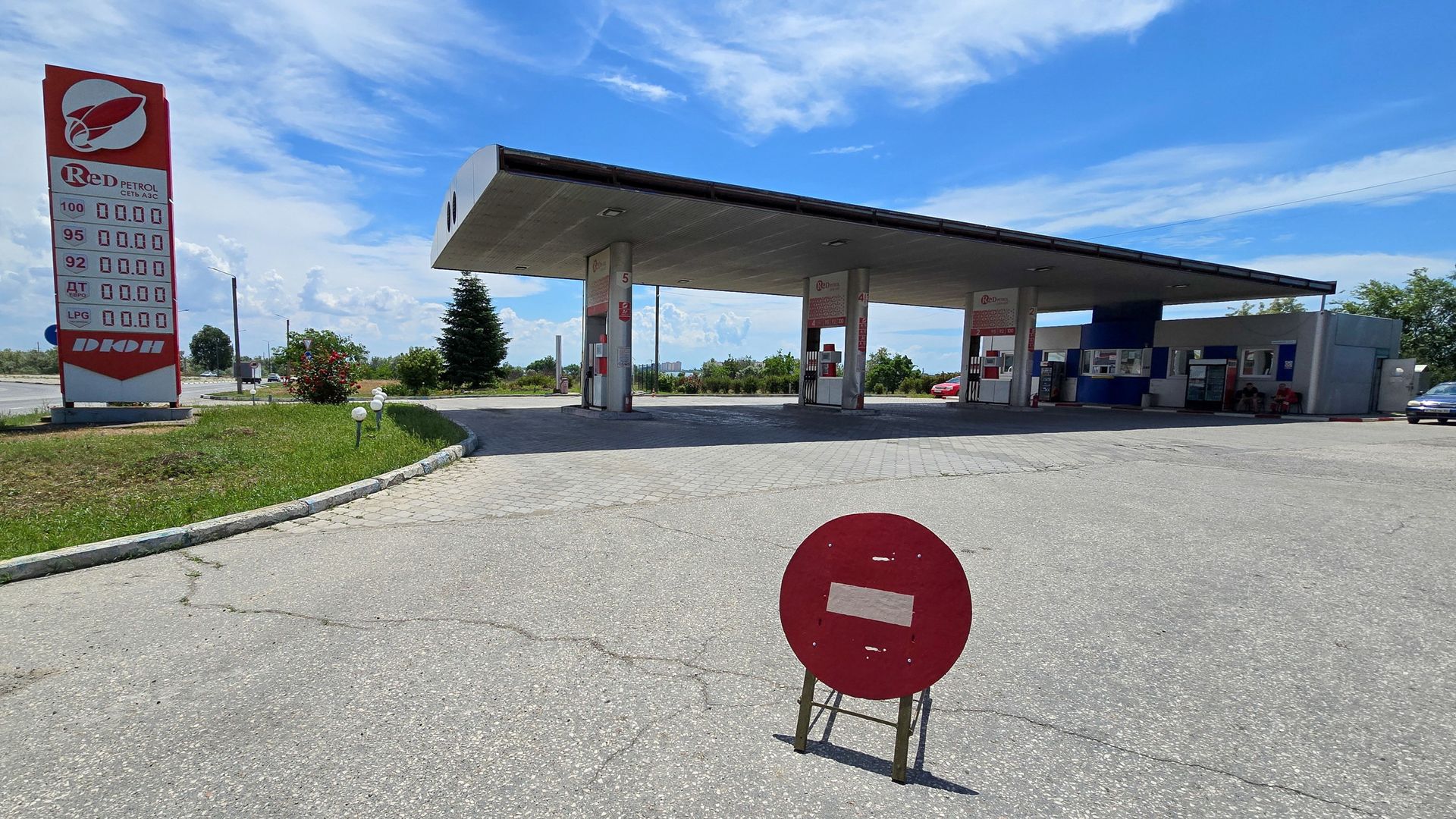
The lines at the remaining operational petrol stations in Sevastopol and Yevpatoriya do not look like a temporary bottleneck. They look like a structural failure. With pumps dry across the occupied peninsula and local authorities stringently rationing fuel, the standard narrative from Moscow blames "temporary difficulties" caused by an uptick in enemy aerial attacks.
The conventional wisdom among Western observers points to the physical isolation of the Kerch Bridge. But the true crisis runs far deeper than a single damaged span of concrete. Ukraine has quietly engineered a systematic, deep-theater logistical lockdown that has effectively severed the Crimean Peninsula from its energy dependencies, revealing that Russia's vast domestic fuel surplus means absolutely nothing if you cannot secure the final hundred miles of delivery.
The Shattered Lifelines of the Black Sea
To understand why Crimea is running on fumes, one must look at how the peninsula has historically consumed energy. Crimea has zero internal oil refining capacity. Every drop of gasoline, winter diesel, and aviation fuel must be imported from the Russian mainland. Historically, this relied on a triad of logistics: rail transport over the Kerch Strait, a fleet of heavy maritime ferries, and massive bulk storage hubs like the Feodosia oil terminal.
That entire operational architecture has been systematically dismantled.
The Feodosia terminal, the largest storage asset on the peninsula, was rendered useless after targeted strikes obliterated its tank farms. With bulk storage gone, Russia lost its operational buffer, transforming Crimea into a just-in-time supply chain that requires constant replenishment.
Then came the neutralization of the maritime route. The Conro Trader and the Slavyanin—large roll-on/roll-on rail ferries capable of moving entire trains of fuel tankers across the Kerch Strait—were knocked out of commission. This effectively forced Moscow into a brutal logistical dilemma.
They could risk running volatile fuel trains across the vulnerable Kerch Bridge, a structure already restricted due to structural vulnerabilities from prior attacks, or they could rely entirely on highways.
The Land Corridor Death Trap
Faced with the bottleneck at the Kerch Strait, the Russian military command diverted its logistical weight to the "land corridor"—the highway network running through occupied Mariupol, Berdyansk, and Melitopol down into Simferopol. This route, designated locally as the R-280 and M-14, was designed to be the ultimate strategic redundancy.
It has instead become an open-air graveyard for Russian rolling stock.
Ukraine's Unmanned Systems Forces have shifted from occasional long-range strikes to a high-tempo, intermediate-range interdiction campaign. Utilizing advanced drones with extended operational depth of 75 to 150 kilometers, Ukrainian operators are hunting dynamic targets in real-time. A fuel tanker truck is an incredibly soft, highly explosive target.
Recent operational data indicates that cargo traffic along this vital southern corridor has plummeted by more than 70%. The attrition rate for civilian and military fuel convoys grew so severe that the Russian military command issued a sweeping ban on military cargo traffic along the main Tavrida and Novorossiya highways during daylight hours.
Consider a hypothetical scenario where a logistics company loses seven out of every ten trucks it sends down a specific route. The business collapses within a week. For an army, it means frontline units are starved of the mobility required to sustain defensive lines, let alone launch offensives.
The Mirage of Domestic Abundance
The paradox of the current crisis is that Russia is not short on crude oil. The Kremlin continues to pump massive volumes of oil out of the ground, yet its Energy Ministry was forced to acknowledge severe regional shortages and extend bans on domestic gasoline exports well into 2026.
The problem is the geographic mismatch between where fuel is refined and where it is consumed.
Ukrainian drone strikes have systematically targeted Russia’s domestic refining footprint, hitting dozens of major plants across western and southern Russia. While Moscow has managed to use spare capacity to cushion the net drop in production to a modest single-digit percentage nationwide, the regional reality is highly fractured. Refineries in the Volga region and southern Russia are under constant threat, forcing the Kremlin to implement complex, inefficient rail maneuvers to bring fuel from deeper within Siberia.
Once that fuel arrives in southern Russia, the distribution network fractures entirely. Rail yards in Rostov and Krasnodar are congested, and the final truck journey into Crimea requires driving through a gauntlet of loitering munitions.
The Tactical Fallout
The civilian lines at the pumps are a symptom; the disease is military paralysis. By turning Crimea into a logistical island, Ukraine is achieving strategic effects without needing to launch a bloody, large-scale ground invasion of the peninsula.
Without a steady influx of diesel, Russia's mechanized units face immobility. Air defenses require constant power; command nodes require generators; artillery units require heavy trucks to haul ammunition. When fuel is rationed to 20 liters per customer on the civilian market, it indicates that the military is hoarding every remaining drop for basic survival.
Moscow’s options are narrowing. If they are truly pressed, they will eventually be forced to transport dangerous fuel cargo via the fragile Kerch Bridge, defying their own safety protocols and exposing their most critical strategic asset to catastrophic secondary explosions. Ukraine is not merely draining the fuel tanks of Crimea; they are draining the Kremlin's ability to project power across the Black Sea.