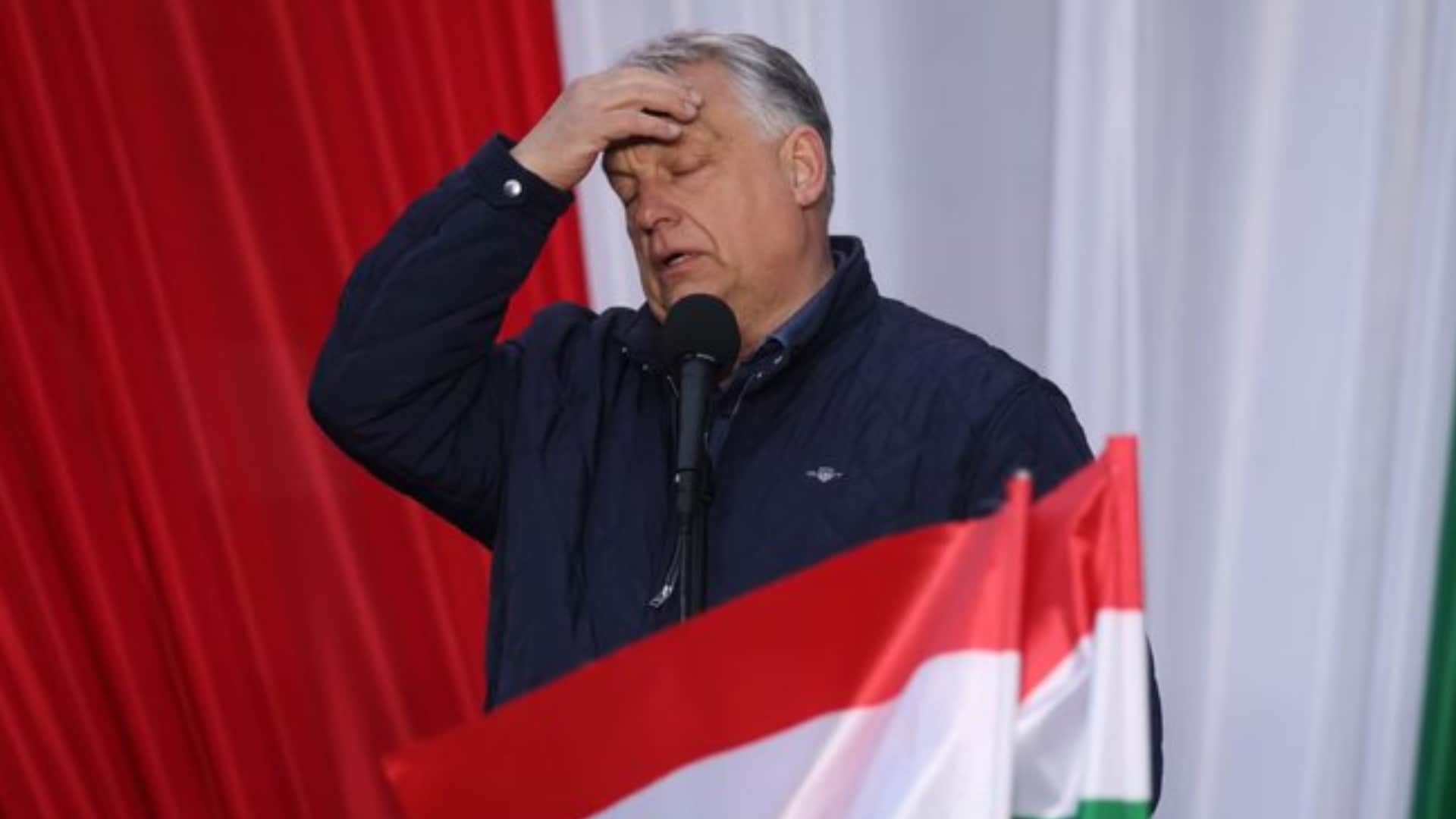
Viktor Orban, the architect of Europe’s most successful "illiberal democracy," finally hit a wall that 16 years of state capture could not dismantle. On Sunday, Hungarian voters delivered a staggering verdict, ousting the Fidesz party in a landslide that handed Peter Magyar’s Tisza party a two-thirds supermajority. The result ends more than a decade of nationalist dominance and signals a sharp pivot back toward the European Union. While the world watches the street celebrations in Budapest, the reality of Orban’s collapse is not just a story of a pro-EU shift, but a systemic failure of a patronage network that grew too heavy for the Hungarian economy to carry.
The Insider Who Cracked the Code
The defeat was not orchestrated by a typical liberal opposition leader. Peter Magyar, a 45-year-old lawyer, spent nearly two decades as a high-level operative within the Orban ecosystem. He knew the pressure points of the regime because he helped build them. His defection in 2024 following a high-profile sex abuse scandal—which forced the resignation of his ex-wife, Justice Minister Judit Varga—provided the first structural crack in the Fidesz monolith.
Magyar’s strategy was surgically precise. He did not run as a progressive revolutionary; he ran as a cleaner, more competent version of the conservative ideal Orban once represented. By maintaining a skeptical distance from "Brussels" while simultaneously promising to restore the rule of law to unlock frozen EU funds, he made it safe for disenchanted Fidesz voters to switch sides. He spent years touring the rural heartlands—the very districts Orban considered his "unbreakable" base—delivering up to seven speeches a day in small towns where the state-controlled media had previously been the only source of information.
The Economic Decay Behind the Slogans
For years, Orban maintained power through a mix of cultural grievance and "Orbanomics"—a system of heavy state subsidies, price caps, and tax breaks aimed at the middle class. But the model had reached its expiration date. While Orban focused on high-level geopolitical posturing, including a controversial "peace mission" to Moscow during Hungary's 2024 EU presidency, the domestic reality was bleak.
The numbers reveal the erosion. After the economy contracted in 2023, growth stalled at a dismal 0.5% through 2024 and 2025. Inflation ravaged the purchasing power of the Hungarian forint, while public services like healthcare and transportation crumbled from a decade of underinvestment. The budget deficit ballooned to 5%, far exceeding the EU’s 3% limit.
Voters were no longer moved by warnings of "war" or "foreign interference" when their local hospitals lacked basic supplies. The record 80% turnout—the highest since the fall of Communism—suggests that the "peace and security" narrative pushed by the government was seen as a facade for economic mismanagement. The youth vote was particularly decisive, with an estimated 65% of voters under 30 siding with the opposition. These are citizens who have known no other leader than Orban and grew tired of a country ranked as the most corrupt in the European Union.
The Collapse of the Kremlin Connection
Orban’s defeat is a significant blow to the Kremlin. As Vladimir Putin’s closest ally in the EU, Orban repeatedly used his veto to stall aid for Ukraine and sanctions against Russia. Recent revelations that top members of his government were sharing confidential EU discussions with Moscow further isolated Hungary on the world stage.
The "Russians go home" chants heard in Budapest on election night were a direct rebuke of this alignment. By framing the election as a choice between East and West, Orban accidentally reminded Hungarians of their own history of Soviet occupation. The strategic error was compounded by high-profile visits from U.S. Vice President JD Vance and Secretary of State Marco Rubio, which were intended to bolster Orban’s standing but instead highlighted his dependence on external nationalist movements rather than domestic results.
Rebuilding a Captured State
Peter Magyar now faces the daunting task of dismantling the "illiberal" framework from within. With a two-thirds majority, he has the legal authority to rewrite the constitution and replace Fidesz loyalists in the judiciary and state media. However, the Orban machine is not just political; it is financial.
Over 16 years, the regime built a vast network of patronage. Major industries, from construction to telecommunications, are controlled by a handful of oligarchs loyal to the former Prime Minister. Stripping these actors of their influence without triggering a total economic collapse will be the new government’s primary challenge.
Magyar has pledged to:
- Restore the independence of the judiciary to unlock over 30 billion euros in suspended EU funds.
- Implement aggressive anti-corruption measures to investigate state tenders.
- End Hungary’s adversarial stance toward NATO and the EU, specifically regarding Ukraine.
The Hard Road for the Resistance
Viktor Orban remains the head of Fidesz. In his concession speech, he signaled a move to a "painful" but active opposition. For the first time in 16 years, he will not have the state treasury or the national airwaves at his disposal.
The immediate fallout will be felt in Brussels, where the "Patriots for Europe" alliance has lost its most influential leader. The shift is likely to pave the way for a massive 90 billion euro loan to Ukraine that Orban had previously blocked. For the rest of the world, Hungary is no longer the blueprint for nationalist populism; it is a case study in its limitations. When a regime prioritizes ideological warfare over the price of bread and the quality of hospitals, even the most sophisticated media machine eventually runs out of fuel.