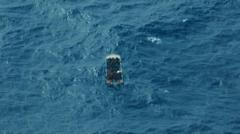
Ten more bodies were pulled from the central Mediterranean this weekend after a wooden craft carrying roughly 60 people overturned 45 nautical miles southeast of Malta. An Italian coastguard vessel recovered the deceased, while a nearby commercial fishing boat managed to haul 48 survivors from the water. This latest disaster matches a grim, recurring geometry of the sea crossing from Libya, where overcrowding and shifting weight turn unseaworthy vessels into death traps within minutes. The core crisis, however, lies not merely in the instability of the boats, but in a fractured maritime jurisdiction where European states increasingly rely on commercial crews and neighboring jurisdictions to deflect direct responsibility for rescue operations.
The incident occurred squarely within Malta’s Search and Rescue (SAR) zone. Yet, as has become standard policy in these contested waters, the physical extraction of bodies and survivors required a patchwork response. While Maltese authorities coordinated the communication, it was an Italian patrol boat that did the heavy lifting, alongside a civilian fishing crew that happened to be in the area. Discover more on a similar issue: this related article.
The Outsource Model of Maritime Safety
European migration strategy along the central Mediterranean route relies heavily on an outsourcing model. Over €700 million has been funneled to Libyan authorities since 2015 to reinforce border management and train the Libyan coastguard to intercept departures before boats reach international waters. When vessels do escape that dragnet, they enter vast SAR zones managed by island nations like Malta, which frequently lack the physical fleet capacity—or the political appetite—to process every vessel in distress.
The reliance on commercial fishing boats and cargo ships to conduct primary rescues is a direct consequence of diminished state-sponsored patrolling. Under international maritime law, any captain is obligated to assist a vessel in distress. Merchant crews now find themselves acting as untrained, ill-equipped first responders. Additional analysis by Reuters highlights similar perspectives on this issue.
When a panicked crowd on an overloaded boat shifts to one side to reach a rescue vessel, the center of gravity vanishes. The craft capsizes instantly. Professional search-and-rescue crews understand how to approach an unstable boat to prevent this sudden displacement of weight. Commercial crews do not.
The Border Paradox
The political reality on the European mainland continues to tighten around the Mediterranean. Recent framework agreements across the European Union have prioritized the swift processing and deportation of asylum seekers to third countries. This political pressure creates an invisible wall at sea.
- Delayed Response Times: State assets are frequently dispatched only after a situation becomes an absolute emergency, rather than when the vessel is first spotted in distress.
- Jurisdictional Hand-offs: Hours are routinely lost determining which nation will accept the legal burden of bringing survivors ashore.
- Deterrence Policies: Criminalizing civilian rescue NGOs has successfully cleared many dedicated search vessels from the water, leaving the deadliest migration corridor in the world largely unmonitored.
According to data from the International Organization for Migration, more than 820 people have died attempting this specific crossing since the start of the year. Last year's total surpassed 1,300. These figures are not anomalies; they are the predictable statistical output of a system designed to deter crossings by withdrawing institutional rescue nets.
The True Cost of Inaction
The physical mechanics of a capsize are simple, but the bureaucratic framework that allows it to happen is complex. When European maritime rescue coordination centers receive a distress call, the immediate objective often appears to be legal insulation rather than rapid deployment. By classifying migrant vessels as "tracked" rather than "distressed," authorities can delay intervention, hoping the boat will drift into a neighboring jurisdiction or be intercepted by Libyan vessels.
This strategy transforms a humanitarian obligation into a game of geographic evasion. The survivors of this weekend’s disaster face an uncertain legal limbo, as the debate over which port constitutes a "place of safety" begins anew.
The Mediterranean maritime infrastructure is broken because it is functioning exactly as intended: as a barrier rather than a highway. Until state-funded, proactive search-and-rescue operations replace the current strategy of containment and buck-passing, commercial vessels will continue to stumble upon capsized hulls, and the death toll will continue to climb.