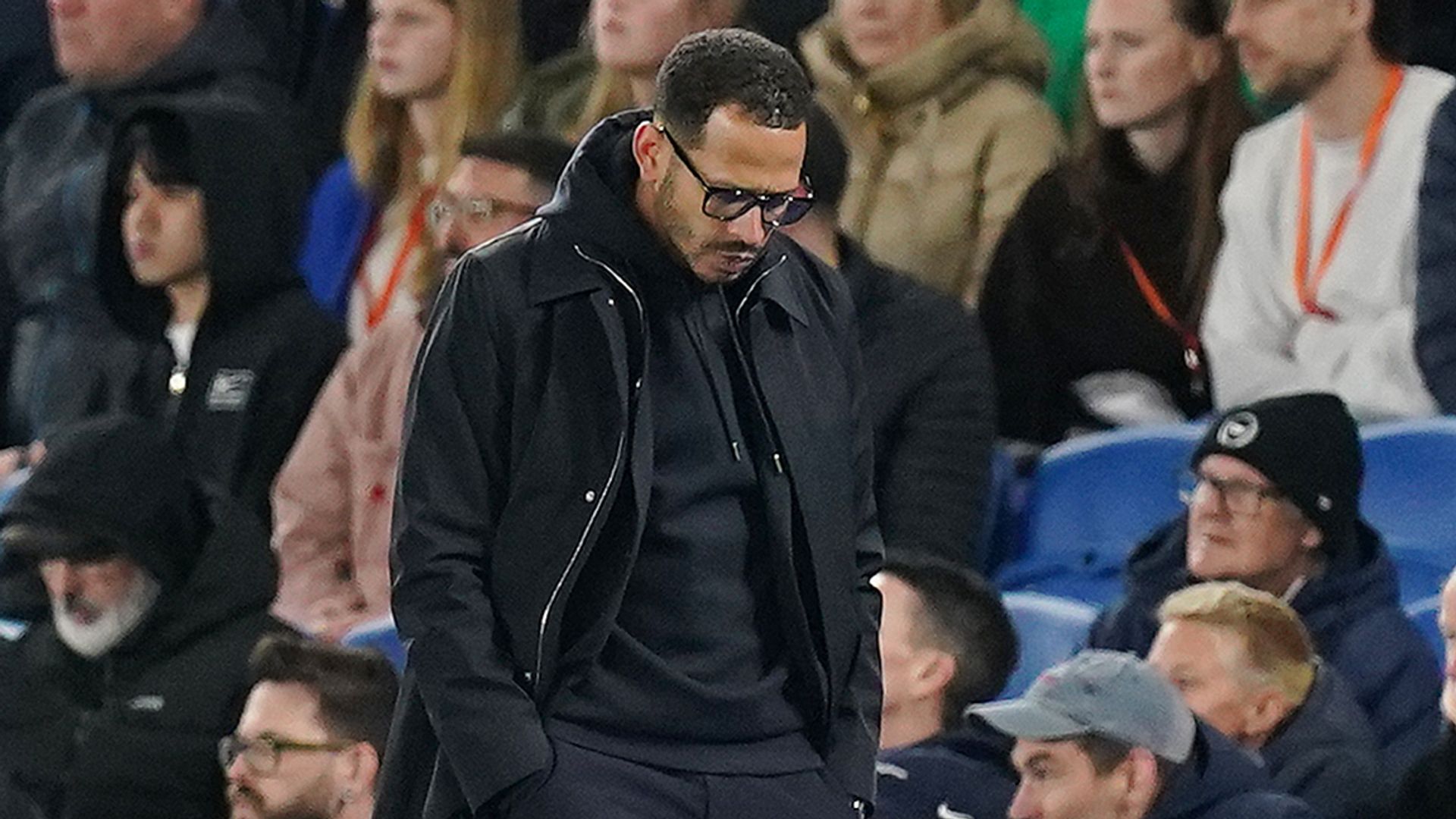
Liam Rosenior has been sacked by Chelsea, an outcome as predictable as it is exhausting. After a 106-day tenure that yielded five consecutive Premier League defeats without a single goal scored, the hierarchy at Stamford Bridge finally severed ties following a 3-0 demolition by Brighton. Rosenior leaves with the second-worst points-per-game record of any Chelsea manager this century, barely eclipsing the ill-fated Graham Potter. For a club that has spent billions to redefine footballing "process," the current reality is a historic regression to 1912—the last time the Blues suffered such a sustained goal-scoring drought.
While the official club statement cites "results and performances below necessary standards," the dismissal of Rosenior is not just a failure of a coach; it is the definitive proof of a systemic rot within the multi-club ownership model. Rosenior was never hired for his tactical CV alone. He was a piece of corporate furniture, moved from the sister club Strasbourg to London to prove that the "BlueCo" ecosystem could produce its own leadership. By firing him before the ink on his six-year contract even dried, Chelsea's owners have admitted that their grand experiment is currently a factory for failure.
The Strasbourg Pipeline and the Illusion of Stability
The appointment of Rosenior in January was framed as a masterstroke of internal synergy. Having shown promise at RC Strasbourg, he was promoted within the BlueCo family to replace Enzo Maresca. The logic was clear: a shared philosophy across clubs would allow a manager to step into the Stamford Bridge pressure cooker with a pre-installed understanding of the data-driven recruitment and stylistic mandates of the board.
It was a fantasy.
The gap between surviving in Ligue 1 and competing for the Champions League at Chelsea is not a gap—it is a canyon. Rosenior found himself managing a bloated, billion-pound squad of individuals who had seen three managers in a single season. The "stability" promised by his long-term contract was a paper shield. When results dipped, the hierarchy did what private equity does when a subsidiary underperforms: they cut the middle manager to protect the asset.
A Historic Scoring Crisis
The numbers are more than just bad; they are an indictment of the recruitment strategy. Under Rosenior, Chelsea’s Expected Goals (xG) plummeted.
- Matches played: 13 (Premier League)
- Goals scored: 12 (Total)
- Consecutive games without a goal: 5
- League position: 7th (7 points off 5th-place Liverpool)
The squad is packed with high-ceiling talent, yet there is no structural floor. Rosenior tried to implement a 3-4-2-1 system that required high-level synchronization, but with a dressing room where players are still introducing themselves to one another, the result was a disjointed mess. The defeat at Brighton was the final straw, not just because of the scoreline, but because of the apathy on the pitch.
Private Equity Logic vs. Footballing Reality
The friction at the top of the club is no longer a secret. While Behdad Eghbali and Todd Boehly are often presented as a united front, the diverging interests of Clearlake Capital and the minority investors are becoming visible. Eghbali recently noted that the decision to fire Thomas Tuchel in 2022 "didn't work out so well," a rare admission of guilt. Yet, the club continues to repeat the same cycle.
They treat managers like software updates. If the new version has bugs, you roll it back or wait for the next patch. But football clubs are emotional and physical ecosystems. You cannot "leverage" a 21-year-old midfielder's potential if he is playing for his fourth manager in 18 months. The board is obsessed with the "why" of the data but has completely ignored the "how" of human management.
The Interim Treadmill
Calum McFarlane now steps in for his second interim stint of the 2025/2026 season. This is the definition of a club in a tailspin. By returning to an interim who was already replaced once this year, the board is effectively admitting they have no immediate plan. They are punting on the FA Cup semi-final against Leeds and hoping a change in "vibes" can salvage European qualification.
The real reason this is failing is the lack of a footballing North Star. Is Chelsea a development project for young assets? Or is it a winning machine? The owners want it to be both simultaneously, refusing to accept the trade-offs required for either.
The Brutal Truth About the Next Appointment
Whoever takes the job next—be it a high-profile "winner" or another project-based coach—will face the same structural sabotage. The squad is a collection of long-term contracts that are nearly impossible to shift, meaning the manager has zero leverage over underperforming stars.
To fix this, the hierarchy must stop looking at Strasbourg or the data labs for the next "undervalued" coach. They need a manager with the institutional weight to tell the owners to stay out of the dressing room. They need a tactical identity that doesn't change every time a new spreadsheet suggests a marginal gain.
If Chelsea continues to treat the head coach position as a disposable component in a multi-club machine, the 1912 records won't just be a historical anomaly. They will be the new baseline. The sacking of Liam Rosenior isn't a fresh start; it's a frantic attempt to stop a bleed that the owners themselves caused.
The process is broken. The "BlueCo" dream is, for now, a nightmare of expensive mediocrity.