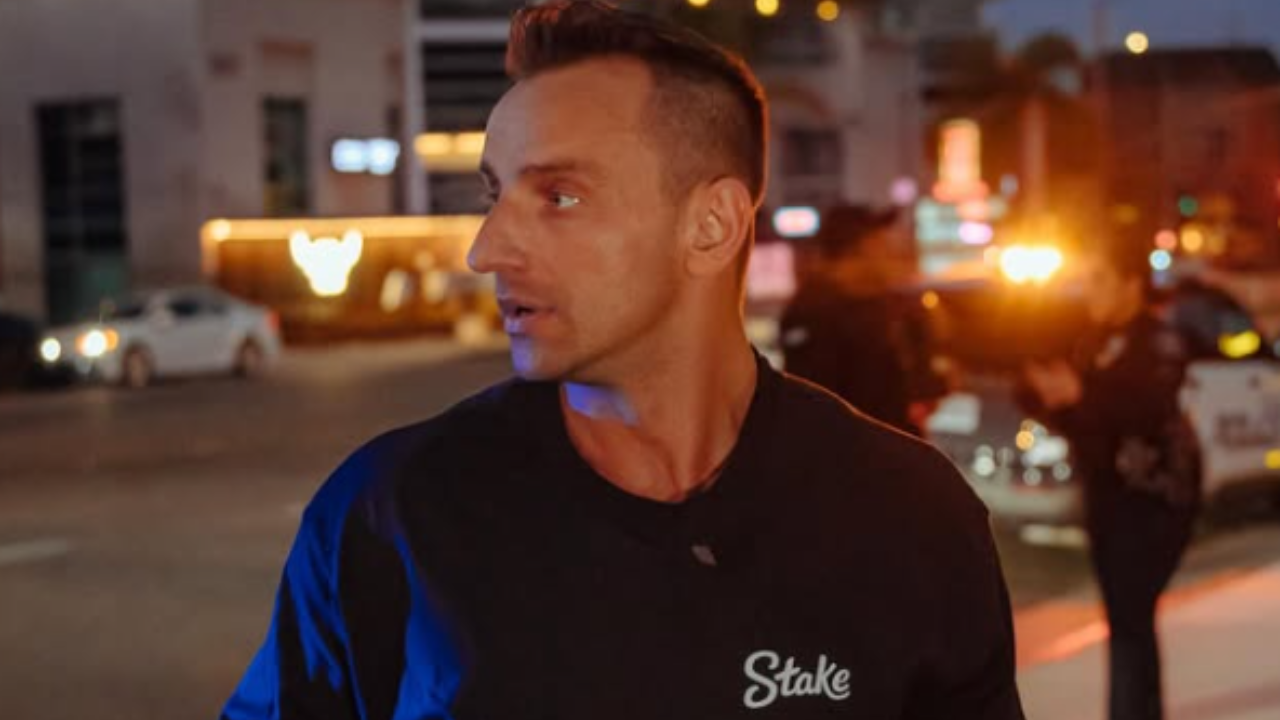
Kick suspended controversial streamer Vitaly Zdorovetskiy on October 28, 2026, citing a violation of its Terms of Service and Community Guidelines under the broad category of endangerment. The enforcement action occurred immediately following a live broadcast of his "Catching Predators IRL" series featuring rapper Lil Pump. While Kick’s automated notice stated that video recordings and screenshots were attached as evidence, neither the platform nor Zdorovetskiy has publicly released the specific clip that triggered the ban, leaving the exact duration of the suspension unconfirmed.
For casual observers, the sudden disappearance of Zdorovetskiy’s channel—replaced by Kick’s standard "Oops, something went wrong" error screen—looks like another routine moderation hiccup on a platform built on chaos. That reading misses the larger picture. The October 2026 suspension is not an isolated incident; it is the predictable collision between high-stakes vigilante content, mounting legal liabilities, and a streaming platform slowly realizing that unregulated real-life (IRL) stunts carry existential business risks. In similar updates, read about: The Architecture of Creative Longevity Behind Patrick Stewart and Ian McKellen.
Inside the October 28 Broadcast and the Endangerment Clause
To understand why Kick pulled the plug, you have to look at what transpired during the broadcast itself. During the late October livestream, Zdorovetskiy and his production crew staged another confrontation in his ongoing "Catching Predators" series, this time alongside Lil Pump. Footage circulating from the stream showed Zdorovetskiy’s team cornering a man inside a house, accusing him of inappropriate physical contact caught on hidden room cameras, and repeatedly demanding that the visibly distraught subject call his wife while cameras rolled.
Kick’s moderation team responded with a formal suspension notice citing endangerment. In platform trust and safety terminology, "endangerment" is a deliberate catch-all. Unlike copyright strikes or explicit nudity violations, which are binary and easy to verify, endangerment covers a spectrum of physical and psychological hazards. It applies when a broadcast creates an immediate risk of physical violence, encourages doxxing, facilitates unlawful detention, or subjects non-consenting third parties to severe harassment. Deadline has also covered this important subject in great detail.
When Zdorovetskiy posted a screenshot of the suspension email to X, he highlighted the lack of granular detail in the text. Yet the email explicitly noted that video recordings and screenshots were included in the private correspondence sent to the creator. Zdorovetskiy chose not to share those attachments. That omission matters. Creators who are genuinely blindsided by algorithmic errors almost always publish the offending clip to rally their audience against unfair moderation. When a veteran provocateur keeps the evidence private, it usually means the footage is indefensible even to his own fanbase.
A Pattern of Escalation and Legal Blowback
Platforms rarely hand down abrupt suspensions for a single borderline broadcast unless there is an established history of severe infractions. Zdorovetskiy’s track record over the past two years reads less like a content calendar and more like a docket of international legal crises and platform warnings.
Consider the timeline leading up to October 2026:
- November 2024: Kick previously suspended Zdorovetskiy after a predator-sting broadcast spiraled out of control, resulting in a confronted individual stripping naked on camera. That same year, a separate man featured in one of the streams filed a lawsuit in California alleging he had been falsely labeled a predator.
- April 2025 to January 2026: Zdorovetskiy spent roughly nine months detained in the Philippines. Authorities arrested him in Metro Manila on multiple criminal charges—including three counts of unjust vexation, theft, and public harassment—stemming from stunts broadcast live on Kick. Following months in custody under the Bureau of Jail Management and Penology, he was deported to Russia and permanently blacklisted from the Philippines in January 2026.
- April 2026: Barely three months after returning to streaming, Zdorovetskiy’s crew botched a sting operation in Santa Ana, California. They broadcast the face and identity of a man named Akash Singhania, accusing him of attempting to meet a minor. Zdorovetskiy later issued a public apology admitting his decoy had never clearly stated her age, clearing Singhania of all wrongdoing. Singhania subsequently detailed the devastating fallout of the broadcast, citing waves of targeted racism, bullying, and real-world harassment. Kick suspended Zdorovetskiy’s channel following that incident as well.
Viewed against this backdrop, the October 2026 suspension looks less like a sudden crackdown and more like a platform hitting its liability ceiling. Every time Zdorovetskiy goes live with an unscripted confrontation, Kick’s legal department inherits the risk of defamation suits, physical altercations, or criminal investigations.
The Economics of Vigilante Livestreaming
Why do creators keep returning to vigilante stings despite repeated bans, lawsuits, and prison time? The answer lies in the brutal attention economy of live video.
Standard IRL streaming—walking through a city, talking to chat, visiting restaurants—suffers from steep viewer drop-off. Keeping tens of thousands of concurrent viewers glued to a screen requires constant narrative tension. Vigilante predator stings manufacture that tension cheaply and reliably. They offer an instant villain, a clear moral binary, high emotional volatility, and the ever-present threat of physical violence. For an audience conditioned to crave extreme spectacle, watching someone’s life implode in real time generates massive engagement spikes, clip velocity on X, and lucrative subscription surges.
Bringing in a high-profile celebrity guest like Lil Pump amplifies that dynamic exponentially. Celebrity co-signs lend mainstream legitimacy to fringe formats while pulling in cross-platform audiences who might not normally watch IRL streams. However, adding famous guests and larger production crews also increases the pressure to deliver a dramatic climax. When a sting fails to produce a clear-cut confession or dramatic chase, crews face an unspoken incentive to manufacture intensity—cornering subjects in private residences, refusing to let them leave, or browbeating them on camera to salvage the broadcast.
That exact pressure is what turns amateur sting operations into legal minefields. Trained law enforcement officers operate under strict evidentiary rules, chain-of-custody protocols, and constitutional constraints specifically designed to prevent entrapment and protect innocent people. Livestreaming crews operate under the exact opposite incentives: they need content immediately, they have zero investigative training, and they are financially rewarded for maximizing public humiliation before any facts are verified.
Kick’s Moderation Dilemma
To understand the timing of this suspension, you also have to examine the evolving business pressures facing Kick itself. Launched as a permissive alternative to Twitch, Kick initially built its market share by welcoming creators who had been exiled from stricter platforms. Its pitch to talent was simple: keep 95 percent of your subscription revenue and broadcast without walking on eggshells.
That laissez-faire philosophy works well enough for edgy gaming commentary or abrasive talk shows. It breaks down completely when applied to real-world vigilantism.
As Kick matures and seeks mainstream advertising partnerships, payment processor stability, and app store distribution, high-liability IRL streams become an anchor. Payment processors like Stripe and major banking partners maintain strict acceptable-use policies. Platforms that repeatedly host non-consensual filming in private spaces, false accusations of severe crimes, or potential unlawful detainment risk losing their financial infrastructure. Furthermore, under evolving digital safety frameworks and civil liability precedents, a platform that repeatedly reinstates a creator after documented real-world harm loses the ability to claim ignorance when the next lawsuit arrives.
Kick’s decision to cite endangerment rather than a minor community infraction signals that its trust and safety team is evaluating the physical and legal risk of the broadcast rather than just counting chat reports. Even if the suspension turns out to be temporary—as some industry observers noted following the initial wave of permanent-ban rumors on X—the message to top-tier IRL creators is unmistakable. The era of absolute impunity on alternative streaming platforms is narrowing.
What Creators and Viewers Get Wrong About Platform Bans
Whenever a major streamer disappears from a platform, the immediate reaction across social media splits into two predictable camps: fans screaming censorship and critics celebrating a permanent exile. Both reactions misunderstand how modern platform enforcement operates.
First, a suspension for endangerment is rarely about free speech; it is almost always about risk mitigation. Private platforms do not ban profitable, high-traffic channels out of moral outrage. Zdorovetskiy draws massive concurrent viewership, which translates directly into platform relevance and traffic. Kick loses active eyeballs every day his channel remains offline. Pulling the plug requires the internal risk calculation to tip decisively—meaning the projected cost of legal exposure, PR damage, or regulatory scrutiny outweighs the revenue and attention the creator brings in.
Second, temporary suspensions on Kick frequently function as cooling-off periods rather than permanent divorces. Unlike Twitch, where indefinite bans often mean permanent exile, Kick has historically used short-to-medium-term suspensions to force creators to scrub offending VODs, let news cycles pass, and adjust their format before returning. Whether Zdorovetskiy returns in a week, a month, or never depends entirely on what is inside the undisclosed video attachments Kick sent him—and whether any local law enforcement agencies or subjects from the October 28 stream decide to press charges.
The Future of Unregulated IRL Content
If Zdorovetskiy’s channel is eventually restored, he will face a shrinking set of options. Rival platforms like Rumble are frequently floated by fans as a frictionless backup whenever a Kick ban hits, yet even alternative video hosts face mounting pressure from app stores and advertisers when content crosses into real-world harassment or defamation.
More importantly, the audience itself is showing signs of fatigue with sloppy vigilante content. The fallout from the April 2026 Santa Ana incident—where an innocent man’s life was upended because a streaming crew failed to verify basic chat logs—exposed the fundamental flaw of crowd-sourced justice. Viewers may tune in for chaos, but the appetite for watching unverified accusations ruin strangers’ lives has sharp limits, especially when the creators themselves end up issuing humiliating retractions weeks later.
Until streaming platforms establish clear, enforceable guardrails around filming non-consenting members of the public, creators chasing the next viral spike will continue pushing right up against the edge of the law—and platforms will keep hitting the emergency brake only after the damage is already broadcast live to thousands of people.
For further context on how earlier wrongful accusations during these livestreams triggered platform backlash, watch Vitaly Ban on Kick After Falsely Accusing an Innocent Person, which breaks down the April 2026 controversy and immediate fallout.