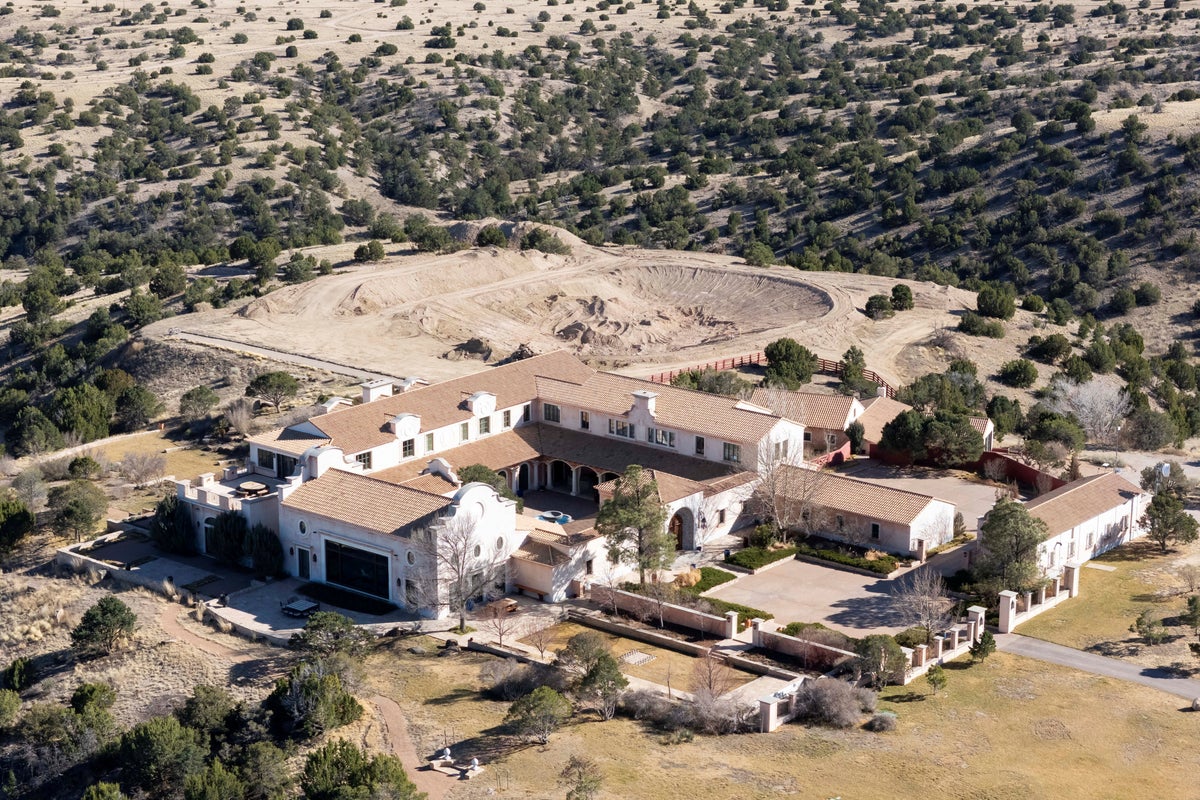
The federal government is systematically choking off the last remaining avenue for criminal accountability in the Jeffrey Epstein saga. By withholding unredacted investigative files, the United States Department of Justice has effectively paralyzed New Mexico's active criminal probe into the late sex offender’s 7,600-acre Zorro Ranch. New Mexico Attorney General Raúl Torrez confirmed that more than 130 days have passed since his office requested the unredacted records, a delay that local prosecutors say is actively eroding the foundation of a potential state-level prosecution. This is not a matter of bureaucratic inertia. It is a deliberate stonewalling tactic that protects powerful co-conspirators.
For nearly three decades, the sprawling compound outside Santa Fe served as a primary site for the trafficking and abuse of young women and girls. When federal authorities took control of the overarching case in 2019, they instructed local law enforcement to back off, promising a comprehensive federal resolution. They did not deliver. Now, the state is trying to pick up the pieces of an abandoned investigation, only to find that the federal gates are locked from the inside.
The Illusion of Federal Transparency
Late last year, a bipartisan congressional mandate forced the Department of Justice to release millions of pages of internal files related to Epstein. The public was led to believe that the era of secrecy had ended. The reality on the ground is entirely different. The documents released to the public, and subsequently provided to state prosecutors, are so heavily obscured by black ink that they are virtually useless for law enforcement purposes.
Names of witnesses, co-conspirators, financial enablers, and institutional protectors remain hidden. This lack of transparency prevents state investigators from building a credible chain of evidence. To make matters worse, members of Congress who attempt to view the unredacted materials are subjected to absurd security protocols. Lawmakers are forced to travel to a secure federal annex, sit at a handful of designated terminals, and read files while federal handlers watch their every move. If elected representatives face this level of friction, a state attorney general stands little chance of obtaining the truth through standard administrative channels.
The obstruction is happening in real time. Torrez sent a scathing demand to Acting Attorney General Todd Blanche, laying bare the consequences of federal non-compliance. Every day the federal government sits on these files, the clock runs out on justice. Witnesses move away and become impossible to track down. Memories of survivors, already fractured by decades of trauma, naturally degrade. Physical evidence at the ranch, which changed hands when the estate sold it, erodes under the desert sun.
The Halted Search of Zorro Ranch
This pattern of federal interference is not new. It dates back to the immediate aftermath of Epstein’s death in a Manhattan jail cell. In 2019, then-New Mexico Attorney General Hector Balderas prepared to execute a full-scale investigation into the Zorro Ranch compound. His office was organized, mobilized, and ready to deploy state assets to search the property for hidden cameras, physical logs, and forensic data.
The federal government stepped in with an explicit directive. Federal prosecutors asked Balderas to stand down, claiming that local interference would jeopardize a broader, national racketeering case. Balderas complied under the assumption that the Federal Bureau of Investigation would thoroughly sweep the property.
They never did.
Internal records recently brought to light reveal that the FBI never executed a comprehensive search of the New Mexico property during that critical window. Federal officials later claimed they lacked sufficient probable cause to secure a warrant, an assertion that state prosecutors found baffling given the volume of survivor testimony identifying the ranch as a hub of abuse. The federal case was quietly wrapped up without a single local raid, leaving the vast property unexamined for years. Balderas later described this sudden federal retreat as the early signs of an institutional cover-up. The jurisdiction was effectively cleared of local investigators, giving anyone remaining on the property ample time to sanitize the premises.
Missing Girls and Shifting Dirt
The stakes of the renewed New Mexico investigation extend far beyond financial records and names on a flight log. Hidden deep within the partially unredacted federal files is a chilling November 2019 email sent to a local radio host, which was later obtained by investigators. The message, sent by an individual claiming to be a former employee at the ranch, contained a specific and horrifying allegation. Somewhere in the vast dirt hills outside the main Zorro Ranch compound, two foreign national girls were buried on the direct orders of Jeffrey Epstein and Ghislaine Maxwell.
This tip went uninvestigated by federal authorities for years. When the state reopened its criminal probe, state police and local sheriff deputies finally initiated ground operations at the ranch. The current owners of the property have permitted access, but conducting a forensic archaeological search across 7,600 acres of rugged terrain without the accompanying federal interview notes is an monumental task.
Investigators are essentially flying blind. The unredacted files held in Washington contain the identity of the email sender, the context of their employment, and the specific geographic coordinates or landmarks discussed during subsequent federal interviews. By withholding those details, the federal government is not just delaying a records request. They are actively impeding the discovery of potential homicide victims.
The Power Network in the High Desert
The resistance from Washington highlights a broader reality. Zorro Ranch was not just a secluded retreat. It was a localized power center where high-profile figures mingled away from the prying eyes of East Coast media. Former New Mexico Governor Bill Richardson and various other political and business elites were frequent topics of discussion in early investigative notes.
The bipartisan Survivor’s Truth Commission, established by the New Mexico legislature, has recently issued a wave of subpoenas targeting major financial institutions, various US Attorneys offices, and state executive records. The commission aims to map out the financial and political network that allowed Epstein to operate a human trafficking hub in the state without local interference for nearly thirty decades.
The federal government's refusal to hand over clean records suggests a deep-seated institutional fear of what a localized, independent state prosecution might uncover. A federal prosecution can be controlled, managed, and quietly settled behind closed doors in Washington or New York. A state-level attorney general, backed by a local grand jury and state police investigators, is much harder to manage from a distance.
The Department of Justice continues to maintain publicly that it stands ready to assist New Mexico, offering vague platitudes about cooperation while sitting on the actual evidence. This boilerplate public relations strategy is designed to deflect media scrutiny while the clock quietly runs out on the statute of limitations for various state-level offenses. The state has the will, the jurisdiction, and the police power to dig up the truth. It simply lacks the pages that Washington keeps locked away in the dark.
The time for polite diplomatic correspondence between state and federal officials has passed. If the unredacted files are not delivered immediately, the New Mexico Department of Justice must bypass administrative channels entirely, utilize its independent grand jury powers to subpoena federal officials directly, and force an open courtroom showdown over who is truly protecting the remnants of the Epstein network.