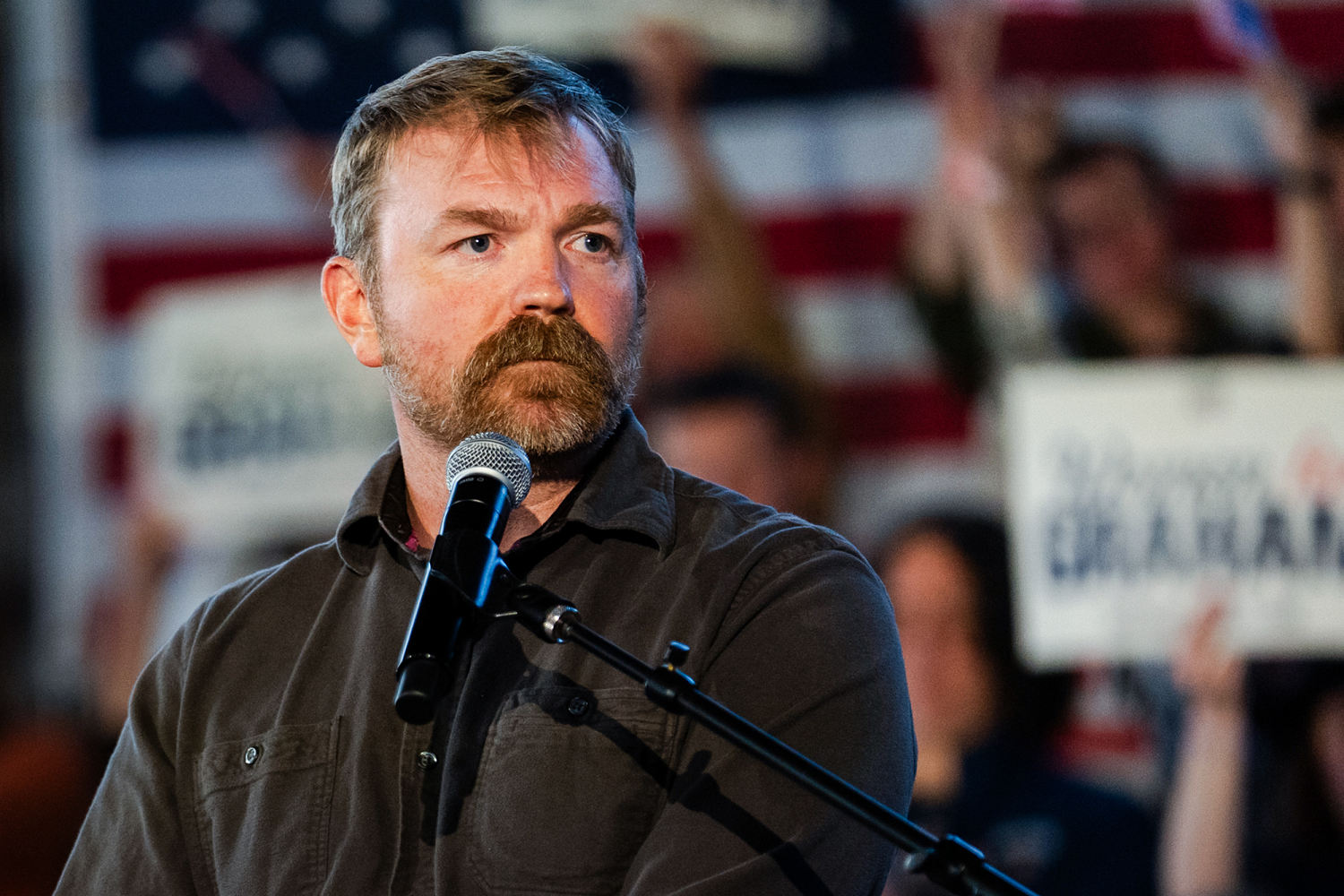
National Democrats are facing a quiet, agonizing panic in Maine because their absolute best chance to flip a crucial United States Senate seat has dissolved into a nightmare of candidate vetting failures. The party entered the current cycle believing that veteran Republican Senator Susan Collins was finally vulnerable, positioning Maine as the linchpin of their strategy to recapture the Senate majority. Instead, just days before the June 9 primary election, the Democratic establishment finds itself handcuffed to an insurgent candidate whose campaign is severely compromised by a compounding series of personal scandals.
The anxiety gripping the state party goes far deeper than typical electoral jitters. It stems from a structural trap of their own making. When the state's most formidable Democrat, Governor Janet Mills, abruptly suspended her Senate campaign in late April, she left a vacuum that was quickly filled by Graham Platner, an oyster farmer and political outsider who built a powerful, populist movement among working-class voters. Now, the party is stuck with him.
The Drip of Scandals and the Primary Trap
Platner initially captured the imagination of Maine voters by presenting himself as an authentic, anti-establishment figure willing to take on corporate interests, corporate ownership of sports teams, and the billionaire class. His momentum appeared unstoppable. However, national strategists watched in horror as his background began to unravel under scrutiny, revealing a series of liabilities that would tank a candidate in any standard election cycle.
First came the revelation that Platner possessed a tattoo widely recognized as a Nazi symbol, which he hastily claimed to have covered up while asserting his ignorance of its meaning. Then came a wave of explicit text messages and sexting allegations with multiple women while married, a development that forced his campaign into a continuous damage-control posture. Just days ago, the situation deteriorated further with a report from an ex-girlfriend alleging physical misconduct, including an incident where he allegedly twisted her arm and held her in a room—an accusation Platner has vehemently denied.
Under normal circumstances, a candidate carrying this much baggage would be abandoned by the party apparatus. But the institutional Democrats are completely toothless in this scenario for several structural reasons.
- The Ballot Deadline: Governor Mills withdrew far too late for a viable establishment alternative to mount a serious campaign. While her name remains on the ballot, she is out of the race.
- The Lack of Alternatives: The only other active Democrat on the ballot is David Costello, a policy-focused candidate who has consistently polled in the single digits and has failed to capture the electorate's enthusiasm.
- The Semi-Closed Primary System: Maine allows unenrolled or independent voters to participate in partisan primaries. Platner's anti-establishment, populist message appeals directly to these independent voters, who are insulating him from the disapproval of traditional party loyalists.
Why the Washington Establishment is Trapped
The reaction from national Democratic leaders illustrates the raw, pragmatic desperation defining modern congressional politics. Senate Majority Leader Chuck Schumer met with Platner in Washington to assess the damage, but rather than demanding he step aside, Schumer publicly maintained that the party intends to back him to defeat Collins. High-profile progressive figures, including Representative Ro Khanna and Senator Arizona's Ruben Gallego, have continued to provide public support or campaign appearances.
This calculation is not born out of affection for Platner; it is driven by cold, hard math. The path to a Democratic Senate majority is exceptionally narrow, requiring victories in defensive territory across the country while picking off at least one or two Republican-held seats. Maine was supposed to be the easiest pickup. If national Democrats cut ties with Platner now, they effectively concede the seat to Susan Collins months before the general election even begins.
Yet, backing an embattled candidate creates an incredibly high-risk gamble. While Platner is poised to win the June 9 primary due to early voting momentum and a fractured opposition, his viability in a general election against a seasoned campaigner like Collins is highly questionable.
The Collins Defensive Fortress
Susan Collins has survived decades in Maine politics by mastering a highly specific brand of independent, New England republicanism. While national polarization has eroded some of her crossover appeal, she remains an exceptionally disciplined campaigner with deep roots in the state's more conservative, rural Second Congressional District.
Maine Political Landscape (2026 Primary Dynamics)
┌─────────────────────────────────────────────────────────┐
│ First Congressional District (Liberal/Coastal)           │
│ - Stronghold for traditional Democratic establishment   │
│ - Deeply uncomfortable with Platner's personal scandals  │
└─────────────────────────────────────────────────────────┘
                            │
                            ▼
┌─────────────────────────────────────────────────────────┐
│ Second Congressional District (Rural/Working Class)     │
│ - Populist tilt, highly independent voters              │
│ - Platner's core base vs. Collins' historical strength   │
└─────────────────────────────────────────────────────────┘
To defeat Collins, a Democrat must achieve two things: maximize turnout in the liberal, coastal First Congressional District around Portland, and peel away working-class independents in the Second District.
Platner's populism was explicitly designed to win over the Second District. However, the nature of his scandals threatens to completely alienate suburban women and highly educated progressives in the First District—the exact voters who form the baseline of any statewide Democratic victory. If those voters stay home in November out of disgust or disillusionment, the party's path to victory completely evaporates.
The Ranked-Choice Factor
Some party optimists point to Maine's use of ranked-choice voting (RCV) as a potential safety net. They argue that in a multi-candidate field, independent or third-party voters could list Platner as a second choice, pushing him over the top if no candidate wins an outright majority in the first round.
This argument ignores how RCV actually functions under high polarization. If a candidate's personal negatives are high enough, voters do not rank them second; they leave them off the ballot entirely. A hypothetical example illustrates the danger: if 15% of moderate voters choose a third-party centrist candidate and explicitly refuse to rank Platner due to the domestic allegations, those votes will never cascade to him in subsequent rounds of counting. RCV rewards candidates with broad appeal and low negative ratings, precisely the opposite of Platner's current trajectory.
The state party's convention in Portland earlier this May was intended to be a showcase of unity and organization. Instead, it felt like a gathering of delegates trying to ignore an approaching storm. The institutional party can pump millions of dollars into television ads attacking Collins, but they cannot erase the public record of their own nominee's text messages or the serious allegations raised by his former partners.
Democratic voters in Maine are experiencing dread because they see the trap clearly. They are being forced to choose between a deeply flawed, scandal-plagued populist who holds the official party banner, or abandoning the race and handed a crucial Senate seat to the opposition without a real fight. It is a crisis born of poor vetting, late strategic withdrawals, and an over-reliance on outsider novelty over structural durability. The primary on Tuesday will formalize this dilemma, locking the party into a high-stakes gamble that could cost them control of the Senate.
Maine Senate candidate faces new allegations as Dems weigh next steps
This broadcast provides immediate local reporting and journalistic context regarding the specific domestic allegations and campaign turmoil currently surrounding the Maine Democratic primary race.