Incumbent Representative Blake Moore secured the Republican nomination for the U.S. House in Utah's 2nd Congressional District on Tuesday night, fending off a fierce intraparty challenge from state Representative Karianne Lisonbee. Preliminary results show Moore leading with 58 percent of the vote to Lisonbee's 42 percent. This victory advances Moore to November's general election in a deep-red district where he is heavily favored to win. Yet, the raw numbers tell only a fraction of the story. Beneath this victory lies a brutal, court-mandated redistricting battle that shattered safe seats and turned Utah's conservative establishment against itself.
To understand why this primary became a political knife fight, one has to look back at the dramatic transformation of Utah's political boundaries. Late last year, a state judge tossed out the congressional maps drawn by the Republican-controlled legislature. The court effectively reinstated Proposition 4, a voter-approved anti-gerrymandering initiative from 2018.
The consequences of that legal decision were immediate and chaotic.
The court-selected map completely reconfigured the state. It transformed Congressional District 1, which Moore previously represented, into a safe seat for Democrats by concentrating urban voters. This left three sprawling, ultra-conservative districts for the state's Republican incumbents to fight over. Instead of running in his familiar territory, Moore was forced to shift into the newly drawn 2nd Congressional District. The new boundaries wrapped around northern Utah, encompassing Box Elder, Cache, Rich, and Davis counties, along with the majority of Weber County. It was a safer seat for a Republican in November, but a minefield for an incumbent in June.
The Irony of the Anti Gerrymandering Fight
Political rivalries in Utah run deep, but this race exposed a bizarre, circular irony that defined the entire campaign.
Years ago, before he wore a congressional pin, Moore served as a co-chair for Better Boundaries. This was the exact advocacy organization that pushed for Proposition 4, funding the legal machinery that ultimately dismantled the legislature's maps.
Lisonbee and her allies seized on this history with relentless force. Throughout the spring, her campaign hung a specific moniker around Moore's neck, branding him "Salt Lake Blake." The label was designed to signal to rural and suburban northern Utah conservatives that Moore was an elite outsider, a creature of the moderate establishment who had paved the way for Democrats to lock down a congressional seat in Salt Lake County.
The attack had teeth. For grassroots activists who view the state legislature as the ultimate authority on Utah sovereignty, Moore's historical alignment with an anti-gerrymandering group looked less like civic engagement and more like political betrayal.
Lisonbee argued that the new map was an artificial creation of the courts, pushed into existence by the very movement Moore had helped guide. In debate halls and local party meetings, she hammered the narrative that Moore was running from the blue monster he had helped create, seeking refuge in a deeply conservative northern district that he did not truly understand.
Convention Purges Meet the Signature Gathering Reality
The conflict reached its first boiling point at the Utah Republican State Convention in April.
Utah maintains a unique dual-track system for ballot access. Candidates can secure a spot on the primary ballot by winning the support of state delegates at the convention, or they can bypass the delegates entirely by gathering thousands of signatures from registered party members.
For decades, the convention system has served as a filter managed by the party's most ideological and energetic activists. These delegates routinely reject well-funded incumbents in favor of hardline challengers.
The 2026 convention followed that exact script.
Delegates inside the convention hall were furious with Moore. They pointed to his voting record on federal spending packages and his status as vice chairman of the House Republican Conference as evidence that he had gone native in Washington. When the ballots were counted at the convention, Lisonbee won a resounding victory, capturing roughly 61.5 percent of the delegate votes. Moore turned in a dismal performance, capturing just 33.7 percent.
Under old party rules, a performance that weak would have ended Moore's congressional career on the spot.
But Moore had built a defensive wall months in advance. Recognizing that the convention delegates were hostile to his style of governing, his campaign spent hundreds of thousands of dollars deploying professional signature gatherers across northern Utah. By the time he walked onto the convention stage, he already had the verified signatures required to force a primary election, regardless of what the delegates decided.
This system creates a recurring disconnect in Utah politics. The convention delegates picked Lisonbee. The broader, more moderate primary electorate picked Moore.
The division split the state's highest-ranking elected officials down the middle. Utah Senate President Stuart Adams threw his weight behind Moore, representing the business-minded, institutional wing of the state GOP. Meanwhile, Utah House Speaker Mike Schultz endorsed Lisonbee, signaling that the local legislative branch viewed Moore as an ideological adversary.
Trump and House Leadership Provide the Ultimate Cover
If Moore was vulnerable on his home turf due to his redistricting history, he held an unbeatable advantage in Washington currency.
Lisonbee campaigned as the true America First conservative in the race. She promised to join the House Freedom Caucus and fight the federal bureaucracy with aggressive tactics. Yet, when it came time for the ultimate endorsement in modern Republican politics, the calculation shifted entirely toward the establishment incumbent.
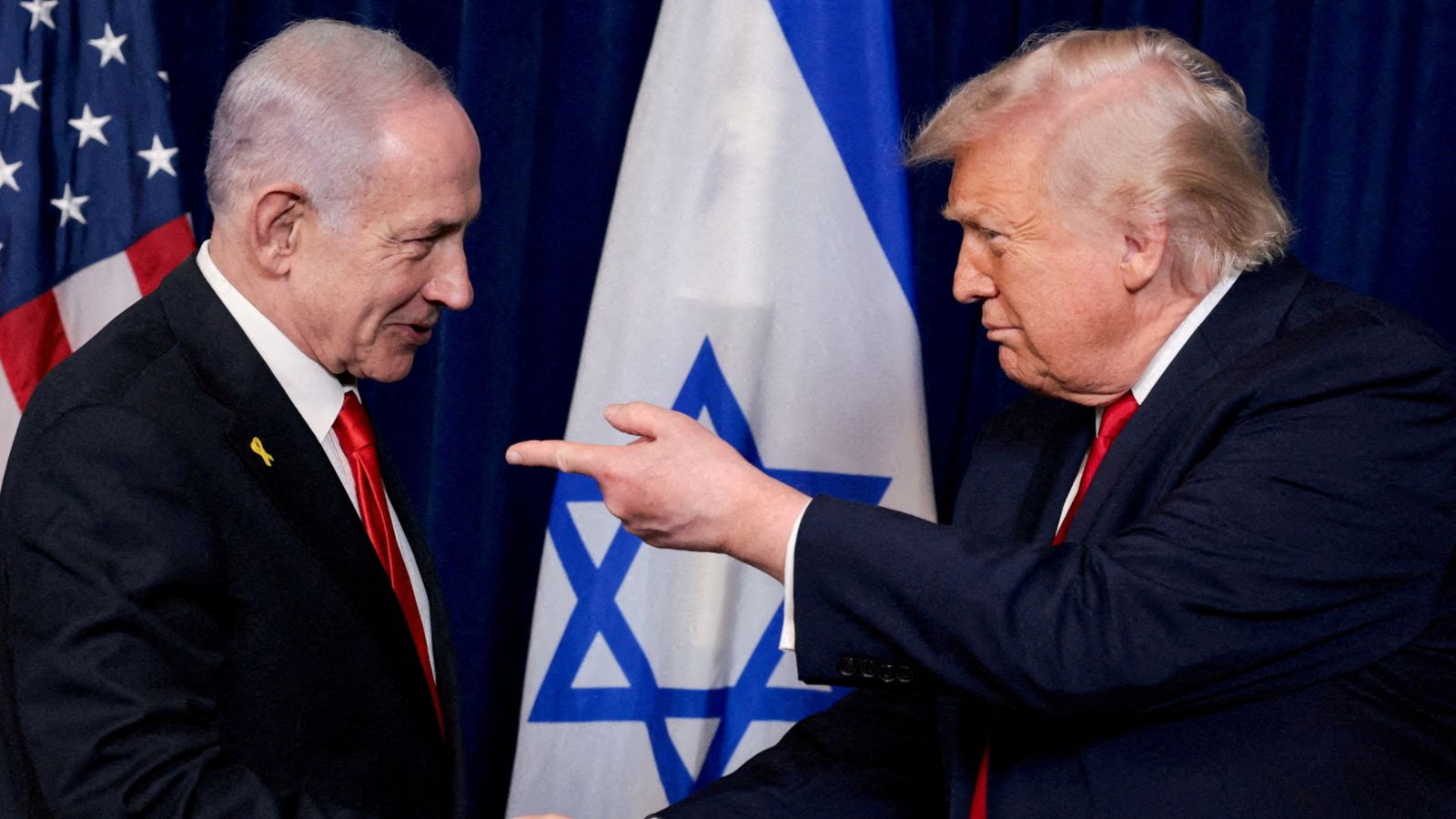
Donald Trump endorsed Blake Moore.
So did House Speaker Mike Johnson.
For local activists trying to paint Moore as a rogue centrist, Trump's endorsement was a devastating blow to their rhetorical strategy. It allowed Moore to brush off Lisonbee's criticisms with a simple counter-argument. He wasn't a Washington insider selling out Utah; he was a trusted lieutenant of the national conservative movement, validated by the leader of the party.
Moore's campaign materials flooded mailboxes with images of the incumbent alongside Trump, effectively neutralizing Lisonbee's attempts to outflank him from the right. Moore pointed to his seat on the powerful House Ways and Means Committee and his role in national leadership as assets that Utah could not afford to lose. His message to voters was pragmatic. He argued that influence in Washington is built on seniority and structural positioning, not just fiery speeches on the House floor.
Lisonbee tried to convince voters that these federal endorsements were merely standard political favors traded among party elites. She argued that Washington leadership always protects its own, regardless of how poorly an incumbent serves their constituents at home. But for the average primary voter in Weber or Davis county, a presidential endorsement carries immense weight. It cut through the local noise regarding redistricting lawsuits and committee co-chairmanships.
The Long Term Fractures of Utah Conservative Politics
The primary results provide a clear map of where the power lies in Utah, but they also highlight a growing stability problem for the state's political infrastructure.
Moore's 16-point victory shows that the signature route remains an effective tool for institutional Republicans to survive grass-roots rebellions. However, the costs of these campaigns are skyrocketing. Relying on signature gathering requires an immense financial apparatus that shifts power away from local volunteers and toward wealthy donors who can bankroll the signature collection drives.
This creates an environment where internal resentment will likely worsen.
The activists who spend their weekends attending precinct caucuses and vetting candidates feel increasingly ignored. They see their convention votes overridden by expensive media campaigns funded by out-of-state political action committees. On the other side, institutional leaders view the convention delegates as an unrepresentative minority that consistently tries to nominate unelectable candidates.
The battle for the 2nd Congressional District was not an isolated incident. It was a symptom of a larger struggle over who controls the identity of Utah conservatism.
With the general election approaching, Moore will easily defeat his Democratic and third-party opponents in this heavily conservative territory. The real challenge will be governing a district where nearly half of his own party's primary voters actively wanted him gone, and where the wounds of a court-ordered map are still fresh.