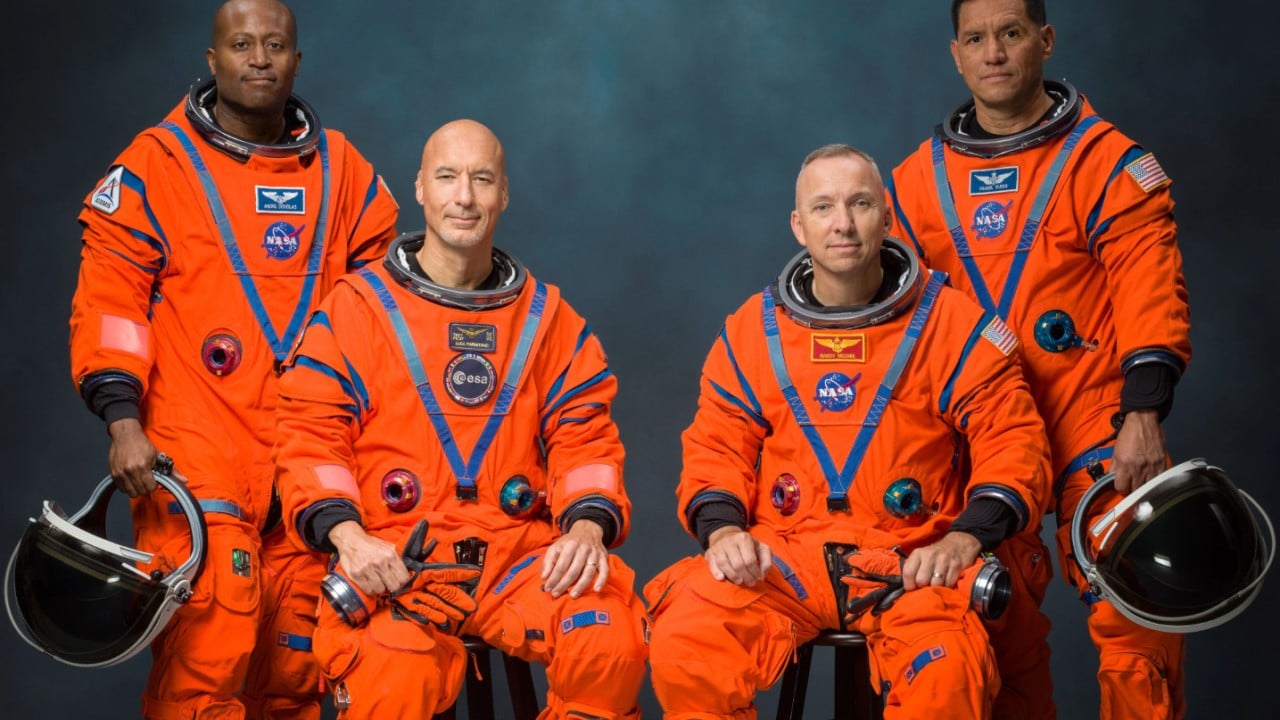
NASA Administrator Jared Isaacman spent the morning of June 10 managing an unexpected public relations firestorm. Less than twenty-four hours after the agency unveiled the four-man crew for the upcoming Artemis III orbital mission, online communities erupted in protest over the lack of a female astronaut. Critics accused the agency of abandoning its high-profile promises of modern, inclusive space exploration.
The backlash misses the cold, operational reality of human spaceflight. NASA selected Randy Bresnik, Luca Parmitano, Frank Rubio, and Andre Douglas because the agency needs a highly specific mix of extreme long-duration flight experience, deep-sea survival training, and engineering expertise to execute a wildly altered mission profile. Artemis III is no longer a moon landing; it is a high-stakes infrastructure shakedown in low Earth orbit. Gender politics did not dictate this roster. Availability, hardware delays, and the brutal mathematics of the astronaut pipeline did.
The Secret Flight Manifest That Dictated the Crew
To understand why the crew looks the way it does, you have to look at the active astronaut corps as a high-stakes chess board. Right now, NASA has only about 35 active-duty astronauts available for assignment. That pool is instantly halved when you subtract the individuals currently locked into long-duration rotations aboard the International Space Station, those in mandatory post-flight recovery, and those assigned to senior management roles on Earth.
Astronaut selection is governed by invisible constraints that the public rarely sees.
- The International Treaty Quota: Because the European Space Agency contributes the vital Service Module for the Orion spacecraft, they are contractually owed seats. Luca Parmitano’s inclusion as pilot satisfies a major international obligation.
- The Training Pipeline Lockdown: Astronauts cannot be in two places at once. Prominent female candidates like Christina Koch are already tied to specific developmental tracks or post-mission cycles, rendering them unavailable when the selection committee met.
- The Surface Mission Savings Account: The agency is intentionally hoarding its lunar-surface-trained female astronauts for Artemis IV, which will actually touch down on the moon. Burning those specific skill sets on an Earth-orbit docking test would be an operational waste.
The Changed Mission and the Men Picked to Fly It
When the public thinks of Artemis III, they still picture boots kicking up silver dust at the lunar south pole. But behind the scenes, structural delays forced a massive shift. In early 2026, NASA delayed the actual lunar landing to Artemis IV. Artemis III was repurposed into a two-week, multi-vehicle docking marathon in low Earth orbit to prove out untested commercial hardware.
The mission requires the crew to launch in an Orion capsule, track down Jeff Bezos’s massive Blue Moon lander, dock with it, and live inside it for two days to evaluate its life support systems. Then they must undock, hunt down Elon Musk’s colossal Starship Human Landing System, and execute a separate rendezvous.
This is not a ceremonial voyage. It is a grueling test pilot operation.
Commander Randy Bresnik
At 58, Bresnik is the institutional memory of the crew. He is the only member who has flown the Space Shuttle, giving him unique insights into legacy manual flight dynamics. He also served as the lead astronaut for NASA’s early partnership with SpaceX during the development of the Dragon capsule. If anyone knows how to bridge the gap between NASA systems and commercial commercial space hardware, it is him.
Pilot Luca Parmitano
The ESA veteran is famous within the corps for surviving a harrowing 2013 incident where his spacesuit helmet flooded with water during a spacewalk. His inclusion provides the crew with a pilot who has demonstrated supreme psychological resilience under the imminent threat of suffocation.
Mission Specialist Frank Rubio
A military physician who accidentally set the American record for the longest single spaceflight (371 days) after his Russian ride home suffered a coolant leak. Rubio understands the biological toll of confined spaces better than anyone else alive. His medical background is essential for evaluating the untested environmental controls inside the Blue Moon and Starship hulls.
Mission Specialist Andre Douglas
The rookie of the group, Douglas brings a Ph.D. in engineering and served as the backup for Artemis II. He knows the specific Orion capsule being used for this flight down to its individual wiring harnesses.
The Hypocrisy of the Backlash
The internet's outrage operates on optics, but NASA operates on logistics. The anger directed at Isaacman ignores the broader trajectory of the Artemis program. The most recent astronaut candidate class selected under the current administration was majority female, yielding six women and four men. The pipeline is heavily populated by women who are currently undergoing the intense, multi-year lunar geology and surface-suit training required for actual moonwalks.
Placing a female astronaut on Artemis III just to satisfy a diversity metric would have pulled her away from the specific training required to actually step onto the lunar surface during Artemis IV or V. It would have traded a historic, permanent milestone for a temporary public relations win.
Human spaceflight is a meat grinder of schedule shifts, mechanical failures, and unyielding physics. The crew of Artemis III was built to survive a complicated orbital test flight using unproven commercial vehicles that are already years behind schedule. They were not chosen to make a statement. They were chosen to bring the hardware back in one piece.