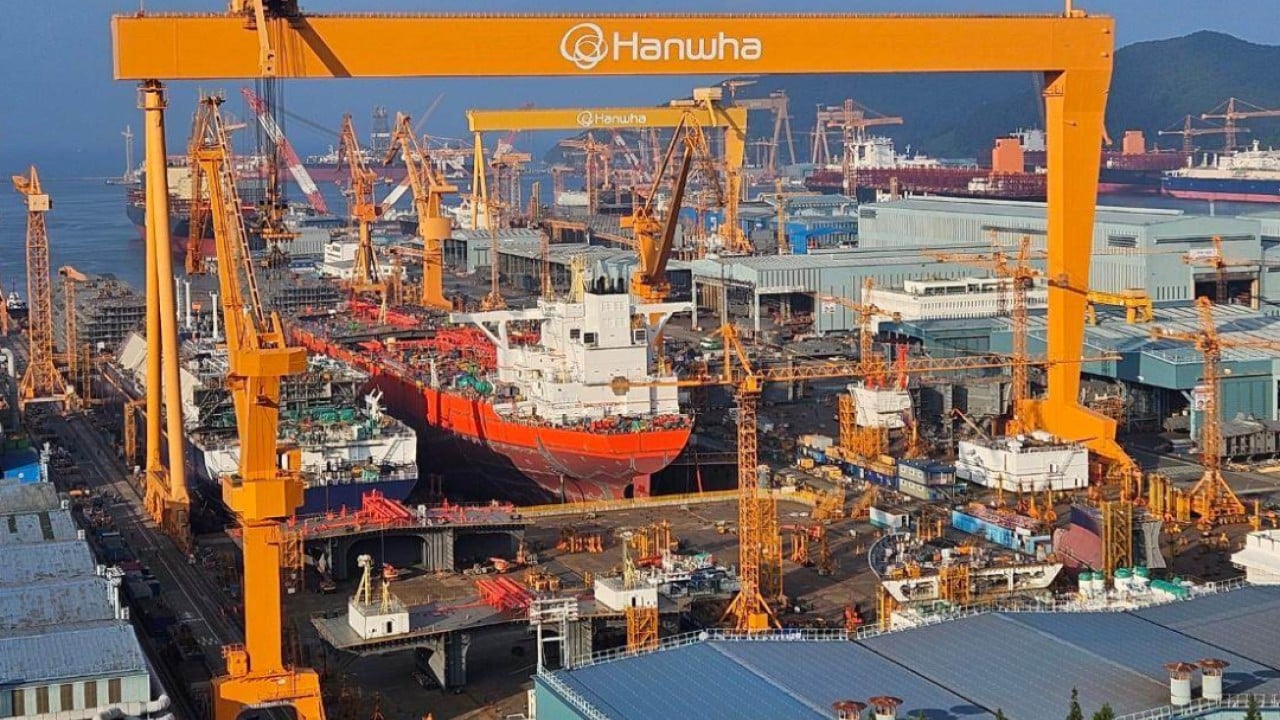
The United States Navy is running out of ships, and its own industrial base cannot build them fast enough to counter the rapid naval expansion of China. To prevent losing its maritime supremacy in the Indo-Pacific, Washington is quietly preparing to outsource a cornerstone of its national defense infrastructure to South Korea. This desperate geopolitical pivot was cemented when the Pentagon and the U.S. Navy officially sent formal Requests for Information to South Korean shipbuilding giants, including HD Hyundai Heavy Industries, Hanwha Ocean, and Samsung Heavy Industries, seeking direct assistance in designing and constructing destroyers, frigates, and replenishment oilers.
For decades, a strict maritime legal framework prevented foreign nations from constructing American warships. The sudden shift toward Seoul is not a casual strategic choice. It is an emergency intervention for an empire that has lost its capacity to build heavy things at scale. For an alternative view, read: this related article.
The Decay of American Shipyards
The numbers paint a bleak picture of American industrial decline. The U.S. Navy wants to expand its current fleet from fewer than 300 vessels to 381 ships over the next three decades. Achieving this goal requires building roughly twelve major hulls every single year.
American shipyards are failing to meet even half of that target. Related coverage on the subject has been published by Al Jazeera.
Walk through any major domestic shipyard and the systemic bottlenecks become instantly obvious. Labor shortages plague the entire sector, from specialized welders to naval architects. The domestic industry suffers from ancient infrastructure, where dry docks designed during the Cold War struggle to accommodate modern modular construction techniques. Financing is choked by bureaucratic overhead, and unpredictable congressional budget cycles prevent private contractors from investing heavily in long-term facility upgrades.
The consequences are felt directly on the front lines. Routine maintenance turnarounds for attack submarines now drag on for years, keeping vital assets sidelined while Chinese shipyards launch new hulls at a breakneck pace. China now commands over sixty percent of the global commercial shipbuilding market share. The United States commands less than one percent.
Because naval power is fundamentally built upon commercial industrial capacity, the U.S. military cannot simply order more ships into existence. The industrial machinery to produce them has largely vanished from American shores.
The South Korean Industrial Leviathan
South Korea approached this crisis from the exact opposite direction. Over the past forty years, the country transformed its southern coast into the premier industrial manufacturing hub of the maritime world.
Yards in Ulsan and Geoje operate with terrifying efficiency. They do not build ships through manual labor alone. They rely heavily on automated robotic welding systems, massive overhead gantry cranes, and digital twin simulation technologies that track every sheet of steel from the moment it enters the facility.
Global Commercial Shipbuilding Market Share (Approximate)
┌──────────────────────────────────────────────────────────┐
│ China: 63%                                               │
├───────────────────────────────┬──────────────────────────┤
│ South Korea: 26%              │ Rest of World: 11%       │
└───────────────────────────────┴──────────────────────────┘
The sheer velocity of South Korean production is what caught the attention of Washington planners. During high-level talks, U.S. officials openly questioned whether Seoul could rapidly construct batches of ten naval vessels at a time. For an American yard, an order of that magnitude would trigger a decade of supply chain delays and labor negotiations. For a company like HD Hyundai or Hanwha Ocean, it represents a standard operational quarter.
This industrial speed is already moving beyond theoretical discussions. Under the bilateral "Make American Shipbuilding Great Again" framework, South Korea committed to injecting $150 billion directly into revitalizing the broader maritime infrastructure ecosystem. The objective is clear. Washington wants to lease South Korean industrial intelligence to fix its broken domestic defense pipeline.
The Legal Wall Facing the Pentagon
Despite the strategic alignment, a massive legislative barrier stands directly in the path of this alliance. The Byrnes-Tollefson Amendment strictly prohibits the U.S. Navy from purchasing or constructing major combat vessels at foreign shipyards.
The law was designed to protect American jobs and preserve domestic manufacturing capabilities during the mid-twentieth century. Instead, it created a protected monopoly that insulated domestic shipbuilders from international competition, inadvertently allowing their technological advantages to atrophy.
The Legal and Financial Friction Points
┌─────────────────────────┬─────────────────────────────────────────────────┐
│ Obstacle                │ Impact on Deployment                            │
├─────────────────────────┼─────────────────────────────────────────────────┤
│ Byrnes-Tollefson Law    │ Bans direct foreign hull construction           │
│ Jones Act Regulations   │ Limits foreign built vessels in domestic waters │
│ Tech Transfer Controls  │ Delays integration of Aegis combat software     │
└─────────────────────────┴─────────────────────────────────────────────────┘
To circumvent these strict legal prohibitions, South Korean defense conglomerates are executing a clever workaround by acquiring American physical infrastructure. Hanwha Ocean completed a $100 million purchase of the Philly Shipyard in Pennsylvania. The strategy is straightforward. By owning the physical dock on American soil, Hanwha can obtain the security clearances required to build naval vessels locally, using South Korean automated manufacturing processes while technically satisfying the domestic build requirement.
Other major players are choosing to form deep corporate alliances rather than pursuing outright acquisitions. HD Hyundai formed a joint engineering partnership with Huntington Ingalls Industries, the primary builder of American nuclear-powered aircraft carriers. Simultaneously, Samsung Heavy Industries embedded its technical teams with General Dynamics NASSCO on the U.S. West Coast. These are not symbolic agreements. They are structural integration efforts aimed at modernizing American shipyards from the inside out.
The Threat of Indo Pacific Distance
The logistical reality of a potential conflict in East Asia further accelerates the need for this alliance. Operating naval assets across the vast expanses of the Pacific Ocean exposes a critical vulnerability known as the tyranny of distance.
If a destroyer suffers combat damage or requires a major engineering overhaul near the Taiwan Strait, sailing it thousands of miles back to San Diego or Pearl Harbor is a logistical nightmare. It removes the vessel from the theater of operations for months at a time.
Pacific Fleet Transit Times (At Standard 20-Knot Speed)
┌─────────────────────────────────────────────────────────┐
│ Taiwan Strait to San Diego: ~14 Days Transit            │
├─────────────────────────────────────────────────────────┤
│ Taiwan Strait to South Korea: ~2 Days Transit           │
└─────────────────────────────────────────────────────────┘
Establishing regional sustainment hubs directly in South Korea solves this geographic dilemma. The U.S. Naval Supply Systems Command expanded its maintenance programs to cover critical platforms operating in the western Pacific. These include MH-60R maritime helicopters, P-8 patrol aircraft, and complex Aegis combat weapon systems.
By utilizing South Korean facilities for depot-level maintenance, the U.S. military can rapidly regenerate its combat power close to the potential front lines. This distributed sustainment network functions as a powerful deterrent, signaling to regional adversaries that damaged American assets can be repaired and returned to service in days rather than months.
Risks of Subcontracting the Arsenal of Democracy
Handing the keys of American naval production to foreign corporations introduces profound long-term risks. Dependence is a dangerous commodity in geopolitics.
If the United States relies entirely on South Korean capital and engineering to rescue its fleet, the domestic manufacturing sector may never recover its independent capabilities. The incentive to fix the underlying structural issues plaguing American factories vanishes when an ally offers a cheaper, faster alternative.
Furthermore, South Korea faces its own unique geopolitical pressures. Seoul rests permanently under the shadow of nuclear-armed North Korea and maintains complex, multi-billion-dollar trade relationships with Beijing. In a hot conflict over Taiwan, China could exert immense economic or military pressure on Seoul to halt the supply of parts, maintenance, or hull construction destined for the U.S. Navy.
Relying on a frontline state as the primary dry dock for an empire creates a single point of failure. If South Korean shipyards are targeted by long-range missiles or subjected to intense cyber warfare at the onset of hostilities, the entire American naval replenishment strategy crumbles.
A Flawed Blueprint for Global Submarines
The limits of South Korea's aggressive defense export strategy were made clear when Canada selected Germany's Thyssenkrupp Marine Systems for its multi-billion-dollar conventional submarine replacement program. Hanwha Ocean campaigned intensely for the contract, offering its advanced KSS-III class platform.
The defeat in Ottawa revealed a cold reality. High-end technology and rapid production timelines are not always enough to secure defense deals within major Western alliances. Deep-seated political ties, historical NATO interoperability, and long-term industrial offsets frequently outweigh pure manufacturing efficiency.
This setback forced Seoul to pivot its defense focus heavily toward direct, bilateral integration with the United States rather than relying solely on open international tenders. The lesson was learned quickly. To become indispensable, South Korean shipbuilders must embed themselves deeply within the foundational security architecture of the U.S. military.
The ongoing request for information process conducted by the Pentagon proves that Washington understands its own limitations. The era of total American industrial self-reliance is over. Without the mechanical muscle, automated efficiency, and financial backing of South Korean shipbuilders, the plan to field a 381-ship navy will remain a paper fantasy, leaving the world's most powerful military stranded on the shores of its own industrial decline.