Two percent.
On a spreadsheet, it looks like a rounding error. A polite, harmless little number tucked into the corner of a financial report. Yet when you sit at a kitchen table at eleven o’clock at night with a calculator, a stack of overdue bills, and a cup of cold coffee, two percent is the difference between keeping the house and packing boxes.
I know because I have sat at that table. Most of us have, in one form or another. You stare at the numbers until they blur, trying to figure out how you worked harder this year than last year, earned roughly the same paycheck, and somehow ended up further behind. The answer rarely sits inside your own bank account. It lives inside a marble building in Washington, D.C., where a small group of economists decides what money itself should cost.
And right now, that marble building is under siege.
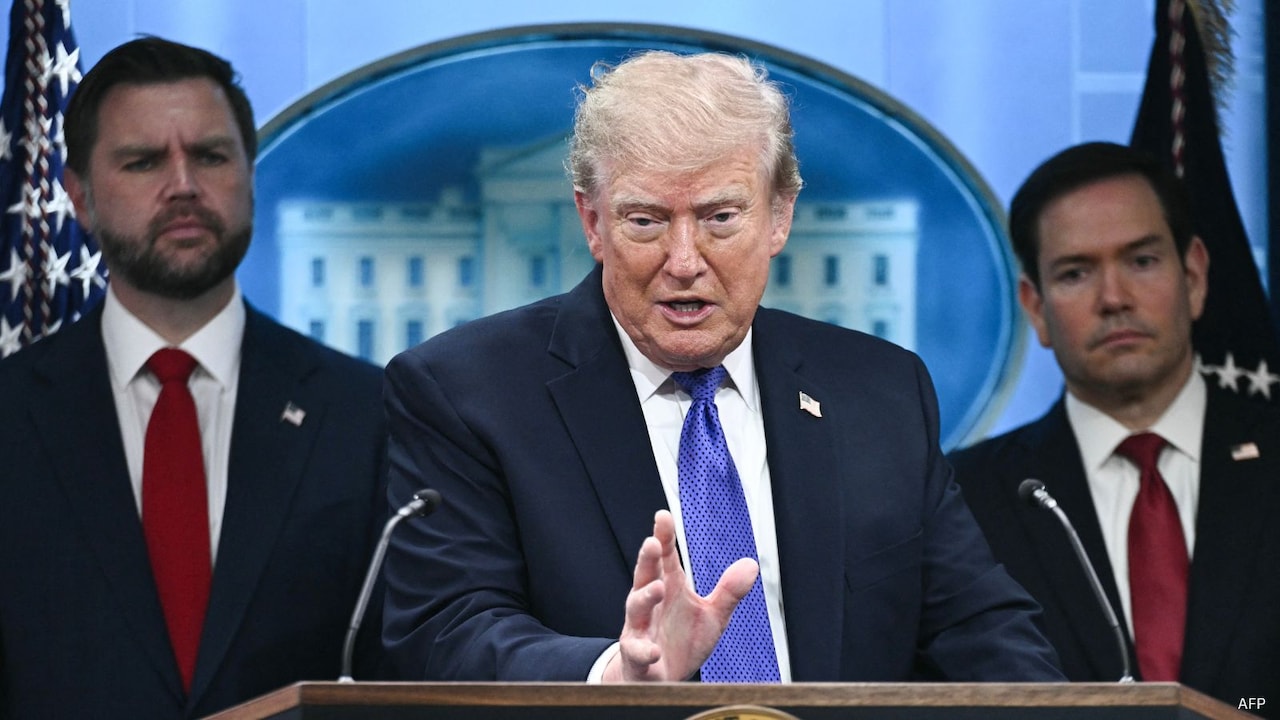
When Donald Trump stood before a crowd and pointed a finger half a world away—telling Americans to "look at India" while attacking the United States Federal Reserve for keeping interest rates high—most casual observers heard just another political soundbite. Cable news played the clip, pundits argued for four minutes, and the news cycle moved on.
They missed the real story. Beneath the political theater lies a fierce, high-stakes collision over how an economy breathes, who gets choked when money becomes expensive, and whether the world’s most powerful central bank is protecting the future or strangling the present.
The Invisible Throttle
To understand why a presidential candidate pointing at New Delhi matters to a plumber in Ohio or a baker in Texas, you first have to strip away the Wall Street jargon.
Think of the economy as a massive, roaring engine. When it runs too cold, people lose jobs, businesses shutter, and families stop spending. When it runs too hot, prices spiral out of control—a loaf of bread costs five dollars, then seven, then ten. Inflation eats savings alive.
Interest rates are the throttle on that engine.
When the Federal Reserve raises rates, it makes borrowing money more expensive. Banks charge higher interest on mortgages, car loans, credit cards, and small business lines of credit. The goal is simple: force people and companies to slow down, spend less, and cool off inflation. It is the economic equivalent of pouring cold water on an overheating radiator.
The problem? Cold water doesn't just cool the radiator. It splashes onto everyone standing nearby.
Consider a hypothetical small business owner—let’s call her Elena. Elena runs a mid-sized metal fabrication shop in Pennsylvania. Three years ago, she wanted to buy a new laser-cutting machine to double her output and hire four more workers. Back then, money was cheap. A business loan carried a manageable four percent interest rate. Today, under the weight of elevated Federal Reserve rates, that same loan costs closer to eight or nine percent.
Elena didn't buy the machine. She didn't hire the four workers. Multiply Elena by three million small businesses across America, and you begin to feel the invisible weight pressing down on the country’s chest.
Why India Entered the Chat
So why did Trump bring up India?
On the surface, comparing the American economy to India’s seems like comparing a cargo ship to a speedboat. They operate at different scales, face different demographic pressures, and carry vastly different histories. Yet in the arena of global finance, they are competing for the exact same thing: momentum.
Over the past few years, India has emerged as the fastest-growing major economy on the planet. While Western nations wrestled with sluggish growth and stagnant manufacturing, India’s gross domestic product surged ahead, regularly posting growth rates north of six and seven percent. Factories were opening. Infrastructure was expanding at breakneck speed. Global supply chains, eager to diversify away from China, were pouring billions of dollars into Indian ports, tech hubs, and assembly lines.
Meanwhile, the Reserve Bank of India—India’s version of the Federal Reserve—walked a delicate tightrope. While the U.S. Federal Reserve embarked on its most aggressive rate-hiking campaign in four decades, pushing benchmark rates to a 23-year high between 2022 and 2023, Indian policymakers held a steadier hand, calibrating their rates to keep domestic growth humming without letting inflation spiral out of control.
When Trump says "look at India," he isn't offering an academic lecture on emerging markets. He is tapping into a primal American anxiety: the fear of being left behind.
His argument is blunt, visceral, and intentionally stripped of central-bank nuance. Why, he asks, should American builders, manufacturers, and homebuyers be shackled by high borrowing costs while rival economies surge forward? To a political leader whose entire identity is built on growth, deal-making, and cheap credit, high interest rates feel like voluntary self-sabotage.
The Collision of Two Worlds
Here is where the story turns from a simple policy debate into a genuine constitutional and economic drama.
Since 1913, the Federal Reserve has been designed to operate independently from the White House. That independence isn't an accident. History is littered with countries whose leaders ordered their central banks to print cheap money and slash interest rates right before an election. The short-term result is always euphoric—stock markets soar, mortgages get cheap, everyone feels rich. The long-term result is almost always catastrophic inflation that destroys the currency and wipes out the middle class.
To prevent politicians from rigging the economy for short-term votes, the architects of the Fed gave its chair and board of governors long, staggered terms. The President can nominate the Fed Chair, and the President can complain loudly on television, but the President cannot simply pick up the phone and order a rate cut.
At least, that is how the rulebook is written.
Trump’s repeated attacks on Federal Reserve Chair Jerome Powell—a man Trump himself originally appointed before turning on him—strike directly at the heart of that century-old wall. By publicly hammering the central bank over high rates and pointing to roaring foreign competitors like India, Trump is doing something deliberate. He is shifting the blame for everyday economic pain away from corporate pricing or global supply shocks and placing it squarely on the shoulders of unelected central bankers.
And honestly? It is easy to see why that message lands.
If you are twenty-eight years old, saving every spare dollar for a starter home, and watching a seven percent mortgage rate add eight hundred dollars a month to your payment, you do not care about central bank independence. You care that the American Dream just moved out of reach. When someone with a microphone says, "The people setting these rates are hurting you, and look how fast other countries are growing," it resonates. It feels like someone is finally saying the quiet part out loud.
The Danger of Cheap Money
Yet if we stop the story there, we fall into a trap. Because the central bankers inside that marble building aren't villains twirling their mustaches, plotting to ruin your weekend. They are haunted by a ghost from the 1970s.
In the 1970s, the Federal Reserve blinked. Facing political pressure and economic slowdowns, policymakers cut interest rates too early, before inflation was truly dead. Inflation roared back with a vengeance, climbing above thirteen percent. To finally kill it in the early 1980s, Fed Chair Paul Volcker had to push interest rates to a staggering twenty percent. Unemployment skyrocketed. Farms went bankrupt. Entire industrial towns hollowed out.
That is the nightmare keeping Jerome Powell and his colleagues awake at night.
Imagine, for a moment, that the Federal Reserve caves to political pressure and slashes interest rates aggressively tomorrow. What happens next?
At first, celebration. The stock market jumps. Mortgage rates dip. Elena, our hypothetical shop owner in Pennsylvania, finally calls the bank to finance her laser cutter. Millions of buyers flood back into the housing market all at once.
Wait six months.
Because there still aren't enough houses on the market, that sudden flood of cheap mortgage money drives home prices up another fifteen percent. Because businesses are borrowing and expanding simultaneously, demand for raw materials and labor spikes again. Grocery prices, insurance premiums, and utility bills start creeping upward. Within a year, inflation is back, hungrier than before, erasing every single wage gain workers fought to win.
Cheap money feels like a gift when you sign the loan papers. It feels like a poison when you go to the grocery store.
The India Illusion
There is another truth buried beneath the headline that rarely survives a thirty-second campaign speech. Looking at India’s growth rate and demanding the United States match it by slashing interest rates misunderstands why India is growing in the first place.
India is growing rapidly because it is building its foundational infrastructure from the ground up—laying millions of miles of fiber-optic cable, paving highways, electrifying rural villages, and bringing hundreds of millions of young workers into the formal economy for the first time. When an economy starts from a lower baseline of per-capita income, double-digit expansion is structurally possible in a way it simply isn't for a mature, thirty-trillion-dollar economy like the United States.
Furthermore, India’s central bank has hardly been handing out free money. Throughout the post-pandemic inflation wave, the Reserve Bank of India kept its benchmark repo rate locked at 6.5 percent for over a year and a half, fiercely guarding the value of the rupee and keeping food inflation in check. Indian policymakers faced the exact same brutal trade-off as Washington: push rates too high and choke off small factories; drop them too fast and watch the cost of rice, onions, and fuel ignite social unrest.
No country on earth has found a magic button that delivers painless, permanent growth without consequences. Not Washington. Not New Delhi. Not anywhere.
The Weight on the Kitchen Table
Still, understanding the economics doesn't make the reality any easier to swallow. That is the maddening paradox of modern finance. Both sides of this argument hold a piece of the truth, and both sides can ruin lives if they push their logic too far.
If the Federal Reserve holds rates too high for too long, waiting for statistical perfection while small businesses quietly suffocate and young families give up on homeownership, the cure becomes worse than the disease. An economy isn't an abstract model on a computer screen in D.C. It is millions of fragile household budgets stretched to their absolute limit.
Conversely, if political leaders successfully bully the central bank into becoming an arm of the White House—turning interest rates into an election-year candy dispenser—the United States risks losing the single thing that makes the U.S. dollar the anchor of the global financial system: trust. Global investors lend money to America at lower costs than almost anywhere else precisely because they believe the Federal Reserve answers to data, not politicians. Break that trust, and the cost of borrowing for every American won't go down. It will explode.
We are living through a tug-of-war where the rope is the middle class.
On one end pulls the populist demand for immediate relief, roaring growth, and cheap credit—pointing across the ocean to rising giants as proof that America is holding itself back. On the other end pulls the cold, cautious discipline of central bankers terrified of repeating the mistakes of fifty years ago, willing to inflict controlled pain today to prevent uncontrolled chaos tomorrow.
Tomorrow morning, the traders on Wall Street will wake up, check the overnight markets in Mumbai, London, and Tokyo, and place billion-dollar bets on which way the Federal Reserve will blink next. Politicians will step up to microphones and turn complex monetary policy into applause lines.
And somewhere in America, long after the news anchors have signed off for the night, someone will sit down at a kitchen table with a cold cup of coffee, open a banking app, and stare at a single percentage point that decides the shape of their entire life.