Silence.
When a drummer can no longer hold a pair of sticks, the silence that follows is not peaceful; it is an amputation of identity, a slow, grinding erasure of the very language a person used to speak to the world for over six decades. For an alternative perspective, see: this related article.
Consider a hypothetical fan sitting in the upper bowl of an arena, forty years ago, watching a small, balding man sprint from behind a massive Gretsch drum kit to the center microphone, sweat soaking through a rolled-sleeve blazer, commanding fifty thousand people without a hint of rock-star posturing. That man was invincible. He was the human metronome who powered Genesis through progressive rock labyrinths before turning into the inescapable voice of 1980s pop radio, moving more than 150 million solo records worldwide and proving that an ordinary-looking guy from West London could conquer the globe on sheer musicality and raw, unvarnished heartache.
Then, the body kept the score. Further reporting on this matter has been provided by Entertainment Weekly.
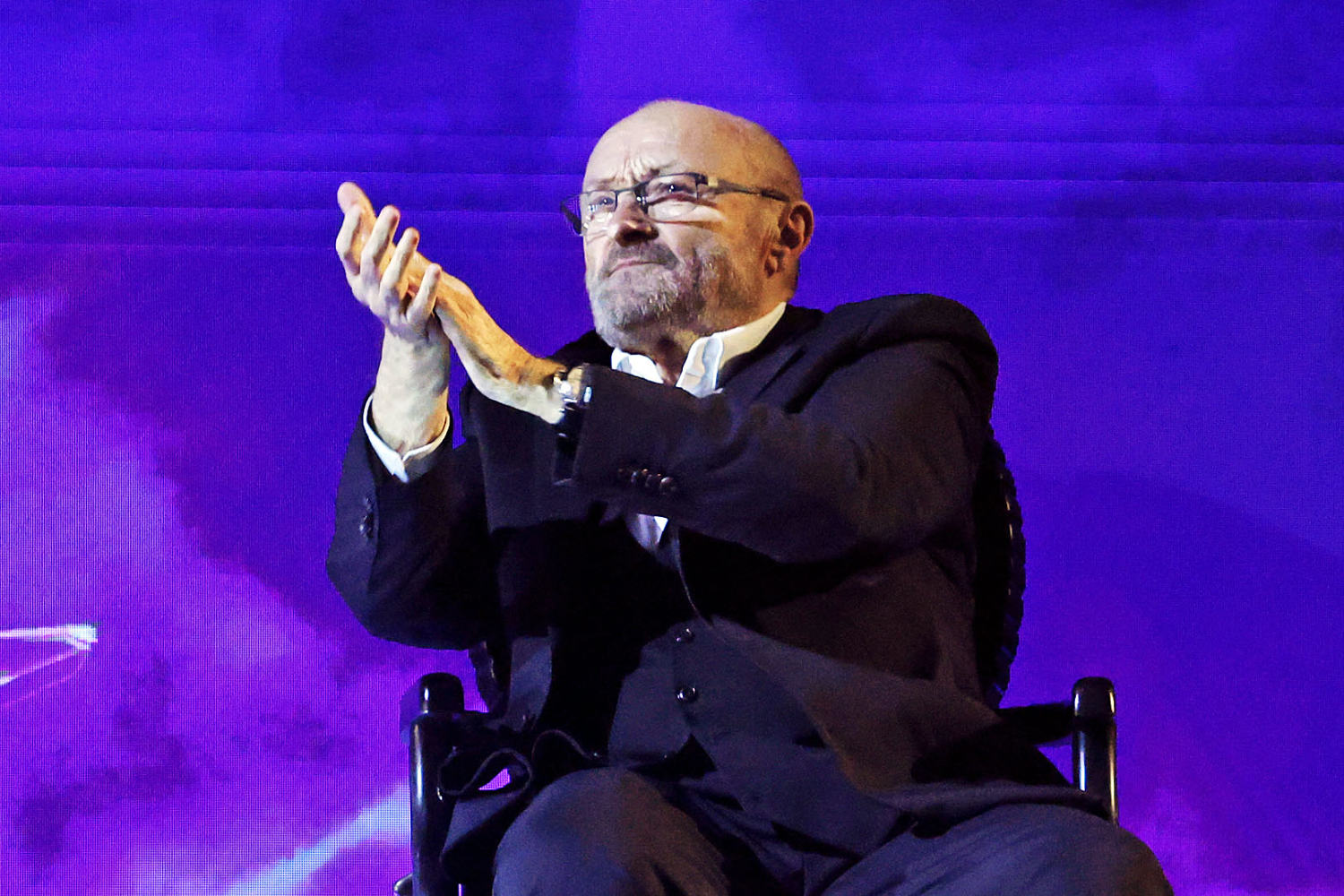
By the time the Rock & Roll Hall of Fame finally called his name as a solo artist—years after inducting him with Genesis in 2010—the man walking toward the podium was not the tireless dynamo of the No Jacket Required era. He was a seventy-five-year-old survivor of catastrophic spinal surgeries, severe nerve damage, and a public reckoning with aging that few rock icons ever permit the cameras to witness up close. When Phil Collins stepped up to accept his induction at the Rock & Roll Hall of Fame ceremony, the room didn't just applaud a catalog of hits. They wept for the sheer, stubborn grace of a man who had given his physical frame to the altar of rhythm and refused to apologize for the wreckage it left behind.
The Heavy Price of the Backbeat
To understand why that speech landed like a thunderclap in an industry usually allergic to genuine vulnerability, you have to understand what drumming actually does to a human spine.
Think of a professional drummer’s body like the suspension system of a rally car driven at redline for fifty straight years. Every rimshot, every thunderous gated-reverb tom fill on "In the Air Tonight," sends a microscopic shockwave traveling up the ulna, through the shoulder girdle, and directly into the cervical vertebrae. Most musicians play an instrument; drummers absorb the impact of one. For decades, Collins played with a violent, joyful precision that fused jazz-fusion dexterity with stadium-sized power, often pulling double duty behind the kit and at the front of the stage, twisting his torso night after night under the hot lights.
In 2007, during a Genesis reunion tour, a vertebra in his upper neck dislocated, crushing his spinal cord. The damage was permanent. The nerve pathways connecting his brain to his hands—the superhighway that once allowed him to execute blistering polyrhythms with effortless grace—were severed and scarred.
I remember watching footage of him in later years, sitting in a chair center-stage, a cane resting beside him, his fingers curled inward from drop foot and peripheral neuropathy. Watching a hero age in real time is deeply unsettling because it forces us to confront our own fragility. We want our rock stars frozen in amber, forever young, forever loud, forever capable of the magic trick that saved us when we were seventeen. Seeing Phil Collins frail felt, to many, almost unbearable.
And yet, there he was at the podium.
Why the Hall of Fame Wait Mattered
For years, the omission of Phil Collins as a solo inductee stood as one of rock criticism's strangest blind spots.
Rock history has always harbored a quiet snobbery toward artists who become too popular, too accessible, too omnipresent. In the mid-1980s, you could not turn on a radio, walk through a grocery store, or watch a Friday night television drama without hearing Collins’s distinct, pleading tenor. He played Live Aid in London and Philadelphia on the exact same day via Concorde. He wrote Academy Award-winning Disney soundtracks. He became, in the eyes of self-serious gatekeepers, the ultimate emblem of mainstream excess—a perception that obscured the staggering technical brilliance underneath the polished production.
It is easy to forget now, buried beneath decades of nostalgia, just how radical his solo debut Face Value actually was in 1981. Recorded in the bleak aftermath of a painful divorce, the album stripped away progressive rock's intellectual armor and replaced it with bruised, naked confessionals backed by stark drum machines and Earth, Wind & Fire’s horn section. He didn't invent heartbreak, of course, nor did he invent the gated drum sound—credit for that sonic accident goes to producer Hugh Padgham and Peter Gabriel’s sessions—but Collins weaponized that sound into an emotional sledgehammer.
When the Rock & Roll Hall of Fame finally inducted him in his own right, it wasn't merely a clerical correction. It was an admission that accessibility is not the enemy of art, and that making millions of people feel less alone in their own quiet desperation is the highest function popular music can serve.
Inside the Room When the Guard Came Down
Awards shows are typically exercises in rehearsed humility. Artists read from teleprompters, thank their managers, plug an upcoming tour, and exit stage left before the orchestra swells.
Collins blew that script to pieces within thirty seconds.
Standing at the microphone, leaning slightly forward, his voice weathered into a warm, gravelly baritone that carried the weight of every mile he had traveled, he didn't lecture the audience on his legacy. He didn't rattle off chart statistics or demand credit for influencing generations of R&B and hip-hop producers—from Pharrell Williams to Kanye West—who sampled his drums like sacred relics.
Instead, he talked about the hands.
He spoke candidly, with that self-deprecating British wit he has always used as a shield, about what it feels like to hear a groove in your head—a crisp, syncopated hi-hat pattern or a rolling fill—and realize your body can no longer translate the signal. Watching the broadcast, you could feel the oxygen shift in the room. The camera cut to seasoned musicians in the audience—men and women who had spent their own lives chasing perfection on stages around the world—and their faces were tight with recognition. Every performer in that hall knew that the nightmare Collins was describing aloud was the exact nightmare waiting for them at the end of their own road.
He thanked his family, his bandmates, and his son Nic, who had stepped behind the drum kit during Genesis’s final The Last Domino? tour to play his father’s parts note-for-note while Phil sat watching from the front. Think about the emotional geometry of that moment: a father watching his own child carry the physical torch he can no longer lift, hearing his own rhythmic DNA echoed back to him by the next generation. When Collins mentioned his children during the speech, his voice cracked—not the theatrical catch of an actor hitting a cue, but the sudden, involuntary fracture of a man overwhelmed by gratitude that he had lived long enough to see the circle close.
The Vulnerability That Changed Pop Music
Why does a speech like this resonate far beyond the walls of a Cleveland arena or a televised broadcast?
Because we live in a culture obsessed with curated strength. Every day, we are fed a steady diet of airbrushed resilience—stories of people who conquered every obstacle, bounced back stronger than ever, and turned every scar into a triumphal brand. We rarely make space for the truth that sometimes, the body breaks and does not heal back to what it was. Sometimes, the trade you make for your life’s work leaves you with a cane and a tremor.
Phil Collins never pretended otherwise. Throughout his career, his superpower was never cool detachment; it was radical, almost embarrassing honesty. While his peers wore sunglasses indoors and spoke in cryptic metaphors, Collins stood in front of millions of people in plain clothes and sang about failing at marriage, failing at fatherhood, and begging for one more night to get things right.
That same refusal to hide is what made his Hall of Fame acceptance speech unforgettable. By standing before the world without his drumsticks, without the armor of his youthful athleticism, he offered a quiet masterclass in dignity. He proved that an artist’s worth does not evaporate when their physical virtuosity fades. The rhythm wasn't in the wrists, after all. It never was.
The Echo That Remains
Long after the trophies are boxed up and the broadcasts fade into archive clips, what stays with you from that night isn't the induction itself. Institutions are slow; they always arrive late to the party, long after the real work has been done in basement studios and half-empty clubs.
What stays with you is the image of Phil Collins gripping the edges of the podium, looking out over a sea of peers and fans who had finally stopped taking him for granted, smiling a crooked, tear-streaked smile as the applause refused to die down. He didn't need to play a single note to command that room. His stillness was louder than any snare drum he had ever struck.
Somewhere, right now, a kid is sitting behind a beat-up secondhand drum kit in a garage, headphones clamped over their ears, waiting for that famous four-bar fill to drop out of the speakers so they can swing their sticks into the air and feel, for three glorious seconds, like a giant.