Fluorescent lights hum over a quiet waiting room in southeastern Pennsylvania. A mother checks her phone for the third time in ten minutes, her thumb brushing the edge of a diaper bag that smells faintly of vanilla baby wash and cold rain outside. Her six-month-old son sleeps against her collarbone, his breathing soft and even, completely unaware that his immune system is still learning the alphabet of danger. Across the room, a teenager coughs—dry, sharp, unremarkable—before pulling a hoodie collar up to his chin.
Nothing looks dramatic. No sirens wail. No hazard tape seals the doors.
Yet behind the scenes, public health officials are bracing for a collision between an ancient, relentless virus and modern routines that rarely pause for invisible threats. When federal investigators from the Centers for Disease Control and Prevention step into a state facing a deadly measles outbreak, the headlines usually speak in numbers: case counts, exposure windows, vaccination percentages, quarantine zones. Numbers are tidy. Numbers keep distance.
Outbreaks do not live in numbers. They live in grocery aisles, school buses, urgent care lobbies, and the quiet second-guessing of parents trying to do right by their kids.
How a Forgotten Virus Steps Back Through the Door
Ask people what measles looks like and most reach for old television or half-remembered childhood stories—red spots, fever, a week stuck on the couch with ginger ale and cartoons. That memory feels safe because routine immunization pushed measles so far into the background that entire generations grew up treating it like a museum piece, something dusty and defeated behind glass.
Measles never retired. It only waited for gaps.
To understand why public health teams move with urgency the moment measles surfaces in a community, you have to picture how the virus behaves in open air. (Note: The following comparison is a metaphor used to illustrate viral transmission.) Imagine someone sprays a fine mist of perfume into a quiet room, walks out, and two hours later another person steps inside and breathes it in. Measles is notoriously airborne and lingers in the air after an infected person leaves a space. Before the telltale rash even blooms across the skin, a person carrying the virus can already be spreading it—often mistaking the early days for a bad cold, with a hacking cough, runny nose, and red, watery eyes.
That lag is what turns a single case into a chain reaction. A family stops at a pharmacy for fever reducer. Someone sits in a clinic waiting room for forty minutes. A kid goes to soccer practice before anyone suspects anything worse than seasonal crud. By the time the rash appears—starting near the hairline and spreading downward—the clock has already been ticking for days.
I still remember the tight, metallic taste of anxiety in a clinic hallway during an earlier regional scare years ago, watching a triage nurse move a coughing toddler through a side entrance so no one else in the lobby shared the same air. There was no panic on her face, only practiced speed. When you have seen what measles can do to fragile lungs or an unvaccinated infant, you do not treat the first report lightly. You treat every hour as borrowed time.
A Hypothetical Family Caught in the Ripple
Because real patient stories carry privacy boundaries, let us trace a hypothetical scenario grounded in how health departments track exposures every day. (This scenario is hypothetical, built to show how contact tracing and exposure windows unfold in real life.)
Call the mother Elena and her baby Leo. Leo is seven months old—too young for his routine first dose of the measles, mumps, and rubella vaccine, which is typically given starting around twelve months of age under standard schedules unless special outbreak guidance applies. Elena follows the rules. She shows up to appointments. She keeps up with checkups. Still, in the months before her baby can get that first shot, Leo depends heavily on something sociologists and epidemiologists call community immunity: the protective wall formed when the vast majority of people around him cannot catch or pass the virus.
On a Tuesday afternoon, Elena takes Leo to a pediatrician’s office for a routine visit. Twenty minutes earlier, an older child who had visited a crowded gathering the week before sat two chairs down, rubbing tired eyes and coughing softly. Nobody knew yet.
Three days later, the county health department gets a lab confirmation: measles.
Suddenly, Elena’s phone rings. The voice on the other end is calm, methodical, and earnest—a contact tracer working through exposure logs. Elena’s stomach drops. Not because Leo has a fever—he does not—but because the phrase "exposure window" carries a heavy weight when you are holding a baby who cannot yet be vaccinated against it.
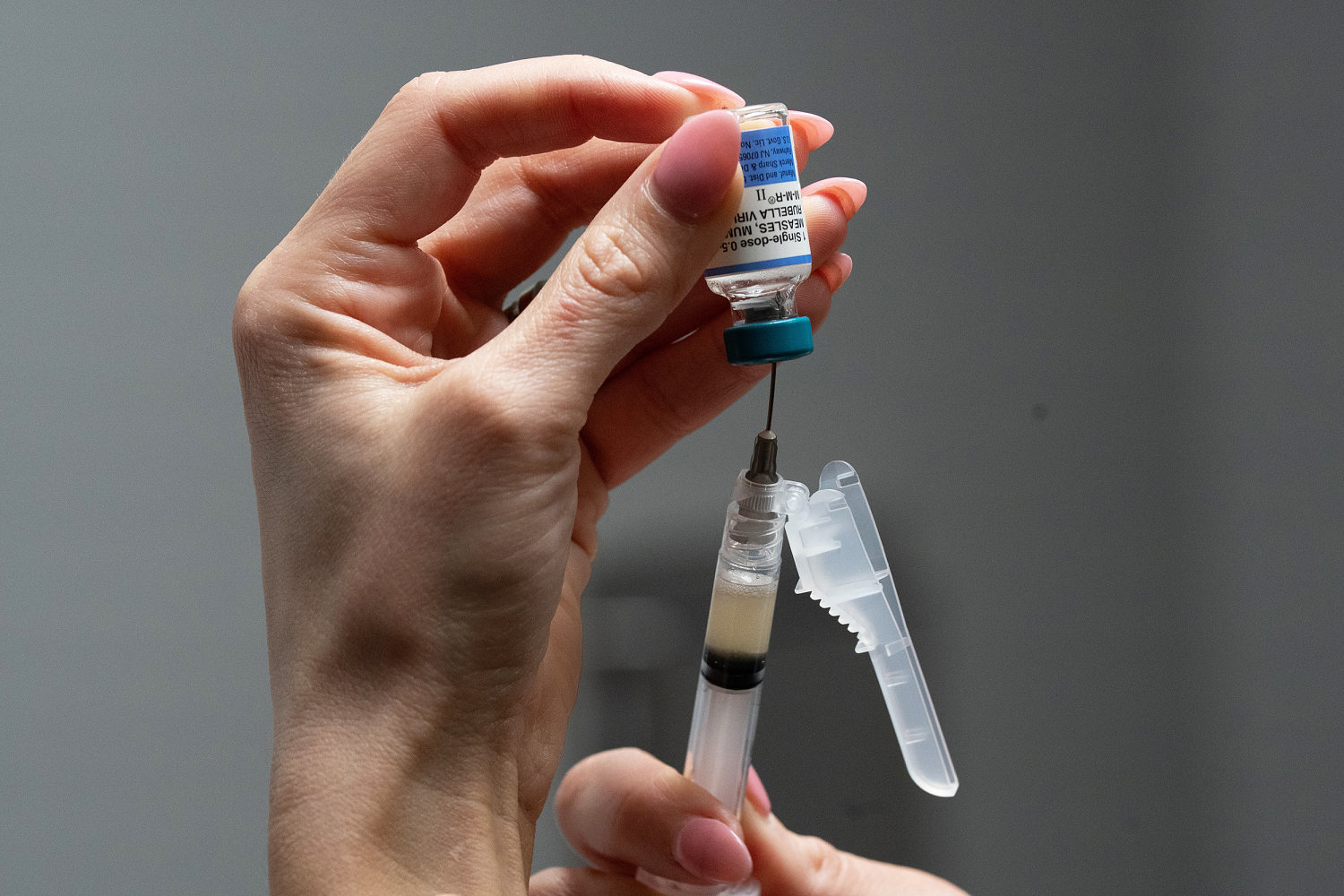
What happens next is a quiet race against biology. Health officials look at timing, immune status, and vulnerability. For some people exposed to measles, getting the MMR vaccine shortly after exposure—or receiving immune globulin for those who cannot take the live vaccine, such as certain infants or people with weakened immune systems—can help prevent illness or make it milder if given quickly enough. For others, the next steps mean watching closely for symptoms, staying home if illness starts, and coordinating directly with doctors before stepping foot back into a waiting room.
Elena sits at her kitchen table long after the call ends, staring at Leo’s tiny fingers curled around her thumb. Doubts creep in that she never expected to feel. Should we cancel our errands? Who in our circle knows their immunity status? If a neighbor’s child has a runny nose at the park, is that just allergies or something worse?
Doubt is exhausting. It makes ordinary air feel suspicious.
Why Deadly Complications Are Not Just a Headline Word
When a news report calls a measles outbreak deadly, readers sometimes wonder how a rash illness crosses that line. For most healthy people who contract measles, recovery happens over a couple of weeks, miserable as the high fever and cough can be. Yet "most" is cold comfort when you are standing at the bedside of someone who falls into the minority where the virus turns ruthless.
Measles does not merely irritate the skin and airways. It temporarily batters the immune system—a phenomenon researchers have studied closely, often described as "immune amnesia," where the body’s hard-won defenses against other infections are weakened for months afterward. That opens the door to secondary trouble.
Pneumonia is a leading cause of measles-related deaths, especially in young children. Ear infections can be severe and lead to lasting hearing loss. Encephalitis—swelling of the brain—can strike roughly one in a thousand cases, carrying risks of seizures, intellectual disability, or death. And in rare, devastating instances years later, a slow, progressive neurological condition called subacute sclerosing panencephalitis can emerge after an earlier measles infection, proving fatal with no cure.
When health agencies step in during a surge in Pennsylvania or anywhere else, they are not reacting to a mild inconvenience. They are trying to keep hospital pediatric units from filling up and to keep preventable tragedies from happening in families who never saw the storm coming.
Inside the Machinery of a Public Health Response
When local clinics report suspected cases and lab tests start coming back positive, the response shifts gears fast. State health departments coordinate with local county teams, hospitals, schools, and the CDC. Each group brings a piece of a puzzle that has to be assembled while the clock runs.
Epidemiologists build timelines. They ask where a person went, who sat near them, which days they were contagious, and where gaps in protection might exist. Think of it like reconstructing the path of a spark across dry grass—except the grass is human contact, and every spark investigated early is a fire that might never catch.
Public health teams also look closely at vaccination coverage across neighborhoods, school districts, and social networks. Herd immunity is not an abstract slogan; it is a threshold. Because measles spreads so easily, a community generally needs very high vaccination rates—often cited around ninety-five percent—to keep sustained transmission from taking hold. When coverage slips in pockets, even a single imported or introduced case can find enough fuel to burn through households, childcare centers, or gatherings.
That is where conversations get tense. Vaccine hesitancy rarely comes from nowhere. Sometimes it grows out of fear of side effects, bad experiences with healthcare institutions, conflicting information online, or a simple desire to protect one’s own child. Dismissing a worried parent with eye-rolls never changes minds; it only pushes people further apart when trust is the very currency an outbreak drains.
Having lived through public health briefings where data sheets were stacked inches high while phones rang nonstop with anxious calls from schools and clinics, I have seen how fragile trust can be in the middle of a spike. People want straight answers without spin. They want to know what the actual risk is today, what symptoms to watch for, what to do if they are unsure whether they were vaccinated as a child, and how to protect babies or immunocompromised relatives.
Practical Questions People Ask When Measles Hits Close to Home
When news breaks about an outbreak nearby, questions tumble out fast—often in the middle of the night when a child feels warm.
One of the most common questions is how to tell measles apart from a regular viral bug at the start. Early on, it looks frustratingly ordinary: fever that can climb high, cough, runny nose, red eyes. Tiny white spots—known to doctors as Koplik spots—can sometimes appear inside the mouth a couple of days before the red blotchy rash breaks out, usually starting on the face and hairline and moving down the body. Because early symptoms blend into everyday illnesses, calling ahead before walking into a busy urgent care or doctor’s office matters. Calling first lets staff protect other patients and get the right person evaluated safely.
Another question that catches adults off guard is whether they themselves are still protected. Most people who received two doses of MMR vaccine—or who were born before 1957 and are presumed immune from prior infection—have strong, lasting protection. Still, there are specific situations where a healthcare provider might check immunity or discuss an extra dose, such as certain healthcare workers, international travelers, or people in high-risk settings during an outbreak. Checking old immunization records or talking with a primary care doctor is a straightforward place to start rather than guessing.
People also ask whether isolating or staying home actually makes a difference once an exposure is suspected. Yes. Measles has an incubation period—usually about ten to fourteen days from exposure to rash, sometimes up to twenty-one days—which means someone can look and feel completely fine right up until they suddenly do not. Following health department guidance on monitoring symptoms and staying home if told to quarantine breaks chains of spread before they reach another classroom or breakroom.
The Invisible Stakes Beneath Everyday Life
What makes an outbreak in Pennsylvania resonate far beyond state lines is how tightly connected modern life really is. A weekend trip, a regional tournament, a train ride, a hospital visit—viruses do not care about county borders or school district lines.
There is also a quieter cost that rarely makes the evening news. Missed work for parents caring for sick children or managing quarantine rules. Stress on nurses and doctors already stretched thin by seasonal respiratory illnesses. Anxiety for families navigating cancer treatments, organ transplants, or newborn care, where an infection that looks manageable to one person can become life-threatening to another.
We get used to convenience. We get used to assuming that modern medicine has permanently closed the book on old plagues.
History is stubborn about reminding us otherwise. Every time immunity dips low enough in enough places, diseases that once filled wards return to test our patience, our solidarity, and our memory. Not because science stopped working, but because protection is a shared habit, not a one-time trophy.
A Quiet Choice in a Crowded Room
Evening settles over that Pennsylvania waiting room again. Outside, headlights sweep across wet pavement as commuters head home through the dusk. Inside, the lights stay on a little longer while nurses log calls, trace timelines, and answer questions from parents trying to sort fact from fear.
A single cough in a crowded room can carry a history longer than anyone there realizes—a reminder that health is rarely a solo project, and that the smallest choices we make today shape the air someone else breathes tomorrow.