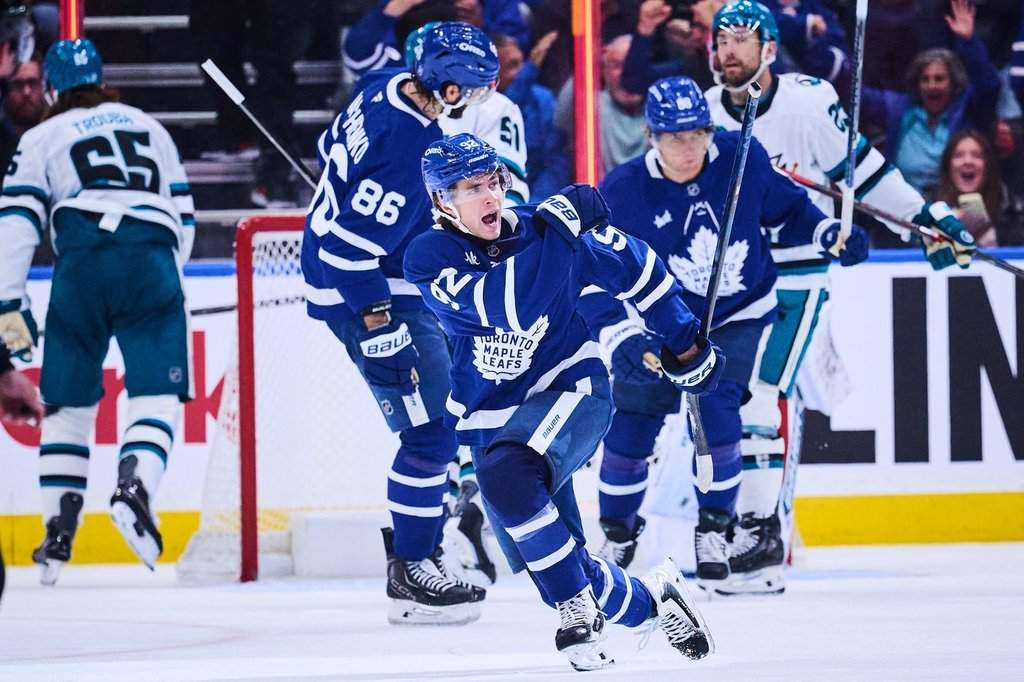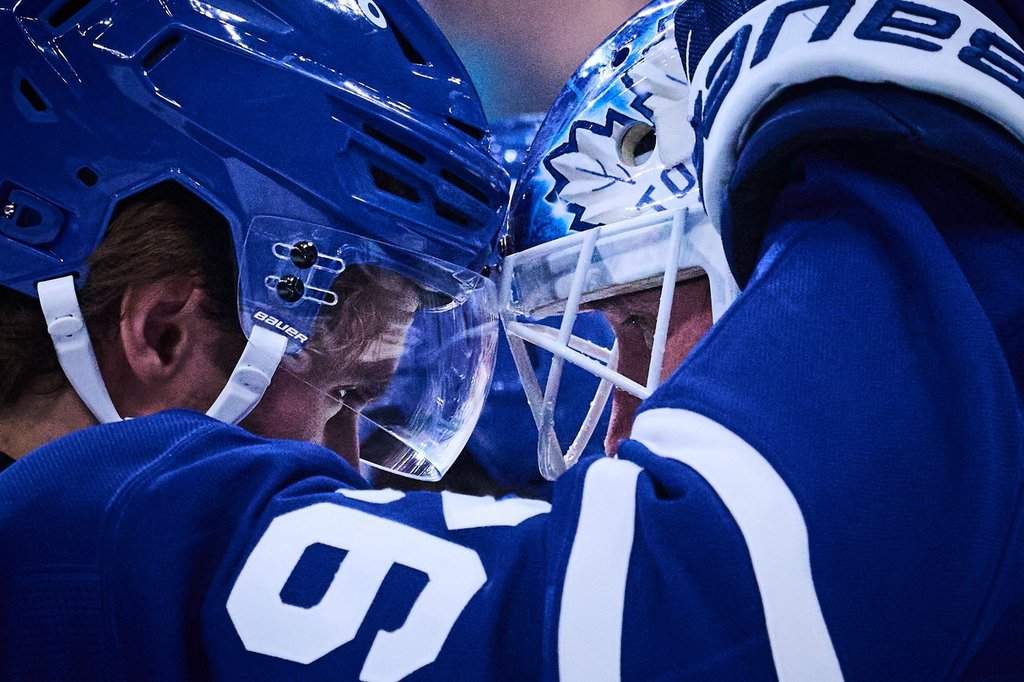
Cold.
That is the first thing a player notices when the tunnel doors swing open in Toronto, where the air smells faintly of Zamboni fuel, damp wool, and a hundred years of unresolved longing pressing down from the rafters.
When McKenna stepped back into the spotlight for the Maple Leafs, the moment arrived wrapped in everything a box score fails to capture. Box scores give you shifts, minutes, shots, and line combinations. They do not tell you what it feels like to lace up skates knowing that every stride is being audited by a city that treats hockey less like a game and more like a public weather forecast for the soul. If the sun shines on Bay Street, people breathe easier. If the puck bounces the wrong way in April, coffee shops go quiet for three days.
I have stood along the glass during enough practice sessions and late-night road games to know how heavy that atmosphere gets. You hear the sharp shhhk of steel carving white shavings at ninety miles an hour. You hear coaches barking timers from the bench. And underneath it all, there is a low, vibrating hum—the weight of expectation that follows anyone connected to the blue and white sweater once the spotlight swings their way again.
Why Returning to the Spotlight Feels Different in Toronto
Stepping back into prominence anywhere in the National Hockey League tests a player's nerve. Stepping back into the spotlight with the Maple Leafs tests a player's nervous system.
Toronto is the largest hockey market in North America by sheer cultural density. Every morning radio show dissects fourth-line rotations with the intensity of central bank policy. Every misread play on a Tuesday night in November turns into a referendum on character, contract value, or roster construction by noon on Wednesday. When McKenna returned to the center of that conversation, the scrutiny wasn't merely loud; it was immediate and total.
Think of the Toronto spotlight like a magnifying glass held over dry leaves on a sunny afternoon. A little bit of warmth is normal. Too much focus in one spot, held steady for too long, and something starts to smoke. Players who thrive here usually share one rare trait: the ability to treat noise like arena hum—present, unmistakable, yet separate from the mechanics of a twenty-foot pass or a clean zone exit.
To make sense of what that pressure looks like from the inside, consider a hypothetical veteran skater—let's call him Tom—who spent six seasons bouncing between press-box healthy scratches, injury rehab, and sudden call-ups in a high-pressure market. Tom didn't struggle because he forgot how to read a forecheck. He struggled during the first forty-eight hours after hearing his name called again, when every family text message carried a well-meaning question and every social feed felt like a courtroom gallery. Only when Tom stopped trying to win the afternoon and focused on the next ten-second shift did his legs catch up to his instincts.
That is the invisible stake whenever a figure like McKenna steps back into frame. The public sees a roster move, a lineup change, or a return to active duty. The person on the ice sees a narrow window to prove belonging while thousands of eyes watch for a tell.
The Invisible Stakes Behind Every Shift
Fans often talk about momentum as if it lives inside the puck. In reality, momentum lives inside human lungs, hamstrings, and decision trees.
Hockey is a sport of micro-decisions made under fatigue. At the NHL level, a defender might have less than half a second to decide whether to rim the puck off the boards, eat a hit to make a tape-to-tape outlet, or chip it past an oncoming forward. When a player returns to the spotlight—whether coming off a quiet stretch, an adjustment period, or heightened team expectations—those split-second choices carry extra emotional tax. Adrenaline narrows peripheral vision. Tension stiffens wrists. A shot that normally snaps off the blade with effortless whip can come off a fraction late, giving a goaltender just enough time to square his shoulders.
Even when a player handles the public side with calm poise, the physical ledger still has to balance. Ice time has to be earned shift by shift against opponents who do not care about storylines. A missed assignment in the defensive zone costs energy twice: once while chasing the cycle, and again while watching video the next morning with twenty teammates in the room.
In a city this obsessed with hockey, there is no such thing as a low-stakes Tuesday. Every game feels like a chapter in a book everyone else is already skimming ahead to finish.
Let's be honest about something most sports commentary glosses over. Watching someone step back into the spotlight is fascinating from the couch, yet it can feel strangely unsettling when you care about the person behind the helmet. You want the big moment. You want the clean recovery, the sharp execution, the proof that grit and preparation still pay off. At the same time, you know how unforgiving pro sports can be when a bounce goes sideways or a single mistake hijacks the narrative. That tension—wanting greatness while fearing how quickly a story can turn—is part of why people keep tuning in.
What History Teaches Us About Second Acts
If you look back at decades of hockey history, second acts rarely look like Hollywood montages. They usually look like grinding through unglamorous details.
Across generations of the NHL, players who reclaim relevance or command renewed attention rarely do it with a single lightning bolt. More often, it happens through quiet repetition: winning a board battle along the wall, blocking a point shot when legs feel like lead, making the simple play five times in a row instead of forcing a highlight-reel pass that turns into a rush the other way.
Consider that as a metaphor for rebuilding trust on the ice. Trust isn't a vault door you kick open; it is brick masonry laid one course at a time. Each clean exit from the defensive zone is a brick. Each disciplined stick lift in the neutral zone is another. Miss a few courses and the wall wobbles. Lay them straight and level, and suddenly the structure holds weight again.
In Toronto, that masonry matters even more because the Maple Leafs exist inside a perpetual push-and-pull between urgent contention and long-term patience. When the team's fortunes are scrutinized from every angle, any individual returning to the spotlight becomes a lens for larger questions. Is the depth holding up? Are the supporting pieces driving play or just surviving minutes? How does the room respond when things tighten up in the third period?
Those questions don't belong to one person alone, yet anyone standing in the glare feels their pull.
Reading Between the Lines of a Return
When a headline says McKenna is back in the spotlight for the Maple Leafs, the smartest way to watch isn't to hunt for a single dramatic play and call the verdict settled.
Watch the first five minutes of a period instead. Notice posture on the bench when the whistle blows. Look at whether strides stay smooth and economical under pressure or get choppy when a forechecker closes fast. Pay attention to how quickly a player moves from a tough sequence to the next reset—because in hockey, recovery speed between shifts matters almost as much as top skating speed.
There is real drama in that quiet craft. It doesn't scream for attention the way a breakaway goal does, yet it decides whether a player stays in the mix when playoff intensity arrives and space on the ice disappears.
Every time the arena lights blaze down onto freshly scraped ice in Toronto, the city gets another chance to see who rises to meet the moment and who gets swallowed by the noise. Out on the boards, blades bite deep, breath plumes in the chilly air, and the game moves on at full speed—waiting for no one, forgiving nothing, and offering the next shift to whoever is ready to take it.