Every November, a specific kind of panic settles over the modern consumer.
It starts quietly, right around the time the first frost hits the windshield, and swells into a deafening roar by the second week of December. We walk down brightly lit aisles or scroll endlessly through algorithmic feeds, hunting for objects that scream ambition. We buy luggage for friends who haven't taken a vacation since 2019, cocktail shakers for people who are secretly exhausted by Friday night bars, and high-tech fitness trackers for relatives who just want to sleep past six in the morning. We gift the lives we think people ought to be living, rather than the lives they are actually surviving.
Consider a hypothetical character—let’s call her Elena. Elena is thirty-four, works in logistics, and spends roughly nine hours a day staring at spreadsheets while answering messages marked "urgent" that rarely are. By the time December rolls around, her nervous system is frayed like an old charging cable. When her brother asks what she wants for the holidays, she shrugs and says, "I don't know, maybe a new carry-on?" She says this because saying "I want permission to disappear from the world for seventy-two hours without feeling like a failure" sounds like a cry for help rather than a wishlist item.
Elena is not an anomaly. She is the statistical norm.
According to data from the American Time Use Survey, Americans spend more time at home now than at almost any other point in modern history, yet our cultural narrative still treats staying in as a consolation prize. We have been conditioned to view domestic stillness as laziness. We use words like "homebody" with a slight, apologetic laugh, as if preferring the warmth of one’s own living room over a crowded, overpriced restaurant is a minor character flaw.
That is the invisible stake of holiday gifting. When you hand someone a box wrapped in silver paper, you are not just giving them an object. You are casting a vote for how they should spend their most precious, non-renewable resource: their unscheduled time.
For years, I got this completely wrong. I used to pride myself on being the "experience" gift-giver. I bought concert tickets, cooking class vouchers, and weekend passes. I thought I was giving people memories. In reality, I was giving them obligations. A voucher is just a chore with an expiration date. A ticket is a demand to put on hard pants, find parking, and make small talk when all your body really wants is horizontal stillness. It took a particularly brutal winter—one where I burned out so severely that the mere thought of leaving my apartment triggered a low-grade hum of anxiety—for me to realize what real generosity actually looks like.
Real generosity doesn't demand energy. It restores it.
If you want to give a gift that actually changes someone’s winter, stop trying to upgrade their social life and start upgrading their sanctuary. You don't need a massive budget, and you certainly don't need another plastic gadget that requires a smartphone app to function. You need to understand the sensory architecture of comfort.
The Physics of Slowing Down
To understand why certain cozy gifts work while others end up in the back of a closet, you have to look at how the human body processes stress. Think of your nervous system like a high-performance engine that has been redlining on the highway for eleven months straight. You cannot simply turn the key off and expect the metal to cool instantly. You need a mechanism to bleed off the heat.
Psychologists and occupational therapists call this "sensory modulation"—using specific physical inputs like weight, temperature, and texture to signal to the brain that the threat has passed. When we talk about turning someone into a homebody, we aren't talking about trapping them indoors. We are talking about giving them the physical tools to downshift.
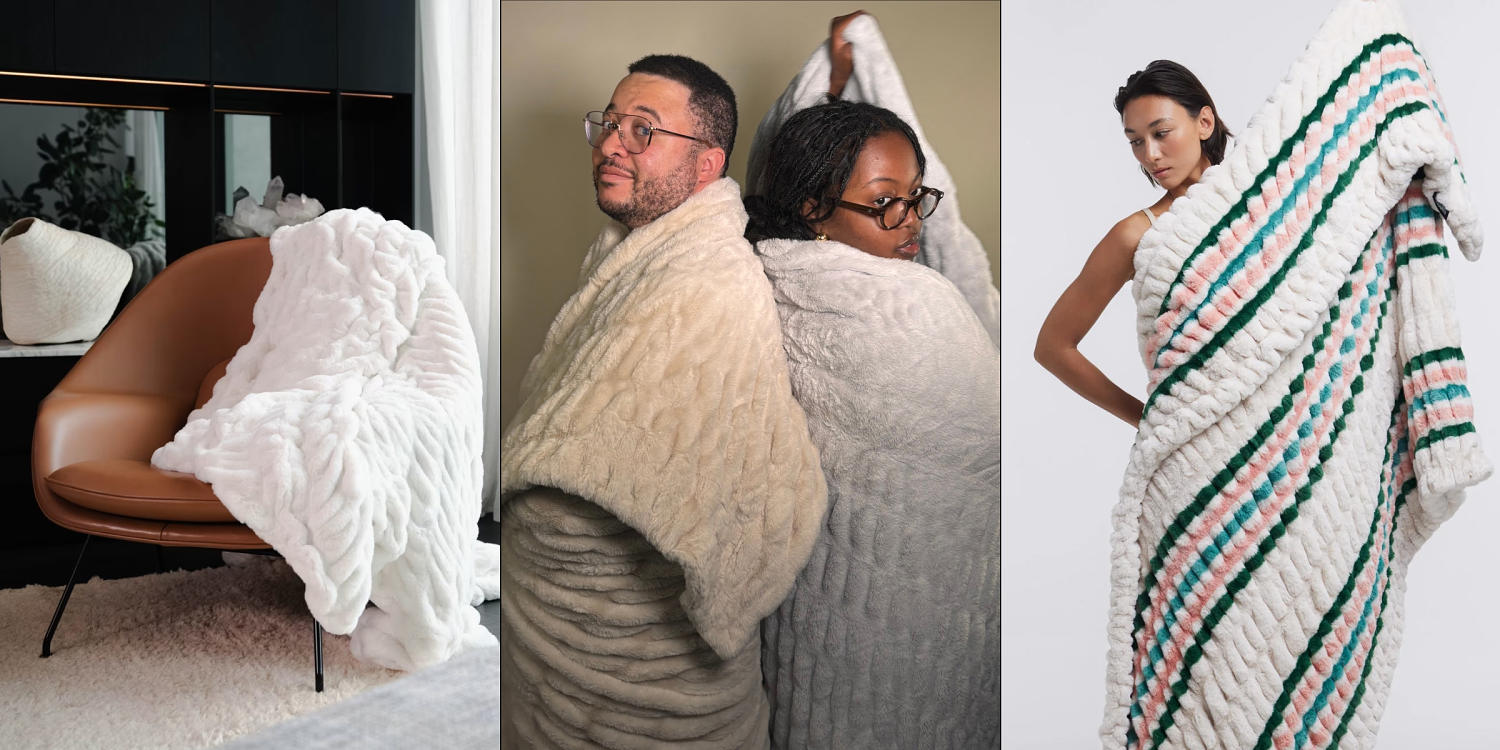
Weight is the most obvious lever. A few years ago, weighted blankets exploded into the mainstream, and for good reason. The mechanics are simple: deep pressure stimulation mimics the sensation of being held, which triggers a drop in cortisol and a spike in serotonin and melatonin. It is biology, not magic. Yet most people buy cheap, synthetic versions that trap body heat like a greenhouse, turning a relaxing evening into a sweaty nightmare. If you are going to gift weight, look for chunky knit weighted blankets made from breathable cotton or bamboo jersey. They distribute the pressure evenly through thick, woven loops without suffocating the sleeper, and they look like sculptural art draped over the back of a sofa.
Temperature is the second lever, and it is routinely underestimated. Anyone who has ever stepped out of a hot shower into a freezing bathroom knows how quickly cold air triggers a stress response. Your shoulders hunch. Your jaw clenches. Your body goes on the defensive.
Now, picture the inverse. Imagine wrapping yourself in a bath sheet that has just emerged from a freestanding towel warmer. It sounds absurdly decadent until you experience it on a Tuesday morning in January when the wind is howling against the glass. For three minutes, that radiant heat penetrates straight to the bone, forcing every tight muscle in your back to let go. Pair that with shearling-lined suede slippers—the kind with a proper rubber sole so you can step onto the porch to grab the morning paper without soaking your socks—and you have effectively eliminated the harshness of winter floors.
Even the way we consume warmth matters. A standard ceramic mug loses its heat in about twelve minutes, leaving you with lukewarm coffee and a faint sense of disappointment. A temperature-control smart mug solves a problem nobody wants to admit is annoying, keeping tea or coffee at an exact, chosen degree for over an hour. It allows a person to read three chapters of a novel without having to get up and microwave their cup twice. That is not just convenience; that is uninterrupted flow.
Designing the Evening Shift
The hardest part of being at home isn't the afternoon. It's the transition at 5:30 PM when the laptop closes, the sun has already set, and the brain refuses to stop spinning. Without a physical boundary between "work" and "rest," the living room just becomes an extension of the office.
This is where lighting and scent do the heavy lifting. Overhead lighting—especially the cool-toned LED bulbs standard in most apartments—is an enemy of relaxation. It mimics the midday sun, tricking the brain's suprachiasmatic nucleus into suppressing melatonin. Gifting a dimmable amber bedside lamp or a cluster of beeswax pillar candles changes the entire geometry of a room. Beeswax burns cleaner and longer than paraffin, emitting a subtle, natural honey aroma and a warm, golden spectrum of light that practically forces the eyes to soften.
Scent works on an even faster track. Unlike sight or sound, which get routed through the thalamus for processing, the olfactory bulb has a direct, unfiltered highway to the amygdala and hippocampus—the brain’s centers for emotion and memory. Lighting a wood-wick candle with notes of cedar, damp earth, or smoked vanilla doesn't just make a room smell nice; the soft, rhythmic crackling mimics the sound of a distant fireplace, anchoring the mind in the present moment.
For those who find candles too intense, an ultrasonic stone diffuser paired with pure essential oils like hinoki cypress or bergamot offers a quieter atmospheric shift. The matte ceramic finish blends into a bookshelf like pottery, releasing a cool, nearly invisible mist that turns stale winter air into something reminiscent of a quiet forest after rain.
Once the room feels different, the body needs permission to shed its armor. Most people lounge at home in clothes that are merely "demoted" outdoor wear—stretched-out t-shirts, faded gym shorts, socks with thinning heels. There is a profound psychological difference between wearing old clothes and wearing garments engineered specifically for rest.
Consider the heavyweight French terry robe. Not the thin, scratchy waffle-weave kind you find in mid-tier hotels, but a dense, plush cotton robe that feels like wearing a warm hug. Or look at modal loungewear sets. Modal, a semi-synthetic fiber derived from beech tree pulp, is roughly fifty percent more absorbent than cotton and resists pilling, draping over the skin with a cool, liquid softness that makes changing out of denim feel like a ceremony.
Add a pair of cashmere bed socks to the equation. Cashmere fibers are hollow, meaning they trap warm air far more efficiently than standard wool without any of the itch. They are pure, unapologetic indulgence—the exact kind of thing people rarely buy for themselves because it feels too extravagant, which makes them the gold standard of holiday gifting.
The Art of Analog Immersion
Let’s return to our hypothetical friend, Elena. Suppose you buy her the heavyweight robe, the beeswax candles, and the temperature-controlled mug. She puts the robe on, lights the wick, and sits on her couch.
What happens next?
If she reaches for her phone, the entire sanctuary collapses. Within four minutes, she will be reading bad news, comparing her life to a stranger's curated vacation photos, or checking an email she cannot answer until Monday. The greatest threat to the modern homebody isn't boredom; it's the algorithmic slot machine sitting in their pocket.
To truly turn someone into a homebody, you have to give their hands and eyes something better to do. You have to offer analog immersion.
Think about the tactile satisfaction of a 1,000-piece art puzzle with a matte, linen-textured finish. There is a specific kind of quiet that descends on a room when someone is hunting for a single corner piece of a painted sky. The brain enters a low-stakes problem-solving mode—engaging enough to crowd out anxious thoughts, gentle enough to let the heart rate drop.
Or consider the resurgence of tabletop tabletop fire bowls fueled by clean-burning isopropyl alcohol. They sit safely on a coffee table, producing a real, dancing flame with zero smoke or soot. Pair one with a set of telescoping roasting forks and artisanal marshmallows, and suddenly a Tuesday night in the living room feels like a campsite in the mountains, minus the freezing wind and damp sleeping bag.
For the reader in your life, skip the bestseller list and look for clothbound hardcover editions of classic literature, or a walnut thumb page holder that lets them hold a thick paperback open with one hand while drinking tea with the other. It is a tiny, inexpensive piece of carved wood, yet anyone who reads in bed knows it solves a genuine ergonomic frustration.
And we cannot ignore the kitchen—the undisputed engine room of domestic comfort. Cooking on a weeknight feels like a chore, but cooking on a Sunday afternoon with nowhere to be is therapy. A enameled cast-iron Dutch oven isn't just cookware; it is an invitation to spend four hours simmering short ribs or baking crusty sourdough bread while the windows fog up from the steam. For something smaller, an electric milk frother and steamer paired with ceremonial-grade matcha or single-origin drinking chocolate turns a five-minute afternoon break into a ritual that rivals any neighborhood café.
The Invisible Rules of Cozy Gifting
I used to think the best gifts were the ones that elicited the loudest gasps when the wrapping paper came off. Huge boxes. Shiny electronics. Loud promises of adventure.
I was wrong.
The best gifts are the ones that quietly integrate into the fabric of a person's daily life until they can't imagine their winter without them. They are the memory foam reading pillow with built-in armrests that saves someone's lower back during a weekend movie marathon. They are the pour-over glass carafe that turns making morning coffee into a slow, meditative three-minute exercise in precision. They are the linen-bound guided journal with thick, bleed-proof paper that sits on a nightstand, waiting patiently for thoughts that don't need to be broadcast to the internet.
When you choose a gift from this world, keep three quiet rules in mind:
- Prioritize natural fibers over synthetics. Polyester fleece feels soft in the store, but it traps static, holds onto odors, and degrades after ten washes. Reach for organic cotton, merino wool, linen, sheepskin, and real wood. Materials that age gracefully carry an inherent warmth that plastic never will.
- Avoid anything that beeps, blinks, or requires a password. The goal is to lower cognitive load. If a gift requires a firmware update or a charger cable, it belongs in an office, not a sanctuary.
- Buy the upgraded version of an everyday mundane object. People rarely splurge on the best version of things they already own. A heavy, double-walled glass teapot, a pure silk pillowcase that stays cool against the cheek, or a chunky hand-knitted wool throw feels extraordinary precisely because it elevates a routine moment.
History shows us that whenever the outside world becomes loud, fragmented, and relentlessly fast, humans instinctively turn inward. During the Dutch Golden Age, as global trade exploded and cities grew crowded, the concept of gezelligheid—a nearly untranslatable word encompassing warmth, togetherness, and cozy contentment—became the cultural bedrock of the Netherlands. In Denmark, hygge isn't a marketing trend; it is a centuries-old survival strategy engineered to endure dark, punishing Scandinavian winters with grace.
We are living through our own version of a loud, punishing season. The notifications never stop. The news cycle never sleeps. The demand to be visible, productive, and constantly on the move is heavier than ever.
So this year, skip the luggage. Leave the concert tickets on the shelf.
Instead, hand someone a heavy wool blanket, a jar of raw honey, and a book they have been meaning to read since summer. Look them in the eye and give them the one thing nobody else will offer them this holiday season: a quiet, unapologetic excuse to lock the front door, turn off the porch light, and stay right where they are.