Every October in Canada begins with the same low-grade logistical negotiation.
You stand in the bright, fluorescent aisle of a Shoppers Drug Mart or a neighborhood clinic, holding a laminated clipboard with a pen tethered to a piece of frayed string. Ahead of you is a line of seven people in heavy wool coats. Behind the counter, a pharmacist in a white smock is trying to verify two separate provincial health card entries, thaw two different vials, prep two separate syringes, and ask you the same screening questions twice before sticking you once in the left deltoid and once in the right. If you enjoyed this piece, you should look at: this related article.
Friction. That is the quiet enemy of public health. Not dramatic ideological refusal, not loud protests on parliament steps, just the mundane, exhausting friction of an extra appointment, a second sore arm, a ten-minute wait that turns into forty, and the lingering doubt that maybe you can skip one of the shots this year and hope for the best.
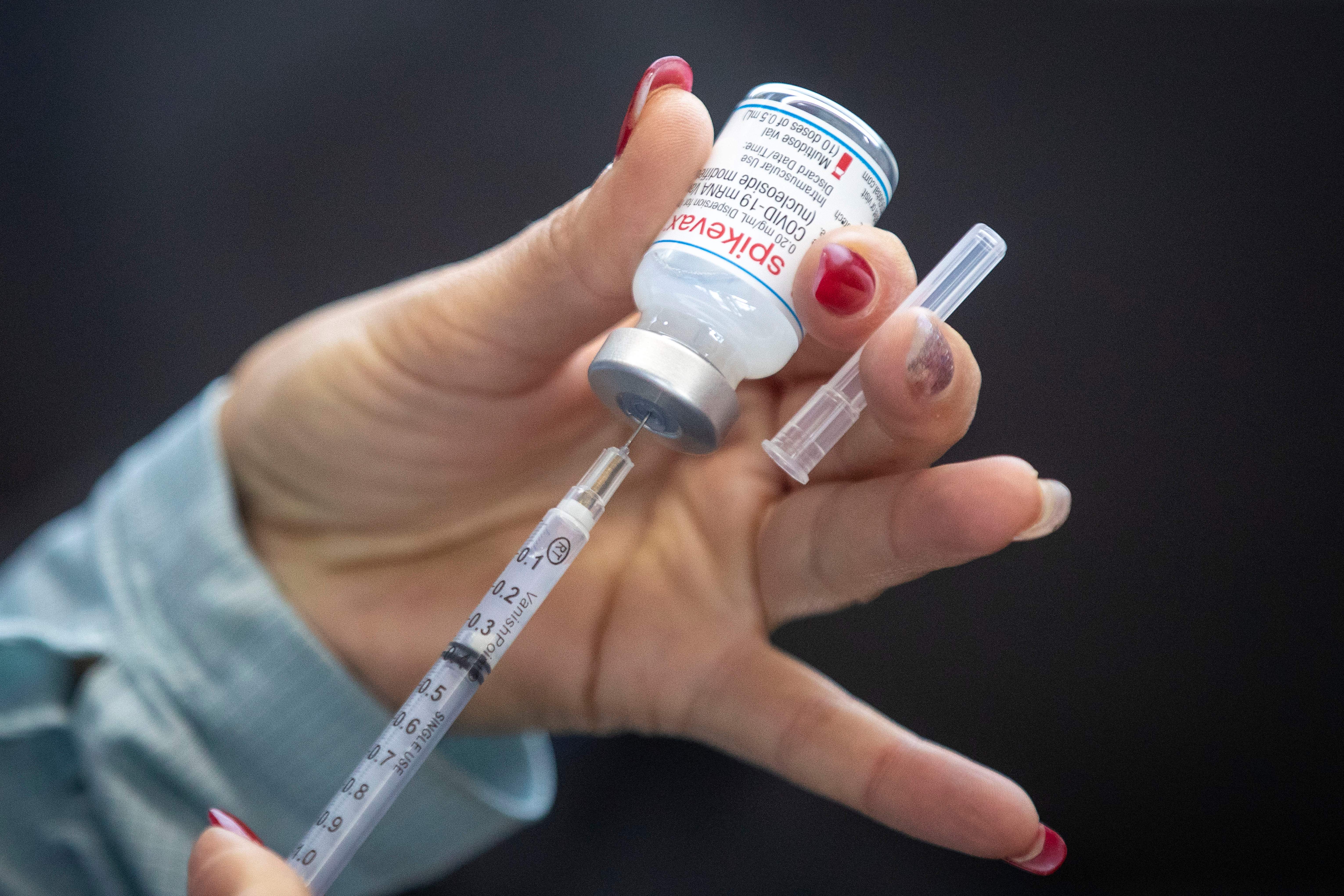
When Health Canada granted regulatory approval to Moderna’s combination COVID-19 and seasonal influenza vaccine—known clinically as mRNA-1083—for adults aged 50 and older, the headlines read like dry pharmaceutical bookkeeping. A regulatory milestone. An expansion of the immunization toolkit. A targeted approval for a specific demographic. For another look on this story, check out the recent update from World Health Organization.
Those headlines miss the point entirely. They treat a profound shift in human behavior and biological engineering like an inventory update. To understand what actually changed when federal regulators signed off on that single glass vial, you have to step away from the press releases and look at what happens in the human body—and the human kitchen—when winter arrives.
The Architecture of Hesitation
Consider a hypothetical scenario that plays out in millions of Canadian households every autumn. Meet Arthur, 68, a retired high school history teacher living outside Halifax. Arthur isn't anti-vaccine. He remembers lining up in gymnasiums in the 1950s for polio sugar cubes without a second thought. He believes in science, respects his family doctor, and wants to stay healthy enough to shovel his own driveway and fly to Calgary to see his grandkids at Christmas.
Yet by November, Arthur is only half-protected.
Why? Because in mid-October, he stopped by his local pharmacy for his annual flu shot. The pharmacist offered him the updated COVID-19 booster at the same time. Arthur hesitated. Last year, getting both on the same day left him feeling as though he had been hit by a slow-moving snowplow for thirty-six hours, with two throbbing shoulders that made sleeping on either side impossible. He told the pharmacist he would come back next week for the COVID shot.
Next week turned into a rainy Tuesday. Then his furnace needed servicing. Then the holidays arrived, and the urgency faded into background noise. By January, when a dual wave of influenza A and circulating SARS-CoV-2 variants swept through his community, Arthur had half an umbrella in a hurricane.
Public health data across North America confirms that Arthur’s story is not an exception; it is the statistical norm. Over the past several respiratory seasons, influenza vaccination rates among older adults have hovered steadily between 60 and 70 percent, while uptake for updated COVID-19 boosters has lagged far behind, often dropping below 20 or 30 percent even among high-risk seniors. Epidemiologists call it "vaccine fatigue," a sterile clinical phrase that fails to capture the real-world exhaustion of navigating fragmented healthcare schedules.
Every additional needle requires an additional decision. Every extra decision is an opportunity for life to get in the way.
Two Blueprints in a Single Drop
To grasp how Moderna compressed two distinct defenses into a single dose without diluting either one, it helps to abandon medical jargon and picture how the immune system actually reads information.
Think of traditional vaccines as wanted posters printed on heavy paper. Historically, making a flu shot meant growing live influenza viruses inside millions of fertilized chicken eggs, harvesting the fluid, inactivating the virus, and purifying the proteins. It is a slow, artisanal process invented in the 1940s. If the virus mutates while those eggs are incubating, the wanted poster arrives at the police station slightly out of date.
Messenger RNA works differently. Instead of handing your immune system a finished physical protein, an mRNA vaccine hands your cells a temporary, digital blueprint—a crisp set of genetic instructions written in biological code. Your own cellular machinery reads the blueprint, manufactures a harmless piece of the virus’s outer surface, displays it to your immune patrol, and then shreds the blueprint within days.
Until recently, however, those blueprints were delivered separately. Moderna’s mRNA-1083 merges two distinct instruction sets into one microscopic lipid nanoparticle—a tiny, protective fat bubble that ferries the genetic code safely into your muscle cells.
Inside that single 0.5-milliliter dose sit two specialized components:
- mRNA-1010, which encodes the hemagglutinin surface proteins for four seasonal influenza strains (two influenza A subtypes and two influenza B lineages), designed to match the World Health Organization's annual seasonal recommendations.
- mRNA-1283, a next-generation COVID-19 antigen construct engineered specifically to target the receptor-binding domain and N-terminal domain of the SARS-CoV-2 spike protein, triggering a stronger, more targeted antibody response at a lower dose than earlier pandemic-era shots.
I still remember the first time I sat across from a clinical immunologist who explained the challenge of combination vaccines. The fear in pharmaceutical development isn't just whether two vaccines can sit in the same vial without reacting chemically; it is immunological interference. If you shout two urgent warnings at a crowded room at the exact same moment, people often miss half of both messages. Early combination vaccines in medical history sometimes stumbled because the immune system focused overwhelmingly on one pathogen while ignoring the other.
That is precisely why Health Canada’s scrutiny of Moderna’s Phase 3 clinical trial data—which enrolled roughly 8,000 adults across two age cohorts—carried so much weight. Researchers weren't just testing whether the shot was safe. They were testing whether a single combined injection could provoke an immune response just as strong as—or stronger than—getting two separate licensed shots in opposite arms on the same day.
The data delivered a surprise. Not only did the combination shot meet all non-inferiority criteria, it actually generated statistically higher antibody responses against multiple influenza strains and SARS-CoV-2 variants in adults aged 50 and older compared to standard separate vaccinations. By pairing a streamlined, next-generation COVID antigen with an mRNA flu platform unburdened by egg-adaptation mutations, the combined shot taught the immune system to recognize both threats simultaneously without losing clarity.
Why 50 Is the Dividing Line
If you read the regulatory fine print closely, a specific question immediately surfaces: why did Health Canada approve the combination shot specifically for adults aged 50 and older, rather than the general adult population?
The answer lies in the cold arithmetic of biological aging and clinical risk.
Around age 50, the human immune system begins a gradual, invisible decline known as immunosenescence. Your thymus gland—the organ responsible for training new T-cells to recognize novel invaders—has been slowly shrinking since puberty, and by your sixth decade, its reserve capacity is markedly thinner. You still feel sharp. You still run five kilometers, manage teams, or carry groceries up three flights of stairs. Internally, however, your immune patrol takes longer to mobilize when confronted with respiratory viruses, and the inflammatory aftermath of infection lasts longer.
In Canada, adults over 50—and particularly those over 65—account for the overwhelming majority of hospitalizations, intensive care admissions, and deaths linked to both influenza and COVID-19. In a typical winter season, influenza alone triggers roughly 12,200 hospitalizations and 3,500 deaths nationwide, while COVID-19 continues to drive tens of thousands of severe respiratory admissions annually, straining emergency rooms from Vancouver to St. John’s.
Yet there is a second, equally practical reason regulators drew the line at 50: the clinical trial architecture itself. Moderna’s pivotal Phase 3 study split participants into two distinct groups—adults aged 50 to 64, and adults aged 65 and older—specifically because that demographic faces the steepest burden of co-circulating winter viruses and stands to gain the highest clinical benefit from simplified annual boosting.
In younger adults under 50, reactogenicity—the temporary, uncomfortable side effects like fever, chills, and fatigue—tends to be brisker because younger immune systems react more fiercely to mRNA stimulation. Focusing the initial authorization on Canadians 50 and up targets the exact population where high protection meets manageable tolerability, and where eliminating a second appointment translates directly into fewer hospital beds occupied in January.
What the Side Effects Actually Feel Like
Let’s be honest about the part everyone actually worries about when sitting in that pharmacy chair: tomorrow morning.
Nobody likes feeling miserable on a Wednesday because they tried to do the responsible thing on a Tuesday. When people ask whether combining two mRNA vaccines doubles the misery, they are asking a fair, grounded question rooted in lived experience. Many of us still vividly recall the heavy fatigue or low-grade fever that followed our early COVID-19 boosters—that unmistakable sensation of having a mild flu for twenty-four hours while your immune system ran a full-scale fire drill.
In Moderna’s clinical trials, the safety profile of the combination vaccine mirrored what patients already experience when receiving separate COVID-19 and high-dose or standard flu shots on the same day. The most common reactions were predictable and short-lived:
- Pain, redness, or swelling at the single injection site.
- Generalized fatigue and muscle aches.
- Headache and occasional low-grade chills.
Most symptoms peaked within the first 24 to 48 hours and resolved completely within two to three days without medical intervention. Crucially, regulators found no new safety signals—no unexpected spikes in severe allergic reactions, myocarditis, or neurological complications—compared to administering the two vaccines separately.
And there is one immediate, tangible relief built into the math: one sore arm instead of two. You still have a shoulder to sleep on that night.
The Invisible Stakes for Canada’s Healthcare System
Step back from the individual syringe for a moment and look at the broader institutional picture. Canada’s provincial healthcare systems operate on razor-thin margins every winter. Walk into an urban emergency department in Toronto, Montreal, or Calgary in mid-January, and you will see stretchers lined along hallway walls, nurses working double shifts, and elective surgeries quietly postponed because acute respiratory wards are overflowing.
Pharmacists—who now administer the vast majority of seasonal vaccines across Canadian provinces—feel that bottleneck firsthand. Every autumn, community pharmacies transform into mass vaccination clinics while still trying to fill daily prescriptions for blood pressure medications, insulin, and antibiotics.
Think about what happens behind the pharmacy counter when one combined vial replaces two separate products. Cold-chain refrigerator space—one of the scarcest resources in rural and northern clinics—is immediately cut in half. Syringe waste drops by fifty percent. Provincial billing codes, inventory tracking, and adverse-event reporting streamline into a single workflow. A pharmacist who previously needed twelve minutes to prepare, counsel, and administer two separate injections can complete the entire encounter in seven.
Multiply those five saved minutes across ten million eligible Canadians over 50. That is more than 800,000 hours of clinical capacity returned to an exhausted healthcare workforce—time that goes straight back into patient care, medication reviews, and rural clinic outreach.
And because Moderna’s mRNA flu component can be updated much closer to the start of the winter season than egg-based flu shots—which require strain selection nearly six months in advance—public health officials gain precious weeks of viral surveillance data before locking in the autumn formula. When a sneaky H3N2 flu strain mutates in the Southern Hemisphere during our summer, mRNA manufacturing can pivot in weeks rather than months.
The Questions Still Hanging in the Cold Air
Approval from Health Canada is a vital gate, not the finish line. Even with regulatory clearance secured, real-world questions remain that deserve clear, unvarnished answers rather than pharmaceutical cheerleading.
First, approval does not automatically mean the shot will be sitting in every neighborhood pharmacy tomorrow morning. In Canada, federal authorization confirms safety, efficacy, and manufacturing quality, after which the National Advisory Committee on Immunization (NACI) issues clinical guidance on how the vaccine should be used, and provincial health ministries negotiate procurement and public funding. Depending on provincial rollout schedules and existing supply contracts, access may roll out unevenly across provinces before becoming standard across public programs.
Second, cost and coverage matter. While routine seasonal flu and COVID-19 shots have historically been publicly funded across Canadian provinces, new combination formulations sometimes debut first on the private market—covered by employer health plans or out-of-pocket payment—before provincial formularies absorb them fully for all eligible residents over 50. Checking with your provincial health portal or local pharmacist before walking in remains essential.
Third, science never offers absolute immunity. Neither a combined mRNA shot nor two separate vaccines will erect an impenetrable force field that stops every microscopic viral particle from entering your nasal passages. You can still catch a mild breakthrough sniffle at a crowded family dinner. What the data consistently demonstrates is that timely vaccination dramatically slashes the odds that a winter infection spirals into viral pneumonia, cardiac strain, long-term post-viral exhaustion, or an ambulance ride at three in the morning.
Back in the Pharmacy Aisle
Picture that same Shoppers Drug Mart aisle next October.
The wool coats are still there. The tethered pen on the clipboard hasn't changed. Arthur walks up to the counter, rolls up his left sleeve, and leaves his right sleeve buttoned. The pharmacist swabs a single patch of skin, presses the plunger once, applies a small round bandage, and hands him a single receipt.
Two minutes later, Arthur is walking out into the crisp autumn air, both keys in his pocket, his errands finished before noon, protected against two distinct viruses that have spent the last several winters tag-teaming older lungs. No second appointment taped to the refrigerator door. No mental tug-of-war in November. Just one small, quiet decision made once, and done.