Fluorescent lights hum at sixty hertz in a windowless room three stories beneath Washington. A keyboard clicks. Then another. On a Tuesday morning, an administrator opens a terminal window, types a single command, and watches an entire model folder vanish from a government server.
No sirens. No press conference in the rose garden. Just a deletion log scrolling down a glowing monitor while coffee cools beside a stack of printed memos.
When headlines report that the United States has ordered DeepSeek removed from federal systems over national security risks, most people picture espionage thrillers—microfilm hidden inside hollowed-out coins, trench coats in the rain, midnight dead drops behind embassy walls. The reality is quieter and far stranger. Modern statecraft often looks like an IT ticket with high clearance.
I have spent years sitting in rooms with engineers who build and defend digital infrastructure, and I will admit something right up front: even seasoned security specialists sometimes struggle to trace every invisible thread inside a massive neural network. Weights are numbers. Billions of them. You cannot hold a weight in your hand, smell it, or inspect its grain like steel on a bridge. That opacity makes the whole subject feel slippery, almost uncanny, and it is completely normal if you feel a little disoriented trying to tell real danger apart from political noise.
How a Cheap Model Shook a Fortress
To understand why a software purge matters to ordinary citizens, consider a hypothetical analyst named Elena. Elena is not a spy. She works on public health logistics or veteran benefits or supply-chain forecasting—the unglamorous machinery that keeps a large country from stalling when weather or shortages hit. One afternoon, she tests a fast, low-cost AI tool that promises to summarize dense regulatory filings in seconds. It works remarkably well. It costs a fraction of what commercial alternatives charge. For a budget-strapped agency trying to clear a backlog before Friday, temptation is practically oxygen.
That is the human hook behind almost every federal software ban. Bureaucrats rarely install risky code out of malice. They install it because their inbox is overflowing, their software budget was cut last quarter, and a tool on their screen seems to hand them back two hours of their life.
To picture what happens next, let us use a metaphor. Think of a modern government agency as a sprawling municipal water system. Clean water flows through pipes, pumps push it uphill, and filters catch sediment before it reaches a school or hospital. If a new pump arrives at a fraction of the usual price, a tired engineer might hook it up to clear a bottleneck. Even if the pump runs smoothly on day one, nobody on the local crew knows who machined the valves inside the sealed casing, what alloys sit against the pressure line, or whether a remote signal could alter the flow rate when nobody is watching.
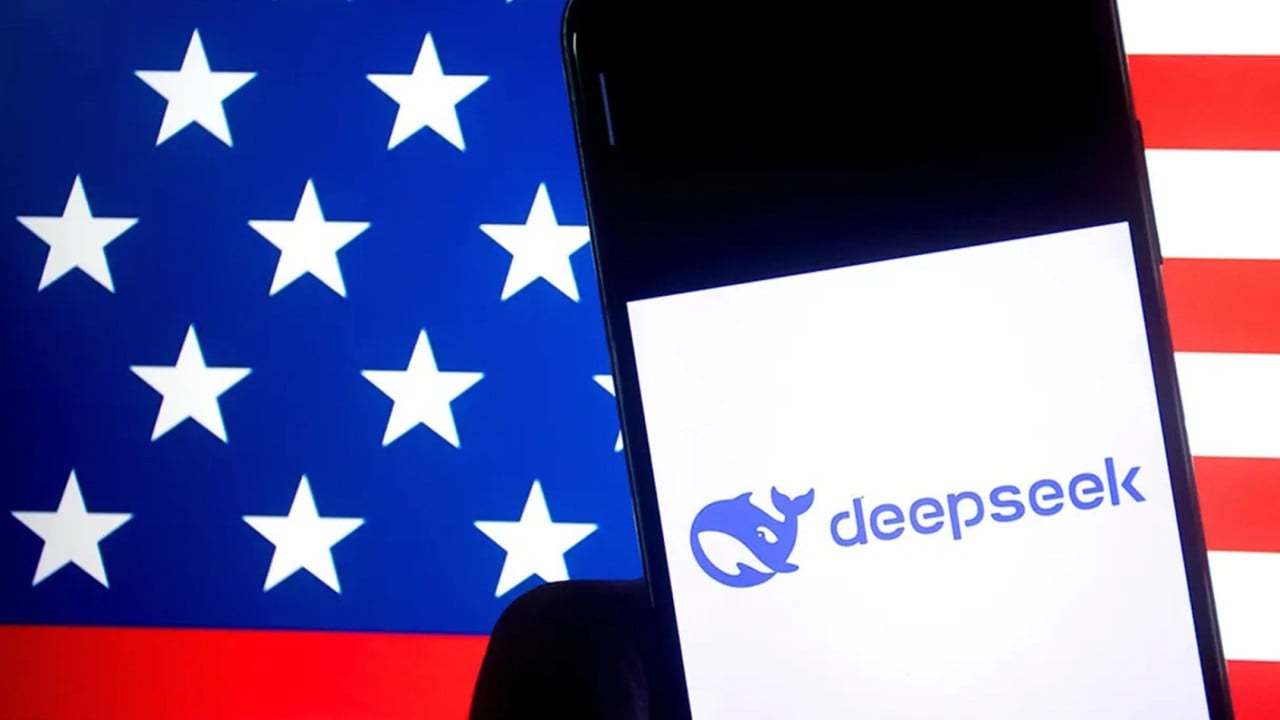
Federal directives targeting DeepSeek sit right on that fault line between efficiency and trust. DeepSeek drew global attention because its training methods and pricing challenged assumptions about how much capital and hardware frontier AI required. Suddenly, high-capability reasoning tools looked less like expensive luxury goods and more like commodities spreading everywhere at once.
When a capability spreads that fast, security posture shifts from curiosity to containment. Officials look at foreign jurisdiction, data-handling rules, legal obligations under overseas statutes, and the sheer scale of what an agency might type into a prompt. A single prompt entered into an unvetted system is never just a question. Sometimes it is draft policy. Sometimes it is infrastructure coordinates. Sometimes it is personnel data or proprietary procurement notes that should never cross a border.
The Invisible Ledger of Every Prompt
Silence. That is what a data leak sounds like. Nobody hears a window break when text travels across a fiber-optic cable.
People frequently ask whether banning a model on government hardware means the technology itself is broken or useless. Those are two different questions, and conflating them clouds the whole debate. Performance and trustworthiness are not twins. A calculator can multiply numbers accurately while still sitting on a network with a backdoor. A brilliant research assistant can draft clean prose while operating under rules that compel its developer to share logs or tune outputs around sensitive topics.
Another question that surfaces whenever a ban hits the news is whether federal agencies were already using the tool before the order landed. Often, the answer is messy. Shadow IT has been a headache for chief information officers since the first employee plugged an unauthorized modem into a wall jack in the 1980s. Official policy moves slowly through committees and legal reviews; individual workers move fast because deadlines do not wait for memos. By the time a formal directive instructs agencies to rip software out of government systems, some teams have already experimented with it, benchmarked it, or woven it into informal workflows.
And what about everyday citizens—people who do not hold clearances, do not touch classified networks, and simply want to know if their own phone or laptop is affected? A federal removal order applies directly to government systems, contractors operating on federal infrastructure, and official devices. Yet ripples travel outward. Universities that take federal grants pay close attention. Defense contractors audit their stacks so they do not trip compliance wires. Even private companies watch closely because federal procurement rules often set the tone for enterprise risk committees across the economy.
What Happens When Trust Erodes
History offers a sobering reminder about how nations react when technology outpaces shared rules. During earlier waves of communications technology—undersea telegraph cables, radio frequencies, early satellite links—governments initially treated infrastructure as a technical convenience, only to realize later that control over channels meant leverage in crises.
Software adds a twist that physical cables never had: adaptability. A physical wire carries whatever electrical or optical signal you send down it. An AI model interprets language, synthesizes patterns, and shapes how humans frame problems. If an analyst relies on a system to summarize intelligence, draft regulations, or spot anomalies in logistics, the model is not merely a passive pipe. It is part of the cognitive assembly line.
Consider what happens next when security teams cannot verify the entire chain of custody behind that assembly line. Paranoia creeps in, followed quickly by blanket rules. Blanket rules are blunt instruments. They protect the perimeter, yet they can also slow legitimate research or push agencies back toward clunky legacy tools that frustrate the very public servants trying to deliver services faster.
Still, caution in high-stakes environments is rarely irrational. A hospital does not test an unverified infusion pump on a surgical ward just because the manufacturer promised great results on a brochure. National infrastructure carries a similar burden of care. Once sensitive operational patterns enter an external pipeline, you cannot un-ring that bell. Data copied is data multiplied.
Living With Friction in the Machine
We tend to worship frictionlessness. We want instant answers, zero setup, effortless translation, immediate synthesis. Every app store promises that life will get smoother if we just click accept and keep moving.
National security lives in the friction. It lives in the pause before someone pastes a sensitive document into a web box. It lives in the awkward moment when an IT lead tells a team to delete a convenient tool and go back to a slower approved path. It lives in the unglamorous audits that cost money and produce no shiny demo.
Out in that windowless room beneath Washington, the terminal window closes. Another server reboots. Outside, autumn wind sweeps dry leaves across stone steps while millions of people carry glowing rectangles in their pockets, wondering which tools are safe, which ones are compromised, and who gets to decide where the boundary lies.
A single line of code can cross an ocean in milliseconds, leaving no footprint on the grass.