Two words. That is all it took to change the temperature of a room three thousand miles away from the microphones.
Fairly soon.
If you have never sat at a kitchen table waiting for an air-raid siren to decide whether you finish your coffee, those two words sound like bureaucratic filler. They sound like the kind of polite, non-committal phrasing a dinner guest uses when they are standing by the front door with their coat on, promising to call next week. You hear them on a car radio during a morning commute, nod once, and merge into the left lane.
When you live beneath the flight paths, however, you become an involuntary linguist. You learn to weigh syllables the way a jeweler weighs gold dust—holding your breath so you do not disturb the scale.
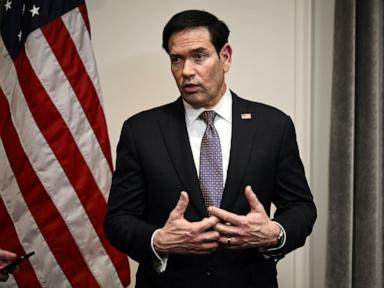
According to recent reporting on statements from President Donald Trump, the conflict involving Iran is projected to wind down "fairly soon," with the administration playing down the likelihood of launching new military strikes. On the surface, the headline reads like a routine diplomatic exhale. A signal to financial markets that the Strait of Hormuz might remain navigable. A quiet reassurance to oil traders in London and Houston that crude prices will not spike before the opening bell.
Yet headlines have a way of flattening human geography into lines on a map. They turn sleepless nights into geopolitical posture. They take the visceral terror of families taping plastic sheeting over their windows and compress it into an assessment of strike prospects.
To understand what "fairly soon" actually feels like on the ground, consider a hypothetical composite of the people caught in the gears of this moment. Call her Elena, a thirty-four-year-old structural engineer living in Haifa, and call him Reza, a forty-one-year-old pharmacist working a night shift in Isfahan. Neither of them sits in a situation room. Neither of them drafts cables or briefs press corps. Both of them spend their evenings refreshing news feeds with the grim, compulsive discipline of people trying to read the weather before a storm hits an unreinforced roof.
For Elena, the war is measured in seconds—specifically, the ninety seconds between an alert chiming on her phone and the heavy, muffled thud of an interceptor meeting its target high above the bay. Her seven-year-old son has learned to sleep with his sneakers beside his bed, laced loosely enough to slip on without looking. When Elena reads reports that Washington expects the conflict to end "fairly soon" and is playing down new strikes, she does not feel a sudden wave of euphoria. She feels a sharp, almost painful spike of anxiety.
Why? Because in the final stretch of any confrontation, nobody wants to be the last casualty before the ink dries.
The Architecture of Ambiguity
Diplomacy runs on strategic ambiguity. Think of it like a dimmer switch rather than a wall toggle. If a leader flips the switch completely off—declaring an immediate, unconditional halt to all military options—they surrender their leverage at the negotiating table before the other side has even pulled up a chair. If they crank the switch all the way up, threatening relentless escalation, they corner their adversary into fighting with nothing left to lose.
So they reach for phrases like "fairly soon." They play down new strikes without taking them entirely off the table.
From the perspective of Washington, as conveyed in Trump's remarks, this calibration serves several interlocking purposes at once. First, it signals to domestic audiences—weary of open-ended foreign entanglements and sensitive to inflation at the gas pump—that the White House has no appetite for a protracted quagmire. Second, it offers Tehran an off-ramp, a quiet acknowledgement that if the cycle of retaliation pauses, American bombers will not be fueled for another sortie. Third, it reassures regional allies who have spent months bracing for a wider conflagration that could scorch every capital from the Levant to the Persian Gulf.
History, however, teaches us that the gap between "winding down" and "over" is where the most dangerous miscalculations live.
Look back at the closing weeks of the Korean War in 1953, or the final months of the Iran-Iraq War in 1988. Once word leaks out that the major powers are looking for the exit, local commanders and rival factions often rush to grab one last piece of leverage, launch one final salvo to prove they were not defeated, or settle an old score while the fog of war still provides cover. Peace, when it approaches slowly, rarely arrives like a gentle tide. More often, it arrives like a sudden drop in barometric pressure—the sky turns bruised and still right before the windows rattle.
What the Market Hears Versus What the Street Hears
Watch how differently two worlds react to the exact same press briefing.
In Manhattan and Zurich, algorithms parse the transcript within milliseconds. The phrase "plays down prospects of new strikes" triggers automated buy orders in shipping stocks and sells off energy futures. Risk premiums—the invisible tax added to every barrel of oil and every container ship passing through contested waters—begin to shave down by fractions of a percent. For institutional investors, de-escalation is a math problem with a clear variable: fewer missiles equal lower insurance rates.
Now walk into Reza’s pharmacy in Isfahan.
The fluorescent tube above his counter hums with a faint, erratic flicker, the result of voltage fluctuations across a strained municipal grid. Reza is not tracking Brent crude futures. He is tracking the price of imported insulin and blood pressure medication, watching how the rial behaves every time a rumor circulates on Telegram. When international news outlets report that the American president believes the war will end "fairly soon," Reza’s customers ask him a question that no white paper in Washington can answer: Does that mean next Tuesday, or does that mean by spring?
I remember standing on a concrete balcony in Tel Aviv during a previous round of sirens years ago, watching the orange arcs of interceptors stitch across the night sky while a radio announcer inside my apartment calmly read out diplomatic statements about "imminent calm." The disconnect between the voice on the radio and the vibration in the soles of my shoes was dizzying. It teaches you a permanent skepticism toward tidy timelines. You realize that officials speak in eras and quarters, while human beings live in heartbeats and grocery runs.
And yet, dismissal is too easy. Cynicism is a comfortable armchair, especially when you are sitting safely outside the blast radius.
To dismiss Trump’s remarks as mere rhetoric misses the real weight they carry. In modern statecraft, public signaling by an American president is not commentary on the weather; it is part of the weather system itself. When the White House publicly lowers the temperature and signals reluctance toward fresh strikes, it alters the internal calculus of every defense ministry in the region. Generals who were preparing target packages for next week suddenly find their orders placed on hold. Back-channel intermediaries in Doha, Muscat, and Geneva suddenly find their phone calls returned a little faster.
The Invisible Ledger of Restraint
People often ask what actually stops a conflict once missiles have already flown. We are conditioned by movies and history textbooks to look for a dramatic turning point—a decisive battle, a signed treaty on the deck of a battleship, a sudden collapse of will.
In reality, most modern standoffs end through exhaustion and arithmetic.
Every air defense interceptor fired into the night sky costs hundreds of thousands—sometimes millions—of dollars, and takes months of specialized manufacturing to replace. Every ballistic missile launched depletes a finite stockpile that cannot be replenished overnight under sanctions and air surveillance. Every day a port operates under threat of closure drains billions from economies that were already walking a tightrope before the first shot was fired.
Eventually, both sides stare at the same ledger. They realize that the next round of strikes will inflict pain without changing the fundamental political reality on the ground. You can destroy a radar array, crater a runway, or hit a command bunker, yet the underlying geography remains stubbornly intact. Iran is still a nation of nearly ninety million people sitting astride the world’s most vital energy chokepoint. Israel and its neighbors still have to wake up tomorrow morning in the same crowded neighborhood. The United States still has global commitments stretching from the South China Sea to Eastern Europe that cannot be starved indefinitely to feed a single theater.
Playing down new strikes is what happens when the cost-benefit curve finally bends downward. It is the quiet admission that further kinetic action yields diminishing returns.
Still, uncertainty clings to every word. Will hardliners in Tehran view restraint as weakness and test the boundary one more time? Will an unforeseen incident at sea—a rogue drone, a misidentified radar blip, a nervous captain—drag everyone back into the dark just as the door was swinging shut? Nobody, not even the people holding the briefing binders in Washington, can promise an airtight guarantee. Anyone who tells you they know the exact date the skies will clear is selling certainty they do not possess.
Waiting for the Ordinary
That is the hardest part of living through a chapter of history before the final page is written. You do not get the luxury of hindsight. You have to pack lunches, refill prescriptions, answer emails, and water houseplants while the future hangs suspended between two cautious phrases.
Think back to Elena in Haifa and Reza in Isfahan.
If the projection holds—if "fairly soon" actually turns into days rather than months, and the prospects for new strikes continue to fade—there will be no ticker-tape parade. There will be no single dramatic broadcast announcing that fear has officially been repealed. Instead, the ending will look almost absurdly ordinary.
Elena will leave her son’s sneakers in the closet instead of beside the bed. She will stand at her kitchen counter and drink a cup of coffee all the way to the bottom while it is still hot, listening to the mundane, glorious sound of garbage trucks rumbling down the street instead of sirens wailing from the hills.
Reza will lock the metal shutter of his pharmacy at midnight, walk home under streetlights that do not flicker, and look up at a dark sky that holds nothing more threatening than clouds.
Until that night arrives, two words hang in the air over millions of rooftops, fragile as glass, carrying the weight of everything left unsaid.