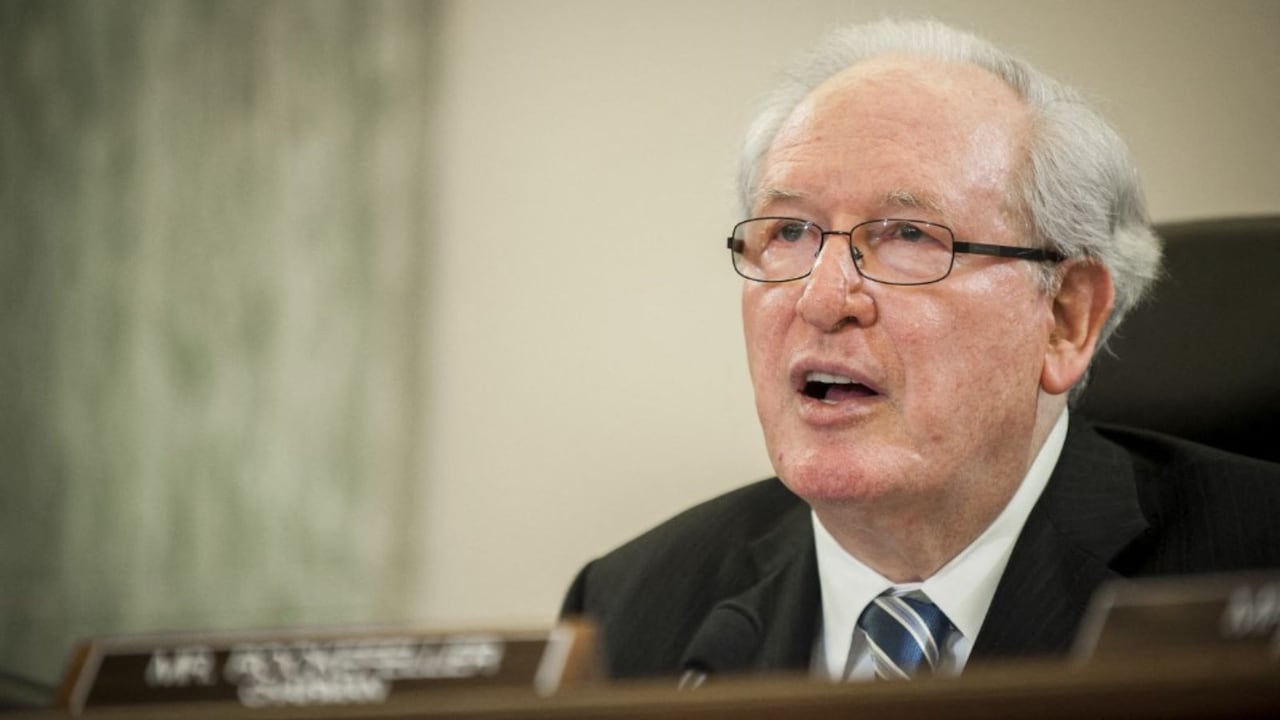
John Davison "Jay" Rockefeller IV, the former five-term Democratic U.S. Senator and two-term Governor of West Virginia, died at the age of 89, effectively closing the final electoral chapter of one of America’s most storied political dynasties. While standard obituaries frame his passing as the graceful sunset of a gentleman statesman, the real story is far more complex. His death marks the permanent extinction of a specific, vanished species of American politician—the patrician liberal who could command a working-class, coal-dependent state through sheer financial independence, institutional patience, and relentless constituent service.
For nearly five decades, Jay Rockefeller operated as an anomaly in Appalachian politics. Born into unimaginable wealth as the great-grandson of Standard Oil co-founder John D. Rockefeller, he arrived in West Virginia in 1964 not as a conquering corporate heir, but as a 27-year-old VISTA volunteer in the impoverished mining community of Emmons. That decision was neither accidental nor purely altruistic; it was the opening move of a calculated, lifelong effort to rehabilitate a surname synonymous with ruthless Gilded Age monopoly and turn it into a brand of progressive public service.
The Strategic Reinvention of a Gilded Age Name
To understand Jay Rockefeller’s career, you have to look past the polite Capitol Hill tributes and examine the structural mechanics of his political survival. When John D. Rockefeller built Standard Oil in the late nineteenth century, he crushed competitors, manipulated railroad rebates, and drew the ire of Ida Tarbell and the Supreme Court. By the time Jay Rockefeller entered public life in the 1960s, the family had spent half a century laundering its reputation through philanthropy, medical research, and conservation.
Jay took that rehabilitation into the electoral arena. Unlike his uncles—Nelson Rockefeller, who served as Governor of New York and Vice President, and Winthrop Rockefeller, who became Governor of Arkansas—Jay did not align himself with the moderate wing of the Republican Party. He became a Democrat. In West Virginia, a state forged by labor union battles and New Deal loyalty, registering as a Democrat was the baseline requirement for political viability.
Yet being a wealthy outsider in a state plagued by systemic poverty carried massive political risk. Critics routinely dismissed him as a carpetbagger buying his way into power. In his 1972 gubernatorial race against incumbent Republican Arch Moore, voters rejected him precisely on those grounds. Rockefeller lost by nearly 70,000 votes.
That loss forced a brutal tactical recalibration. Rockefeller stopped campaigning like a national figure slumming in Appalachia and started operating like a hyper-local machine boss. He poured millions of his personal fortune into his 1976 gubernatorial comeback and his 1984 Senate race, spending roughly $12 million of his own money in 1984 alone—an astronomical sum for a small state at the time.
Money alone, however, cannot sustain a 30-year Senate career in a state that steadily drifted away from the Democratic Party. Rockefeller survived because he understood that West Virginia voters viewed federal power through a transactional lens. They did not want ideological lectures from a Harvard-educated New Yorker; they wanted a senator with the clout to bring federal dollars, healthcare protections, and infrastructure projects back to the hollows.
Inside the Senate Machinery and the Healthcare Gamble
During his tenure in the United States Senate from 1985 to 2015, Rockefeller deliberately avoided the flashy, cable-news-ready theatrics that defined many of his peers. He was never a dynamic orator. His speeches on the Senate floor were often stiff, measured, and bureaucratic. Instead, he accumulated power through committee seniority, mastering the arcane procedural levers of the Senate Finance Committee and the Senate Commerce, Science, and Transportation Committee.
His defining obsession was healthcare. Long before the Affordable Care Act became the central partisan battleground of the Obama administration, Rockefeller was fighting trench warfare over Medicare, Medicaid, and the Children's Health Insurance Program (CHIP).
In 1997, working alongside Republican Orrin Hatch and Democrat Ted Kennedy, Rockefeller was instrumental in passing CHIP, which extended health coverage to millions of low-income children whose families earned too much to qualify for Medicaid but could not afford private insurance. In West Virginia, where chronic illness, workplace injuries, and generational poverty depressed life expectancy, this was not abstract policy. It was political lifeblood.
Later, during the grueling 2009 and 2010 negotiations over the Affordable Care Act, Rockefeller pushed aggressively for a government-run public option to compete directly with private insurers. When moderate Democrats like Joe Lieberman and Ben Nelson killed the public option to secure the 60 votes needed to break a Republican filibuster, Rockefeller swallowed his frustration and voted for the final bill anyway.
That vote was a calculated sacrifice. By 2010, the Obama administration had become deeply unpopular in West Virginia, largely due to federal environmental regulations targeting the coal industry. Rockefeller knew that backing the Affordable Care Act would be weaponized against him by Republicans, yet he viewed the expansion of Medicaid and protections for pre-existing conditions—including black lung disease—as non-negotiable for his constituents.
The Coal Paradox and the Limits of Patrician Politics
No honest assessment of Jay Rockefeller’s career can ignore his fraught, contradictory relationship with the coal industry. For decades, West Virginia’s economy and political identity were bound to coal extraction. To win statewide office, a politician had to protect the miners, appease the coal operators, and fend off environmental regulations from Washington.
Rockefeller walked this tightrope for thirty years, often bending to the economic realities of his state even when they clashed with his broader progressive instincts. He fought fiercely to protect the United Mine Workers of America (UMWA) pension and healthcare funds, notably spearheading the Coal Act of 1992, which forced coal companies to honor promised health benefits for retired miners and their widows. Without that legislation, tens of thousands of elderly West Virginians would have lost their medical coverage overnight.
At the same time, Rockefeller routinely defended coal-fired power plants against clean air mandates and resisted cap-and-trade climate legislation that threatened mining jobs. Critics from the environmental movement accused him of enabling an extractive economy that kept West Virginia poor and polluted while delaying an inevitable energy transition.
By the early 2010s, the middle ground Rockefeller had occupied for decades vanished entirely. The rise of hydraulic fracturing made natural gas cheaper than Appalachian coal, triggering a market-driven collapse in coal employment that politicians blamed almost exclusively on the Obama Environmental Protection Agency. Simultaneously, cultural wedge issues—guns, abortion, and social conservatism—overtook economic populism as the primary drivers of West Virginia voting behavior.
In 2008, Rockefeller won his fifth Senate term with 64 percent of the vote. Just four years later, Barack Obama lost every single county in West Virginia to Mitt Romney. The electorate had shifted beneath Rockefeller’s feet. When he announced in 2013 that he would not seek re-election in 2014, it was widely understood among political analysts that he was stepping aside before the red wave could wash him out of office. Republican Shelley Moore Capito—the daughter of Arch Moore, the man who had beaten Rockefeller in 1972—easily won his seat, ending nearly six decades of Democratic control over that Senate slot.
Intelligence Oversight and Institutional Accountability
Beyond domestic policy, Rockefeller left a significant mark on national security oversight during one of the most turbulent eras in modern American intelligence. Serving as Vice Chairman and later Chairman of the Senate Select Committee on Intelligence during the George W. Bush administration, he found himself at the center of the post-9/11 battles over warrantless surveillance and interrogation practices.
In 2003, after receiving a classified briefing on the National Security Agency’s warrantless wiretapping program—known internally as Stellar Wind—Rockefeller found himself legally barred from discussing the program with his staff or outside legal counsel. Bound by strict classification rules, he took the unusual step of writing a handwritten letter to Vice President Dick Cheney expressing his deep reservations about the legality and oversight of the program, locking a copy in his safe to create a contemporaneous record.
Years later, Rockefeller became a key architect of the Senate Intelligence Committee report on CIA torture, a massive, multi-year investigation into the agency's detention and interrogation program. While committee chair Dianne Feinstein became the public face of the report's release in 2014, Rockefeller’s insistence on institutional accountability helped force the declassification of the executive summary over intense pushback from the intelligence community and the White House.
His approach to intelligence oversight reflected his broader governing philosophy. Rockefeller believed deeply in the legitimacy of American institutions, even when those institutions failed. He did not want to tear down the intelligence apparatus; he wanted to force it to operate within the bounds of constitutional checks and balances.
Why the Rockefeller Dynasty Ended With Him
The phrase "political dynasty" gets thrown around loosely in Washington, usually applied to families like the Kennedys, the Bushes, or the Clintons, whose power was built directly through electoral politics. The Rockefellers were different. Their dynasty was built on industrial capital first and converted into political influence second.
Across two generations, the family placed three brothers in statehouses and the vice presidency, and one nephew in the U.S. Senate:
- Nelson Rockefeller served four terms as Governor of New York (1959–1973) and as Vice President under Gerald Ford (1974–1977), defining the "Rockefeller Republican" wing of the GOP—fiscally conservative, socially moderate, and supportive of big-government infrastructure and social programs.
- Winthrop Rockefeller moved to Arkansas, modernized the state's Republican Party, and served two terms as Governor (1967–1971), championing civil rights and prison reform in the segregated South.
- Laurance Rockefeller bypassed electoral office to become a dominant force in federal conservation policy and venture capital.
- David Rockefeller ran Chase Manhattan Bank, exercising vast informal influence over global finance and foreign policy without ever running for a single vote.
Jay Rockefeller was the last of them to hold public office, and no younger member of the family has stepped forward to claim the mantle. There are three concrete reasons why the Rockefeller political machine died with Jay.
First, the dilution of dynastic wealth and focus. By the fourth and fifth generations, the Rockefeller fortune had been divided among dozens of heirs and dispersed into hundreds of philanthropic trusts, environmental funds, and cultural institutions. Modern political campaigns require hundreds of millions of dollars in continuous fundraising; a single family fortune no longer buys the structural advantage it did in 1976.
Second, the collapse of the political center. The Rockefeller brand of politics—whether Nelson’s liberal Republicanism or Jay’s patrician, institution-building Democratic centrism—relied on bipartisan consensus and legislative compromise. Today’s primary elections punish moderation. A candidate with Jay Rockefeller’s temperament would struggle to survive a modern partisan primary, where ideological purity and viral media combat outweigh legislative seniority.
Third, voter skepticism of aristocratic wealth. While billionaires still enter American politics, they rarely do so by spending decades immersed in local constituent service. Modern political outsiders run as populist disruptors promising to burn down the system. Jay Rockefeller ran as a steward promising to make the system work for people who had been left behind by it.
When Jay Rockefeller walked off the Senate floor for the final time in late 2014, he left behind a West Virginia that was rapidly turning into one of the most reliably Republican states in the country, and a United States Senate increasingly paralyzed by procedural warfare. His death at 89 is not merely the passing of a former senator; it is the final confirmation that the era of the wealthy, institution-minded public servant has permanently closed.


