Silence.
That is the first thing they test you for in Houston, long before anyone measures the bone density in your femurs or checks whether your retinas flatten under zero gravity, because out past the Van Allen radiation belts, noise is a luxury you cannot afford to pack. Meanwhile, you can find related stories here: The Ghost Code in the Tower and the Seventy-Mile-Per-Hour Tire Change.
When NASA opens its astronaut recruitment portal to expand the Artemis program, the headlines usually read like a glorified classified ad for superhero test pilots. They list the baseline criteria—a master’s degree in a STEM field, two years of professional experience, U.S. citizenship, the ability to pass a long-duration flight physical—and move on to the next news cycle.
They miss the entire point. To explore the bigger picture, we recommend the recent report by ZDNet.
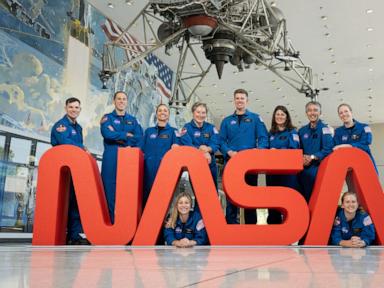
This isn't a hiring spree for a government agency. It is a casting call for the people who will end humanity’s fifty-year quarantine in low Earth orbit. Since Eugene Cernan climbed the ladder of the Apollo 17 lunar module in December 1972, not a single human being has traveled more than a few hundred miles above our atmosphere. We became a species that stared at the ceiling of our own house and convinced ourselves the roof was the sky.
The Architecture of a Modern Explorer
To understand who NASA is actually hunting for right now, picture a hypothetical applicant named Elena.
Elena isn't a fighter pilot with a jawline carved out of granite and an allergy to self-doubt. In this scenario, she’s a thirty-four-year-old hydrogeologist from Tucson who spends her weekends repairing vintage mechanical watches and her weekdays mapping underground aquifers in scorching desert basins. When she logs onto USAJOBS to submit her application, she hesitates over the "Submit" button for twenty minutes, convinced she lacks the cinematic pedigree of the Mercury Seven.
She is precisely the person Houston wants.
The Mercury and Apollo eras required fearless test pilots who could wrestle a tin can through the upper atmosphere using slide rules and raw nerve. Artemis requires something radically different. When NASA sends crews back to the lunar South Pole, they aren't going for a weekend camping trip to plant a flag and hit a golf ball. They are going to prospect for water ice, build sustainable habitats, and test the life-support hardware that will eventually carry humans to Mars.
Think of the difference between a sprinter and an ultramarathoner. Apollo was a dead sprint—three days out, a frantic few hours on the grey dust, three days back. Artemis is the ultramarathon. You don't need someone who thrives on a ninety-second adrenaline spike; you need someone who can spend six months in a pressurized aluminum cylinder with three other people, fix a broken carbon-dioxide scrubber at three in the morning without losing their temper, and still have the mental bandwidth to run geological assays before breakfast.
I remember standing inside the Neutral Buoyancy Laboratory in Houston a few years back, watching two astronaut candidates work underwater in forty-foot-deep pools wearing three-hundred-pound pressurized suits. From the observation deck, it looked graceful, almost balletic. Down in the water, it was a brutal, grinding war against physics. Every movement of a wrist required fighting the stiff, balloon-like resistance of the suit. After six hours in that tank, their fingernails were bruised black from jamming against the inside of their gloves, and their faces were gray with exhaustion.
Yet when they surfaced, they didn't complain about the pain. They immediately started debriefing each other on how they could shave four seconds off a tether transfer. That is the quiet, unglamorous grit NASA is screening for beneath the academic degrees.
Decoding the Gatekeepers
Most people assume the selection process is a ruthless elimination tournament designed to find physical perfection. It isn't. It’s a psychological stress test disguised as a job interview.
Out of roughly twelve thousand applicants in a typical cycle, NASA’s Astronaut Selection Board—a tight-knit group of active astronauts, flight surgeons, and human-resources veterans—will narrow the pool down to about a hundred and twenty finalists. Those finalists are brought to the Johnson Space Center in Houston for a week of relentless evaluation.
Consider what happens behind those closed doors. You aren't just put on a treadmill until your heart rate hits its ceiling. You are placed in a windowless room with four strangers and handed a box of mismatched PVC pipes, a roll of duct tape, and a seemingly impossible engineering problem. A panel of psychologists sits behind one-way glass with clipboards. They aren't watching to see who builds the bridge fastest. They are watching to see who listens when the quietest person in the room speaks up, who hoards information to look smart, and who cracks a joke when the whole structure collapses on the table.
In space, ego is a lethal toxin. If you are locked inside the Orion spacecraft—a capsule with roughly the habitable volume of a large SUV—for a ten-day transit to lunar orbit, a brilliant narcissist will destroy the mission faster than a micrometeoroid strike.
NASA calls this trait "expeditionary behavior." In plain English, it means being an extraordinarily pleasant, hyper-competent roommate when everything is on fire.
The Invisible Stakes of the South Pole
Why the urgency to expand the astronaut corps right now? Because the geography of spaceflight has shifted beneath our feet, and the timeline is tightening.
For decades, the International Space Station served as our orbital training wheels. It is a magnificent laboratory, but it sits a mere two hundred and fifty miles above Earth. If an astronaut suffers a burst appendix on the ISS, they can climb into a docked capsule and be on an operating table in Kazakhstan or Florida within hours.
Artemis strips away that safety net.
At nearly a quarter of a million miles away, there is no quick abort button. A medical emergency on the lunar surface means handling it with the tools in your locker and a two-and-a-half-second communication delay to Mission Control. Worse still, NASA is aiming directly for the lunar South Pole—a treacherous landscape of jagged craters and towering peaks where the sun never rises more than a few degrees above the horizon.
In the permanently shadowed regions of those craters, temperatures plunge to minus four hundred degrees Fahrenheit. That brutal cold is actually the prize. Over billions of years, comets and asteroids have deposited millions of tons of water ice into those dark traps. If Artemis astronauts can figure out how to mine and purify that ice, we don't just get drinking water. By splitting the hydrogen and oxygen molecules, the Moon becomes a literal gas station for deep-space rockets.
But getting to that ice requires walking into pitch-black craters where traditional solar panels are useless, driving rovers over razor-sharp regolith that eats through Kevlar boots like sandpaper, and enduring radiation levels far higher than anything experienced on the space station.
The astronauts selected in this new class won't be spectators to history. They will be the mechanics, geologists, and physicians tasked with turning a barren rock into an industrial outpost.
The Cost of Saying Yes
It is easy to romanticize the blue flight suit. It is much harder to reckon with what the job actually demands of a human body and a human life.
If you make it through the selection gauntlet, you don't immediately get strapped to the top of a Space Launch System rocket. You enter a two-year purgatory known as "ASCAN" training—Astronaut Candidate school. You have to learn Russian, because international cooperation remains the backbone of orbital operations. You have to learn how to fly supersonic T-38 jets at four hundred knots while managing complex navigation failures in the back seat. You have to memorize thousands of pages of spacecraft schematics until you can trace every electrical bus and coolant loop with your eyes closed.
And while you are doing all of this, your body is quietly preparing to betray you once you finally launch.
We rarely talk about the unvarnished physical toll of leaving Earth. Within minutes of reaching microgravity, fluid shifts from your legs up into your head, making your face swell and giving you a permanent sinus headache. Your vestibular system—the delicate inner-ear mechanism that tells you which way is up—goes haywire, triggering violent nausea in nearly half of all spacefarers during their first forty-eight hours. Over months in space, your heart actually changes shape, becoming more spherical because it no longer has to pump blood uphill against gravity. Your bones leach calcium at a rate roughly ten times faster than a post-menopausal woman with osteoporosis.
When you return to Earth, standing up in your own kitchen feels like carrying a refrigerator on your shoulders.
I once spoke with a veteran shuttle commander who admitted, quietly over coffee, that the hardest part of the job wasn't the launch—it was sitting at his daughter’s soccer game three days after landing, fighting waves of vertigo every time he turned his head to watch the ball, terrified that he had permanently broken his own sense of balance.
To apply for the Artemis corps is to look at that physical ledger, acknowledge every single side effect, and sign your name at the bottom anyway.
The Myth of the Chosen Few
There is a dangerous misconception that prevents thousands of qualified people from ever submitting their resumes to NASA: the belief that astronauts are born in a separate genetic tier from the rest of us.
They aren't.
Look closely at the recent classes of astronauts, and the Hollywood archetype dissolves immediately. You will find a former high school chemistry teacher who spent her summers hiking the Appalachian Trail. You will find a submarine officer who spent months underwater without seeing sunlight. You will find an emergency room physician from Chicago who learned to stitch wounds while sirens wailed outside the ambulance doors, and a materials scientist who spent her twenties testing how ceramics fracture under extreme heat.
What unites them isn't superhuman IQ. It is an almost compulsive curiosity paired with emotional ballast.
Let’s return to Elena, our hypothetical hydrogeologist from Tucson. Suppose she pushes past her hesitation and hits "Submit." Suppose she survives the initial resume screen, passes the grueling week of medical probes and psychological puzzles in Houston, and gets the phone call from the Chief of the Astronaut Office.
She won't be chosen because she knows everything about lunar geology. She will be chosen because when the simulated life-support system fails during her evaluation, she doesn't panic, she doesn't blame the software, and she doesn't bark orders at her teammates. Instead, she takes a slow breath, grabs a wrench, and asks the person next to her what they see on their screen.
What Happens When the Door Opens
Right now, across laboratories, hospital wards, naval vessels, and engineering firms, thousands of people are staring at the application requirements and talking themselves out of trying. They are looking at their own flaws—a mediocre grade in freshman calculus, a fear of public speaking, a lack of flight hours—and assuming those imperfections disqualify them from the stars.
NASA isn't looking for flawless human beings, because flawless human beings don't survive unexpected failures. When you have never failed on Earth, you have no blueprint for recovering when a thruster valve sticks open two hundred thousand miles from home. They want people who have been knocked down, dusted themselves off, figured out why the system broke, and built a better one.
The Artemis program is fundamentally a bet on human adaptability. We are building the largest rockets since the Saturn V, designing spacesuits capable of surviving the brutal thermal swings of the lunar south, and assembling a lunar orbital station called Gateway that will serve as a staging post for deep space.
All of that hardware—millions of tons of titanium, carbon fiber, liquid hydrogen, and gold-plated electronics—is completely useless without the human nervous system sitting at the controls.
Somewhere out there, a future moonwalker is currently stuck in traffic, drinking lukewarm coffee out of a dented thermos, wondering if they have what it takes to leave the planet.
The boot prints left by Apollo in the Sea of Tranquility are still there, crisp and undisturbed in the airless dust, waiting for company.