Maps lie. They lie because they flatten mountains into brown contour lines, shrink rivers into blue threads, and turn living, breathing towns into tiny black dots next to serif fonts. When diplomats sit around polished mahogany tables in Washington, Brussels, or Kyiv, they look at those lines and see geometry. They see percentages. Twenty percent. Eighteen percent. A buffer zone. A demilitarized strip.
Down on the ground, near the muddy outskirts of Kramatorsk or inside a damp basement in Kherson, a map is not geometry. It is the cherry tree your grandfather planted in 1964. It is the cemetery where your brother lies beneath fresh, raw earth. It is the smell of wet coal smoke drifting across a frost-bitten yard at dusk.
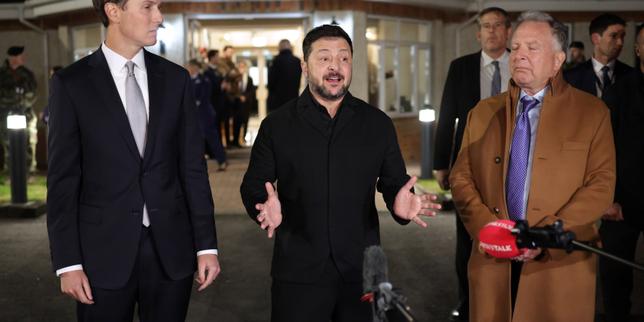
Recently, Ukrainian President Volodymyr Zelensky pulled back the curtain on a conversation that diplomats usually keep locked behind soundproof doors. He stated openly that the United States has floated the idea of territorial concessions in exchange for Ukraine’s admission into NATO.
Read that sentence again. Slowly.
Land for protection. Soil for a signature. Give up the occupied territories—the eastern industrial heartland, the southern land bridge to Crimea—and in return, the remaining free portion of Ukraine gets wrapped inside the ironclad security guarantee of the Western alliance.
It sounds clean on paper. Pragmatic. Almost tidy.
Until you ask a simple question: What does it actually feel like to sign away your own living room so that a stranger promises to guard your front porch?
The Anatomy of a Whispered Bargain
Diplomacy rarely arrives with a thunderclap. It arrives as a suggestion over lukewarm coffee, a "what-if" scenario sketched on the back of a briefing folder, a trial balloon released into the press to see who flinches first.
For years, the official Western mantra was unyielding: Nothing about Ukraine without Ukraine. Kyiv alone would decide when to negotiate, what to concede, and what victory looked like. Yet behind closed doors, war fatigue has a way of eroding even the sharpest principles. Ammunition stockpiles thin out. Domestic elections loom in Western capitals. Taxpayers grow weary of line items measured in tens of billions of dollars.
So the whisper begins.
Consider a hypothetical scenario—one that mirrors the exact logic playing out in foreign policy circles right now. Imagine a family whose house has been broken into by an armed neighbor. The intruder barricades himself inside the kitchen and the downstairs bedrooms. For three years, the family fights to push him out, bleeding on the floorboards, exhausting every ounce of strength while sympathetic neighbors pass bandages and clubs through the window. Finally, the neighbors pull the exhausted homeowner aside on the lawn. Stop fighting for the kitchen, they say. Let him keep it. If you sign over the deed to those rooms, we will install a steel security door on the hallway and promise to shoot him if he ever steps into your living room.
That is the bargain currently hanging in the air over Eastern Europe.
When Zelensky acknowledged that American officials had broached the subject of trading territory for NATO membership, he wasn't merely relaying a diplomatic update. He was exposing a profound moral and strategic fault line. For Washington, the logic is rooted in cold risk management. A protracted war of attrition drains Western arsenals, risks direct escalation between nuclear superpowers, and destabilizes global energy and food markets. Freezing the conflict along current front lines—roughly leaving Russia in control of nearly a fifth of Ukraine—while bringing the remaining eighty percent under NATO’s Article 5 umbrella looks, from four thousand miles away, like a realistic off-ramp.
Stop the dying. Lock in the survival of a sovereign, democratic Ukrainian state. Rebuild the west. Leave the east to the bitter ambiguity of history.
It is the West German model, dusted off from the Cold War shelves and placed onto the Ukrainian table. In 1955, West Germany joined NATO while East Germany remained under Soviet occupation. Millions of Germans lived behind barbed wire for thirty-five years, yet West Germany prospered, stayed free, and eventually absorbed the east when the Soviet Union collapsed under its own weight.
Analysts love the West German analogy because it offers a happy ending without requiring a military victory.
Historians, however, know that analogies are dangerous tools when you ignore the blood in the mortar.
The Ghost of 1994
To understand why the mere mention of trading land for security guarantees triggers a visceral dread in Kyiv, you have to step back three decades, to a cold December afternoon in Budapest.
In 1994, Ukraine possessed the third-largest nuclear arsenal in the world—inherited from the collapse of the Soviet Union. Washington and Moscow both wanted those warheads dismantled. Ukraine, impoverished and newly independent, agreed to give them up. In exchange, the United States, the United Kingdom, and Russia signed the Budapest Memorandum, pledging to respect Ukraine’s sovereignty, independence, and existing borders.
They gave up real, tangible power—nuclear deterrence—for ink on paper.
Twenty years later, in 2014, Russian troops without insignia seized Crimea and ignited a war in the Donbas. The ink on the Budapest Memorandum did not stop a single bullet. In 2022, tanks rolled toward Kyiv from three directions. Again, the promises of 1994 proved weightless against artillery shells.
I still remember standing near a railway station in Lviv during the early weeks of the full-scale invasion, watching thousands of mothers press their children against the cold glass of departing train windows. The air smelled of diesel exhaust, damp wool, and sheer, paralyzing terror. Nobody there was talking about geopolitics or security architectures. They were asking a single, frantic question: Who is actually coming to save us?
Nobody came with troops. Weapons arrived—slowly at first, calibrated carefully so as not to provoke Moscow too much, always arriving a season after they were needed most.
Now, those same partners are suggesting that Ukraine surrender the homes of millions of its citizens in exchange for a new piece of paper—NATO membership.
Can you blame Ukrainians for looking at that offer with hollow eyes?
What Happens Behind the Line
Let us strip away the diplomatic euphemisms and look squarely at what "territorial concessions" actually means in practice.
It does not mean handing over empty fields of sunflowers and abandoned coal mines. It means abandoning millions of human beings to an occupation regime whose methods are already thoroughly documented.
In occupied Melitopol, Mariupol, Berdiansk, and Luhansk, life under Russian control is not merely a change of flags on municipal buildings. It is the systematic erasure of an identity. Children sit in classrooms learning from rewritten textbooks that deny their country’s existence. Homeowners are forced to take Russian passports or lose access to basic healthcare, property deeds, and insulin. Speaking Ukrainian in the wrong café can land you in a basement interrogation room.
If Kyiv signs an agreement ceding those territories—even de facto, without formal legal recognition—it tells every teacher, every mechanic, every grandmother hiding a blue-and-yellow flag beneath her floorboards: You are on your own. Forever.
There is also a cold, military reality that armchair strategists often miss when they draw lines on a map. Front lines are not walls. They are scars.
Right now, Ukrainian forces hold fortified defensive belts in the Donetsk region—cities like Sloviansk and Kramatorsk that have been turned into fortresses over ten years of grinding warfare. Behind those cities lies open, flat steppe stretching toward the Dnipro River. Giving up territory to appease an aggressor rarely satisfies their appetite; more often, it hands them the high ground for the next offensive.
And what of NATO itself?
Admission into the alliance requires unanimous consent from all thirty-two member states. Even if the United States whispers about a land-for-NATO trade, does anyone truly believe that Hungary’s Viktor Orbán, or Slovakia’s Robert Fico, or hesitant voices in Berlin would swiftly ratify Ukraine’s entry while Russian artillery sits twenty miles away?
Worse still: what happens if Ukraine gives up its land, and the NATO invitation gets bogged down in years of parliamentary ratification delays, endless conditions, and shifting political winds?
Ukraine would be left with neither its land nor its shield. Naked. Divided. Vulnerable.
The Trap of the "Frozen" Peace
People often ask whether a bad peace isn't better than a good war. It is a fair question, born of human decency. Nobody who has ever heard the shriek of an incoming ballistic missile or seen a hospital ward reduced to powdered concrete wants the fighting to continue a single second longer than necessary.
War is obscenity. It turns twenty-two-year-old poetry students into amputees and leaves entire generations flinching at the sound of fireworks.
Yet history offers a brutal lesson about premature settlements with expansionist regimes: a cease-fire without justice is merely an intermission.
In 2014 and 2015, Ukraine signed the Minsk agreements under immense pressure from Western leaders who desperately wanted the fighting in eastern Ukraine to stop. The violence dropped from an inferno to a simmer. European leaders congratulated themselves on averting a wider war. Business resumed. Pipelines were built.
All the while, Moscow used those eight years to stockpile currency reserves, sanction-proof its economy, rebuild its military, and prepare for the full-scale assault of February 2022. The "peace" of Minsk did not prevent war; it incubated a much larger one.
If the world signals today that invading a neighbor, flattening its cities, and waiting out Western patience results in legally or practically keeping the stolen land, every autocrat on earth will take careful notes. Borders cease to be sacred rules of international order and become mere suggestions—negotiable at gunpoint, ratified by fatigue.
The Weight on One Man’s Shoulders
Think for a moment about Volodymyr Zelensky sitting in his windowless office on Bankova Street in Kyiv.
In February 2022, when American intelligence offered to evacuate him before Russian paratroopers closed in, he famously replied that he needed ammunition, not a ride. That defiance electrified the world and stiffened the spine of Western democracies that had initially written Ukraine off within seventy-two hours.
Today, his dilemma is infinitely darker, stripped of the cinematic clarity of those first desperate days.
He is the leader of a nation bleeding out slowly. Every day the war drags on, more young men die in the mud of the Donbas. More power plants are shattered before winter. More families pack their suitcases and leave for Poland, Germany, or Canada, unsure if they will ever return. The demographic wound alone will haunt Ukraine for a century.
If he refuses to negotiate, he risks watching Western aid dry up piece by piece until the front lines buckle entirely. If he agrees to surrender territory, he risks tearing his own country apart from within—betraying the hundreds of thousands of soldiers who died specifically so that those lands would remain free, and triggering political chaos in Kyiv that Moscow would eagerly exploit.
By publicly revealing that the United States has raised the prospect of territorial concessions for NATO membership, Zelensky was doing something deeply calculated—and deeply desperate. He was breaking the polite silence of diplomatic backchannels to force an honest reckoning.
He was telling the world: Do not pretend this is an easy choice. And do not pretend you aren't asking us to pay the price for your exhaustion.
Where the Truth Lies
I won't pretend to have a neat answer to this. Anyone who claims this situation is simple—either the idealists who demand total military victory without explaining where the extra half-million troops and millions of shells will come from, or the realists who casually draw partition lines across someone else's country—is selling you comfort instead of truth.
The truth is ugly, jagged, and unresolved.
Ukraine cannot easily recapture all its lost territory by force without a massive, sustained surge in Western military commitment that political leaders in Washington and Europe appear increasingly reluctant to provide. At the same time, forcing Ukraine into a lopsided territorial surrender in exchange for vague or conditional security promises invites a future catastrophe that will drag the West back into the fire anyway—only next time, on worse terms.
If there is any viable path through this wilderness, it cannot be built on illusions. Any security guarantee offered to Ukraine must be ironclad, immediate, and backed by real deterrent power—not another polite memorandum destined to gather dust in an archive. And any pause in the fighting cannot require Ukraine to formally legitimize the theft of its own soil or abandon its citizens to erasure.
Until then, the debate will continue in conference rooms with plush carpets and bottled water, where men in tailored suits trace their fingers across smooth paper maps.
Meanwhile, four hundred miles east of Kyiv, a soldier in a flooded trench pulls his collar up against the freezing rain, lights a damp cigarette with shaking hands, and stares across a stretch of shattered trees toward a horizon that someone far away is already trying to give away.