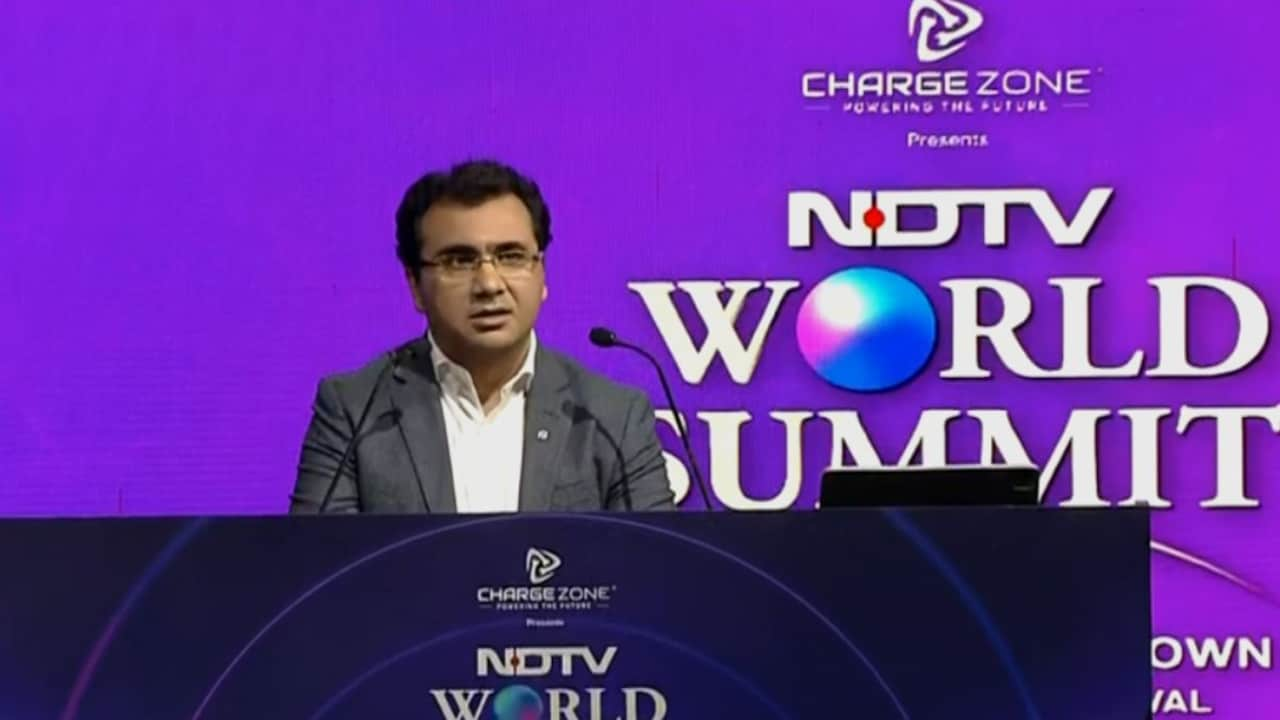
Thirty-five thousand feet above the Deccan plateau, a cup of masala chai sits precariously on a plastic tray table, its surface trembling with a micro-vibration so faint you would miss it if you weren't looking for it. Outside the double-paned acrylic window, the sky is a deep, bruised cobalt. Inside, two hundred strangers are breathing recycled air, scrolling through feeds, sleeping with mouths slightly open, or clutching worn paperback novels. None of them are thinking about metallurgy. None of them are calculating thermal creep in single-crystal nickel alloys or wondering how an executive named Vikram Rai might frame the future of South Asian aviation from a stage at the NDTV World Summit 2026.
Yet the entire fragile miracle of that afternoon flight—every pound of thrust pulling eighty tons of aluminum and carbon composite forward at five hundred miles an hour—rests on decisions made long before the cabin doors clicked shut.
I have spent years reporting on heavy industry and watching how summits turn complex human engineering into soundbites. Conferences love neat boxes. A speaker steps up to a microphone, drops a tidy phrase about growth or innovation, a moderator nods, and the clip goes onto social media. When a headline announces that Vikram Rai, CEO of South Asia for GE Aerospace, is set to appear at the NDTV World Summit 2026, a casual reader might skim past it like another corporate calendar item. Another executive. Another panel. Another round of polite applause.
Blink.
That dismissal misses the weight of what is actually happening in the skies over India and its neighbors. South Asia is not merely buying airplanes; it is rewiring how millions of people move across a crowded, ambitious subcontinent. When an airline orders hundreds of narrow-body or wide-body jets, the public sees the ribbon-cutting and the route map. Behind that ribbon-cutting is a decades-long marriage of thermodynamics, supply chains, defense readiness, maintenance hangars, and sheer human nerve.
Let's be honest about how confusing and intimidating aerospace can feel from the ground. When engineers talk about thrust-to-weight ratios, engine shop visits, or aftermarket services, normal people tune out. It sounds like jargon designed to keep outsiders at arm's length. Even I have stood beside a jet engine cowling on a tarmac, feeling the low, rhythmic hum of auxiliary power in my ribcage, and wondered how anything that loud and heavy can feel so effortless once airborne. There is a quiet vulnerability in admitting that you don't grasp every microscopic detail of a turbine blade's cooling channels—and yet trusting your family's safety to it every time you board a red-eye flight from Mumbai to Delhi or Bengaluru to Chennai.
To understand what Vikram Rai represents at a gathering like the NDTV World Summit 2026, we have to step away from press-release language and look at the real human stakes.
When a Tarmac Becomes a Crossroads
Picture a fictional maintenance engineer—let's call him Arvind—standing inside a hangar in Hyderabad at three in the morning. (Note: Arvind is a composite, hypothetical character created to illustrate real operational pressures in aircraft maintenance; his story is a fictional stand-in rather than a real individual's biography.) Outside, monsoon rain lashes the steel roof with a sound like rolling drums. Inside, under harsh LED work lights, Arvind inspects an engine assembly with a borescope, peering past compressor stages toward the combustion chamber where temperatures routinely exceed the melting point of the metal itself.
A single hairline anomaly or missed turnaround window doesn't just show up on a spreadsheet. It ripples outward. A delayed aircraft means a canceled morning rotation. A canceled rotation means a college student misses an entrance exam in another city, a small business owner loses a client meeting, or an elderly parent waits hours longer at an arrival gate. Multiply Arvind's three-a.m. shift across hundreds of aircraft operating on tight schedules across South Asia, and suddenly an executive's strategic focus on regional leadership, supply-chain localization, and fleet reliability stops looking abstract. It becomes personal.
India's aviation sector has surged at a pace that tests every physical and institutional limit on the ground. Airports have expanded, new carriers have risen, and first-time flyers have stepped onto planes in numbers that would have stunned planners twenty years ago. Growth on that scale is exhilarating. It is also unforgiving.
Think of a bustling family kitchen during a festival feast—a metaphor I want to be upfront about, because a jet engine is obviously not a stove, yet the comparison captures the strain of peak demand. If you have four burners and suddenly twenty guests arrive hungry at once, you don't just need bigger pots. You need better timing, spare ingredients within arm's reach, skilled hands who know the rhythm of the room, and equipment that won't fail halfway through cooking the main course. South Asian aviation has been cooking that feast for years. Keeping the burners steady requires more than selling hardware; it demands building local engineering depth, training technicians, strengthening regional partnerships, and ensuring engines stay on the wing rather than waiting on the ground.
Beyond the Headline Title
Titles like "CEO, South Asia, GE Aerospace" carry a brisk corporate polish that can flatten the person behind them. In public discourse, leaders often get reduced to avatars of their companies—cheerleaders for quarterly momentum or targets for skepticism. When Vikram Rai steps onto a stage at the NDTV World Summit 2026, the value of his presence isn't whether he can recite a brochure. The real test is whether he can speak plainly about friction.
Consider what friction looks like in modern aerospace.
First, there is the friction of scale. Supply chains across global aviation have faced intense pressure in recent years, with airlines eager for deliveries and maintenance bays working overtime to keep existing fleets flying. Every part that moves across borders carries cost, lead time, and regulatory scrutiny. Building stronger local capabilities in South Asia isn't a neat slogan; it is painstaking work involving suppliers, engineers, government policies, and years of qualification standards where "close enough" is a non-starter.
Second, there is the friction of transition. Aviation sits at a fascinating, tense intersection of immediate commercial need and long-term technological change. Airlines need fuel-efficient engines today to keep ticket prices accessible and operating costs manageable, while the industry as a whole wrestles with sustainable aviation fuels, hybrid-electric concepts, and cleaner propulsion architectures for tomorrow. Anyone leading in this space has to hold two timelines in mind at once: what keeps a flight safe and economical this Tuesday, and what makes flight cleaner and more resilient twenty years from now.
Third, there is the friction of trust. In South Asia, aviation isn't only about business travelers in crisp blazers. It is also about migrant workers heading home for Diwali, families flying across states for medical care, and young engineers dreaming of careers in high-tech manufacturing. Trust in flight is earned quietly, flight after flight, year after year. One misstep echoes loudly. Consistent reliability rarely makes a splash—until it's missing.
Why a World Summit Matters Right Now
Summits can sometimes feel like echo chambers where executives talk past the people most affected by their decisions. Yet when done right, a forum like the NDTV World Summit 2026 forces a collision between industry strategy and public reality. Journalists ask sharper questions than a friendly trade panel. Policymakers sit a few seats away. Citizens watch from home, wondering how big global shifts translate into everyday life—jobs, connectivity, security, and opportunity.
Look closely at those curved blades in the photograph above. Each one is a small triumph of geometry and heat resistance, shaped to harvest ferocious energy without tearing itself apart. A regional aerospace leader operates in a similar field of tension: balancing intense speed, extreme heat, tight tolerances, and external forces beyond any single person's control.
When Vikram Rai addresses an audience at the summit, listeners have a right to look past polished talking points and listen for concrete substance. How does aerospace deepen indigenous engineering talent in India and across South Asia? How do global partnerships adapt to a region whose market size and geopolitical importance keep climbing? How do you keep safety and quality unyielding while expanding capacity rapidly?
Those aren't trivia questions for a corporate bio. They are the questions that determine whether a booming aviation market matures into a durable industrial ecosystem or stumbles over its own bottlenecks.
The Human Thread in Cold Metal
It is easy to talk about aerospace as if it were all steel, titanium, and balance sheets. That is a mistake. Every engine has a human shadow.
Somewhere, a young graduate in Pune or Bengaluru is sketching designs or writing test code, hoping to build a career without leaving home. Somewhere else, a mechanic wipes grease from his knuckles after signing off on a pre-flight check, knowing a family's vacation or a surgeon's commute depends on his care. And in a conference hall in New Delhi, leaders gather to debate the architecture of what comes next.
When you look out over a sea of clouds from an aircraft window, the horizon looks infinite and calm. Nothing hints at the decades of research, late-night troubleshooting, regulatory rigor, and commercial negotiation that made that view possible.
Vikram Rai's appearance at the NDTV World Summit 2026 matters because it puts a human face on one of the most consequential—and least visible—pillars of South Asia's modernization. Not the glitz of the cabin, not the drama of a summit spotlight, but the steady, unglamorous work of keeping people moving safely through an uncertain world.
High above the clouds, the coffee stays still in the cup, the engines hum their low, steady note, and the ground below grows smaller with every mile.