The rain in San José doesn’t just fall; it argues with the corrugated tin roofs until the whole neighborhood sounds like a drum rehearsal gone wrong. Standing under a sagging awning in a working-class barrio after dusk, you smell wet asphalt, fried plantains from a corner stall, and the sharp metallic tang of fear that has crept into places where people once left their front doors unlatched until midnight.
For decades, Costa Rica wore its reputation like a tailored linen suit. No standing army. High literacy. Lush cloud forests where howler monkeys barked at dawn and tourists sipped coffee while watching mist curl around volcanoes. When neighbors fought, they argued; they didn’t shoot each other over turf lines drawn in the damp dirt behind a soccer pitch.
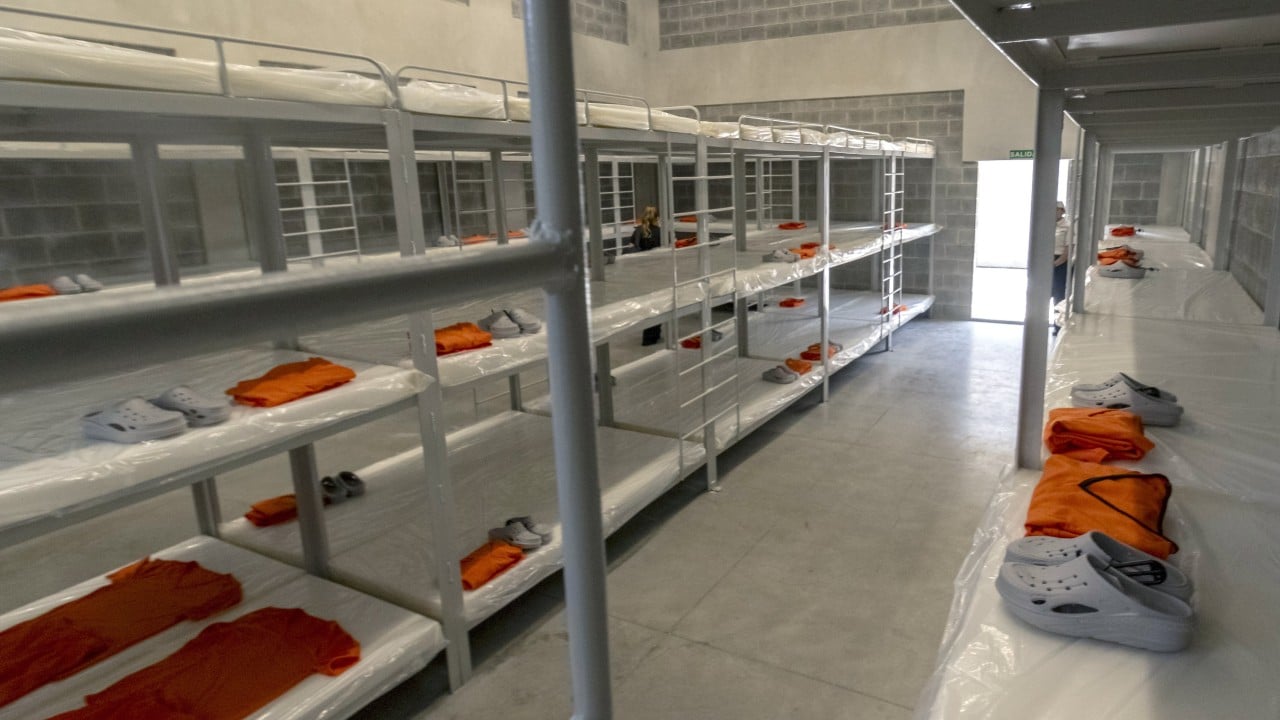
Then came the cocaine trade’s logistics shift, the container ports turning into high-stakes chessboards, and neighborhood disputes escalating into gunfire before breakfast. Homicide rates climbed high enough to shatter old assumptions, leaving ordinary people blinking in harsh, unfamiliar light. And across the isthmus, El Salvador’s Nayib Bukele had already built a towering monument to iron-fisted security—a massive detention complex designed to warehouse thousands of accused gang members behind razor wire and steel.
Now, Costa Rica is stepping toward that same blueprint with plans for a mega-prison of its own.
Panic.
That single word captures the political weather right now. When fear rises fast enough, nuance gets drowned out like a whisper at a stadium concert. Voters who spent their lives believing in gentle consensus suddenly find themselves staring at locked steel gates and wondering if a heavy lock is the only thing standing between their kids and a stray bullet. I have sat at kitchen tables where people who once marched for environmental protection and social welfare now say, quietly and almost apologetically, that maybe the country needs a harder hand. I get that ache. Watching a peaceful place grow jagged hurts in the chest.
To see what a mega-prison really means on the ground, let’s walk through a hypothetical scenario grounded in how large-scale lockups operate across Latin America. Picture Mateo, a twenty-four-year-old mechanic in Limón whose biggest crime until last month was fixing scooters for guys whose names nobody wanted to say out loud. One Tuesday, a raid sweeps his street. Dozens of young men are rounded up in a dragnet meant to clear out local crews. Mateo has no prior convictions, yet his cousin once borrowed his toolbox. Inside an overcrowded, high-capacity facility modeled on harsh regional templates, legal files move at a crawl, courts back up for months or years, and a kid who knew how to tune a carburetor spends eighteen months learning survival from people who actually run extortion rackets from inside the cellblock.
That is the trap hidden inside concrete and steel. Bricks do not distinguish between a kingpin and a kid caught in the wrong place at the wrong time.
The Allure of the Iron Fist
You don’t have to squint to understand why Bukele’s model travels like wildfire through political campaigns. It looks decisive. It looks clean on a television screen. When a city feels out of control, a leader pointing at blueprints for a massive prison offers something intoxicating: an immediate, visible boundary between "us" and "them."
Think of a house with a leaking pipe under the floorboards. Mopping the kitchen every morning is exhausting and humiliating. Hiring a crew to rip up the tile, pour a thick slab of concrete over the whole room, and declare the floor solid feels like relief—at least until the water finds a softer spot in the drywall next door.
Mega-prisons operate a lot like that concrete slab. They promise order through scale and severity. Politicians love them because concrete doesn’t argue back at press conferences, and high headcounts look like action to citizens who feel ignored by slow-moving bureaucracies.
Yet history keeps reminding us of an uncomfortable pattern: locking up vast numbers of people in massive facilities often creates universities for organized crime rather than cemeteries for it. When thousands of detainees are packed into high-security wings with stretched guards and overtaxed oversight, informal hierarchies form fast. Orders get passed during family visits, through corrupt staff, or via smuggled phones. A prison meant to sever criminal networks can end up concentrating them under one roof.
Consider what happens next: once a government builds a gigantic facility designed for maximum containment, political pressure builds to keep it full. Prosecutors lean harder on broad charges. Pretrial detention becomes the default rather than the exception. Before long, the system isn’t just catching violent offenders—it is swallowing petty thieves, low-level couriers, and people swept up by association.
What Costa Rica Stands to Lose
Costa Rica’s identity was never built on brute force. Even its critics usually admit that its strength lay in institutions—courts, social programs, schools, clinics—that kept inequality from boiling over into total collapse.
If I am honest, writing about this makes me uneasy because there are no tidy villains or easy slogans here. A mother burying a son in Puntarenas doesn’t care about constitutional theory in the hour her grief is fresh; she wants the shooting on her block to stop tomorrow. Dismissing her fear as "authoritarianism" is cruel and tone-deaf. At the same time, pretending that copying a foreign mega-prison won’t strain Costa Rica’s courts, budget, and democratic norms is wishful thinking.
Let’s trace a second hypothetical scenario to see the ripple effects beyond the prison walls. Imagine Elena, a public defender with three hundred active files stacked beside her desk in San José. A new mega-prison opens with capacity for thousands, backed by tougher arrest sweeps. Arrests spike overnight. Elena’s caseload jumps before she gets a single extra clerk or investigator. Hearings get postponed three times because transport vans are tied up or prosecutors are overwhelmed. Families travel across provinces for updates that nobody can give them, burning bus fare they can’t afford while the primary earner sits in limbo.
Justice delayed isn’t just a legal cliché; when it stretches across years inside a massive detention center, it hollows out lives. Even people eventually cleared of wrongdoing lose jobs, housing, and family ties while waiting for their day in court.
And what about the money? Building a mega-prison is only the opening invoice. Running one at high security—feeding thousands of people every day, paying trained staff, maintaining surveillance and perimeter security, handling medical emergencies, and defending inevitable legal challenges—eats public funds year after year. Every colón locked into razor wire and guard towers is a colón not going into port scanners, anti-money-laundering investigations, witness protection, or youth programs in neighborhoods where recruiters show up before dawn.
Ports, Cash, and the Real Engine of Violence
Here is a metaphor worth keeping close: chasing street-level arrests without choking off criminal money is like swatting mosquitoes in a swamp while leaving the stagnant water untouched. You can swing all night and still wake up covered in bites.
Crime in Costa Rica didn’t erupt out of thin air because citizens suddenly lost their moral compass. Geography played a massive role. Sitting between major drug-producing regions to the south and lucrative markets to the north, with coastlines and busy shipping corridors, makes the country a natural bridge for traffickers. When international cartels push product through ports and coastal routes, local groups fight for pieces of the transit chain, and violence spills into neighborhoods that never asked to be frontline zones.
A mega-prison can remove individuals from the street, sometimes for a long time. It cannot re-route global smuggling lanes by itself. It cannot trace shell companies or clean dirty money moving through real estate and cash businesses on its own. If the financial and logistical pipes stay open, new recruits step into old slots with startling speed.
People often ask a sharp question at this point: If targeted policing and courts were enough, wouldn’t the violence already be dropping?
Fair question. And the honest answer is that slow reform looks frustrating next to a bold construction project. Fixing port inspections, insulating judges and prosecutors from intimidation, speeding up trials, and offering real alternatives to teenagers tempted by quick cash takes years of unglamorous grinding work. Nobody cheers at a ribbon-cutting for a modernized case-management database or a customs audit.
Yet those unglamorous pieces are the exact places where durable security is forged. When criminals know that ill-gotten wealth will be seized, that corrupt officials will be prosecuted, and that convictions will rest on solid evidence rather than mass sweeps, the math of crime changes in a way concrete walls alone cannot match.
Two Paths From the Same Crossroad
Standing at this crossroad, Costa Rica isn’t choosing between "doing nothing" and "building a giant cage." That false binary is a trap set by fear.
Real strength looks messier than a dramatic press conference, though it holds up better under pressure. It looks like:
- Focusing heavy security and high-containment resources on proven violent offenders and cartel leaders rather than casting wide nets that snare bystanders.
- Investing in customs control, financial intelligence, and joint regional investigations that hit criminal networks where their profits live.
- Shortening pretrial detention times by funding courts and public defenders so prisons hold convicted offenders rather than warehouses of unresolved cases.
- Pouring resources back into high-risk communities—schools, jobs, sports, and neighborhood mediation—before gangs recruit the next generation.
None of that sounds flashy. It doesn’t fit neatly onto a bumper sticker.
Still.
Think about what makes a country feel safe over decades rather than months. It isn’t just the absence of headlines; it’s the quiet confidence that rules apply fairly, that a citizen won’t be crushed by a runaway machine, and that tomorrow’s solutions won’t become next decade’s human-rights crisis.
Back under that tin roof in San José, the rain finally eases to a steady drizzle. Down the block, a teenager kicks a soccer ball against a damp wall while his mother watches from the doorway, arms crossed, eyes scanning the corner where the streetlights flicker. She wants her son safe. Every parent in every country wants that much. The question hanging over Costa Rica’s new prison blueprint isn’t whether the country deserves peace—it clearly does—but whether locking thousands behind heavy iron will bring real peace home, or simply build a bigger shadow over the streets outside.