Cable news loves a clean storyline. Right now, the favorite narrative is simple: Donald Trump’s second-term agenda is getting a direct thumbs-up or thumbs-down through state ballot measures on abortion, redistricting, and voter ID.
That's only half true. Honestly, it misses how voters actually behave when they walk into a booth and stare down a 400-word constitutional amendment.
Across the country, state-level direct democracy has become the ultimate pressure valve for national politics. When Congress stalls or state legislatures push aggressive partisan policies, activists and lawmakers turn straight to the ballot box. During the 2026 election cycle, three specific flashpoints—reproductive rights, legislative mapmaking, and strict voting requirements—have collided in ways that defy neat partisan labels.
If you look closely at how these initiatives play out on the ground, you start seeing a fascinating split. Voters will gladly back candidates aligned with Trump's platform on the economy or border security, then turn right around and vote against conservative priorities on reproductive freedom or partisan gerrymandering on the exact same piece of paper.
The Abortion Ballot Box Paradox
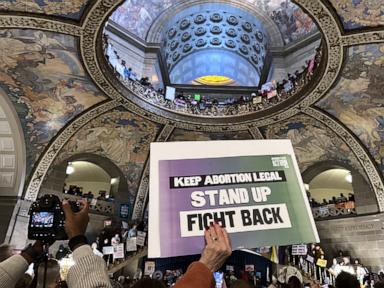
Since the Supreme Court overturned Roe v. Wade in 2022, ballot measures have served as the single most reliable tool for abortion rights advocates. Even in deeply red states, direct votes on reproductive access have repeatedly outperformed Democratic candidates by double digits.
Why does this happen? Because ballot language strips away party loyalty.
When a voter doesn't have to pull a lever for a Democrat to protect medical privacy, the political calculus changes overnight. In states like Missouri, Arizona, and Florida during recent election cycles, organizers discovered that framing reproductive rights around personal freedom and keeping politicians out of hospital rooms resonated heavily with independent and moderate Republican voters.
Yet the strategy isn't static anymore. Anti-abortion groups and GOP-led legislatures learned fast from their early losses. Instead of letting simple "up-or-down" protection measures hit the ballot unchallenged, state lawmakers have started deploying counter-measures, raising signature thresholds, and rewriting ballot summaries to emphasize late-term restrictions or parental notification rules.
Trump himself has walked a tightrope on this issue. By insisting that abortion laws belong strictly with the states rather than under a federal ban, he effectively pushed the fight onto local turf. That move shielded him from some national backlash, sure. It also guaranteed that every state legislative session and November ballot becomes a permanent battleground over what "leaving it to the states" actually looks like in practice.
Why Redistricting Reforms Keep Stalling
Gerrymandering is the one issue almost every American claims to hate until their own party holds the pen.
For years, reform groups pushed independent redistricting commissions via ballot initiatives, arguing that voters should choose their politicians rather than politicians choosing their voters. States like Michigan, Colorado, and California adopted citizen-led panels with fanfare.
Then reality hit.
Creating a truly neutral map is harder than it sounds. Even well-intentioned commissions get bogged down in lawsuits, accusations of secret partisan coaching, and endless fights over how to define "communities of interest." Meanwhile, Republican strategists and Trump-aligned allies have argued that unilateral disarmament—handing mapmaking power to unelected commissions in purple or blue states while hardball politics rules elsewhere—is a sucker's game.
When redistricting lands on the ballot today, the fight is rarely just about good governance. It's about raw congressional math. A shift of three or four House seats in states like Ohio, New York, or North Carolina can decide who holds the gavel in Washington and whether the White House faces subpoena power or smooth sailing.
Voters sense this tension. Ballot measures promising "fair maps" often face fierce pushback from sitting lawmakers who use every procedural trick available to confuse the wording. In Ohio, for instance, disputes over how an anti-gerrymandering amendment was summarized on the ballot sparked intense legal battles, proving that whoever writes the ballot title often holds more power than the people collecting signatures.
Voter ID Mandates Are the Ultimate Wedge Issue
If abortion measures favor the left and redistricting confuses the middle, voter ID mandates are the undisputed heavyweights for the right.
Polling from organizations like the Pew Research Center has consistently shown broad, bipartisan support—often topping 75 to 80 percent—for requiring government-issued photo identification to cast a ballot. To most people, showing an ID to vote feels no different than showing an ID to board a plane or buy cold medicine.
Republican lawmakers and Trump’s political operation know these numbers cold. Pushing constitutional amendments that enshrine strict photo ID rules and citizenship verification into state charters accomplishes two goals at once. First, it locks in policies that courts can't easily strike down under existing state constitutional clauses. Second, it drives conservative turnout by framing election integrity as an urgent, common-sense defense against fraud.
Opponents argue these mandates solve a problem that barely exists in real-world data. Studies from groups like the Brennan Center for Justice have repeatedly found that in-person voter impersonation is vanishingly rare, while strict ID rules disproportionately create hurdles for elderly citizens, students, and low-income residents who lack a current driver's license or passport.
Here is the kicker, though. In politics, perception beats white papers every single time.
When a voter ID question appears on a state ballot, civil rights groups spend millions explaining administrative burdens and disenfranchisement statistics. Proponents spend a fraction of that saying, "Show an ID to prove who you are." On a crowded ballot where voters have thirty seconds to decide on constitutional text, the simple message wins almost every time. Even in states where voters reject conservative stances on minimum wage or healthcare, strict voter ID initiatives routinely sail through with comfortable margins.
The Mechanics Behind the Ballot Battles
Watching these three issues collide on the same ballot reveals just how sophisticated—and cynical—modern ballot campaigns have become. You can't understand the outcomes without looking at the machinery behind the scenes.
Ballot language is a weapon. Most voters never read the full text of a proposed constitutional amendment. They read a 75-word summary printed on the ballot itself. Secretaries of state and ballot boards fight tooth and nail over single adjectives. Calling a measure an "establishment of nonpartisan redistricting" versus "repealing constitutional protections against gerrymandering" can swing a result by ten points before a single TV ad airs.
Signature gathering has turned into big business. Grassroots volunteers rarely qualify a statewide initiative anymore. It takes hundreds of thousands of valid signatures, strict geographic distribution rules, and armies of election lawyers to survive challenges. Campaigns routinely spend $10 to $20 per signature, meaning just getting onto the ballot can cost upwards of $10 million before the real campaign even starts.
Turnout gravity cuts both ways. Political strategists used to think putting a hot-button issue on the ballot automatically boosted turnout for one party. That theory is mostly dead. High-profile measures on abortion and voter ID fire up both sides simultaneously. Instead of creating a one-way wave, they turn low-information midterm or off-year elections into high-turnout brawls where ticket-splitting becomes the norm.
What Happens When Voters Split Their Tickets
The biggest mistake political analysts make is treating state ballot results as a simple referendum on the president.
Voters are way more compartmentalized than pundits give them credit for. A suburban homeowner in the Midwest might support Trump's trade policies, vote yes on a constitutional mandate requiring photo ID at the polls, and simultaneously vote yes to protect abortion access in their state constitution. To a cable news panel, that voter looks contradictory. To the voter, it makes total sense—they want secure elections, a strong economy, and politicians staying out of personal medical decisions.
This ticket-splitting creates massive headaches for party leaders in Washington. When Republican legislatures pass near-total abortion bans or aggressively gerrymandered maps, they risk triggering voter backlash that undermines their own top-of-ticket candidates. Conversely, when Democrats lean too heavily on procedural arguments against voter ID or rely on ballot measures to carry unpopular candidates across the finish line, they hit a hard ceiling.
Direct democracy doesn't neatly validate or reject a national political movement. It acts like a scalpel, carving up a party's platform piece by piece and keeping only the parts the public actually wants.
How to Read Ballot Measures Like an Insider
Next time you sit down with a sample ballot—or watch election night returns roll in—ignore the national spin and look at the structural details that actually decide these races.
- Read the exact ballot summary before election day. Don't wait until you're standing in line. Look up your state's official voter guide through Ballotpedia or your Secretary of State's website and read the exact wording you'll see on the page, paying close attention to what existing laws the measure repeals or alters.
- Follow the money behind the committee names. Ballot committees almost always have warm, fuzzy names like "Citizens for Fair Maps" or "Coalition for Safe Elections." Check your state's campaign finance filings to see whether the funding comes from in-state grassroots donors, national dark-money nonprofits, or out-of-state billionaires.
- Check the passage threshold. Not every ballot measure needs just 50 percent plus one vote. States like Florida require a 60 percent supermajority for constitutional amendments, while others have double-majority rules that completely change what counts as a victory.
- Watch the undervote. Keep an eye on how many people vote for president or governor and leave the ballot questions blank. A massive drop-off usually means the ballot wording was written to confuse voters into voting "no" out of caution.
National headlines will always try to cram messy local elections into a single narrative about who's winning or losing in Washington. Don't buy it. The real story isn't whether voters are rubber-stamping or rejecting one leader's agenda—it's that everyday citizens are using the ballot box to rewrite the rules themselves, one stubborn contradiction at a time.



