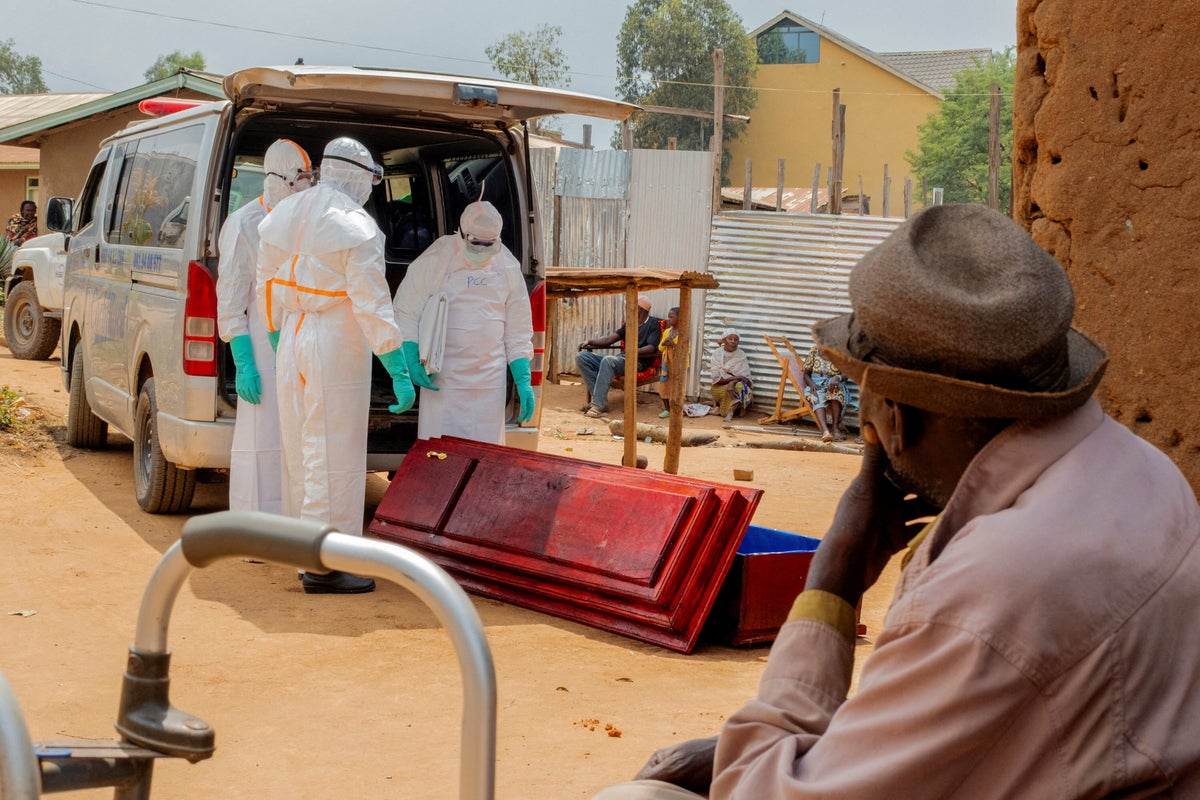
Global health institutions love a good redemption arc. For a decade, the narrative surrounding Ebola outbreak response has been one of self-congratulation wrapped in cautious concern. The mainstream consensus insists that because the world developed rapid diagnostics, deployed investigational vaccines like Ervebo, and established bureaucratic coordination bodies after the West African devastation, we are fundamentally better prepared.
This is a dangerous illusion. For a different perspective, read: this related article.
The institutional belief that we have learned the lessons of past outbreaks misdiagnoses the entire problem. The global health apparatus remains hyper-focused on fighting the last war. It treats Ebola as a localized, containable crisis of infrastructure rather than what it actually is: a symptom of a broken, top-down funding model that prioritizes high-profile pathogens while leaving everyday health systems completely bankrupt. We have not built resilience. We have built a highly reactive, incredibly expensive firefighting squad that leaves the house structurally unsound.
The Biosecurity Theater of Pathogen Chasing
Every time an outbreak occurs, the same script plays out. Western NGOs fly in, temporary isolation centers sprout up, millions of dollars pour into targeted surveillance, and international agencies declare that lessons are being implemented. Similar coverage regarding this has been shared by Healthline.
This is biosecurity theater.
The fatal flaw in this strategy is vertical funding. When money is earmarked strictly for Ebola, it creates artificial silos. I have watched health ministries in developing nations navigate situations where an elite, well-funded isolation unit sits fully equipped with personal protective equipment and experimental therapeutics, while the general hospital next door lacks basic antibiotics, clean running water, and latex gloves.
When you inject millions of dollars into a region solely to track one specific virus, you distort the local healthcare economy. You pull the few trained epidemiological staff away from routine immunization, maternal health, and treatable endemic diseases like malaria or typhoid to chase a single headline-grabbing pathogen. The data bears this out. During major outbreaks, mortality rates from non-Ebola diseases routinely spike because the baseline healthcare infrastructure collapses under the weight of the international intervention.
We are sacrificing broad-spectrum public health on the altar of specific disease eradication. It is a strategy designed to comfort Western donors terrified of a global pandemic, not to protect the communities on the ground.
The Vaccine Silver Bullet Fallacy
The development of the rVSV-ZEBOV vaccine was hailed as a triumph of modern medicine. The conventional wisdom states that deployment of ring vaccination strategies is the definitive answer to halting transmission chains.
But relying on a vaccine as a silver bullet ignores the brutal logistical realities of the regions where these filoviruses actually emerge.
Consider the mechanics of the cold chain. Maintaining a strict ultra-cold storage chain of $-60^\circ\text{C}$ to $-80^\circ\text{C}$ in a region with no reliable electricity grid, ongoing civil conflict, and unpaved roads is a logistical nightmare. The true cost of delivering a single dose under these conditions is exponentially higher than the manufacturing cost of the vaccine itself.
Furthermore, the focus on reactive ring vaccination completely misses the shifting epidemiology of the disease. Recent data indicates that outbreaks are not just originating from animal reservoirs; the virus can persist in survivors for months or even years, occasionally sparking new transmission chains long after the official end of an epidemic. A reactive vaccination strategy that only kicks in after a cluster is detected is perpetually playing catch-up.
If the goal is genuine security, the answer is not a stockpile of highly sensitive vaccines waiting in a European warehouse. The answer is decentralized, basic clinical capacity. A nurse with a reliable supply of clean needles, IV fluids, and PPE can stop an outbreak at Patient Zero far more effectively than a multi-agency task force arriving three weeks late with a sub-zero freezer.
The Trust Deficit Cannot Be Fundraised Away
The lazy consensus blames community resistance for the prolonged nature of recent outbreaks. The narrative suggests that if we simply invest more in communication campaigns and community engagement, local populations will magically comply with international health directives.
This perspective is patronizing and fundamentally incorrect.
When a community looks at an international response, they do not see a benevolent medical intervention. They see an apparatus that ignored their dying children for years, but suddenly arrives in hazmat suits the moment a disease threatens international travel hubs. The resistance to safe burials and isolation protocols is not born out of ignorance; it is born out of a completely rational distrust of institutions that only show up during a crisis.
Institutional Approach vs. Structural Reality
┌─────────────────────────────────────┬─────────────────────────────────────┐
│ Institutional Myth                  │ Structural Reality                  │
├─────────────────────────────────────┼─────────────────────────────────────┤
│ Targeted funding eradicates threats.│ Vertical funds deplete basic care.  │
│ Vaccines solve logistical crises.   │ Cold chains fail in conflict zones. │
│ Resistance stems from ignorance.    │ Distrust stems from systemic neglect│
└─────────────────────────────────────┴─────────────────────────────────────┘
You cannot fix a fundamental trust deficit with a public relations campaign or a series of town hall meetings funded by a temporary grant. Trust is a byproduct of consistent, boring, everyday healthcare delivery. When you refuse to fund the treatment of everyday killers, you forfeit the moral authority required to manage an extraordinary crisis.
Stop Funding Emergencies
The entire framework of international health financing needs a complete overhaul. The current model relies on emergency appeals, global funds, and contingent financing mechanisms that unlock capital only after a certain body count is reached.
This is an absurd way to manage global biosecurity.
Imagine a city where the fire department only receives funding while a building is actively burning, and is forced to lay off its staff and sell its trucks the moment the fire is out. That is exactly how we fund outbreak response. When the crisis fades from the news cycle, the funding dries up, the experts leave, and the local surveillance systems disintegrate.
We must stop treating outbreaks as unpredictable natural disasters that require emergency charity. They are predictable consequences of systemic poverty and ecological disruption. The fix is remarkably unglamorous:
- Abolish Vertical Grants: End the practice of earmarking international health aid for single pathogens. Force donors to invest in horizontal health systems—salaries for local doctors, functional supply chains for basic medicines, and reliable electricity for rural clinics.
- Decentralize Diagnostic Power: Move testing capability out of capital cities and regional hubs directly to the peripheral clinics. If a community health worker can run a rapid differential diagnostic panel for malaria, Lassa, and Ebola on-site within an hour, the containment happens naturally.
- Fund Local Salaries, Not Western Consultants: The billions spent on international travel, logistics, and consulting fees for foreign experts during an active response should be redirected toward permanent, well-paid positions for local epidemiologists and clinical staff who remain in the community permanently.
The downside to this contrarian approach is obvious: it lacks the dramatic, measurable metrics that politicians and philanthropic boards crave. You cannot easily put a picture of a functional sewage system or a well-paid local nurse on a fundraising brochure. It does not look like a heroic battle against a deadly virus.
But it is the only strategy that actually works. Until we dismantle the industry built around reactive crisis management, we will remain trapped in this endless cycle of predictable panic and inevitable neglect.
Stop looking for gaps in the last response. The gap is the response itself.