Civil unrest involving security forces and civilian populations over land tenure in disputed territories represents a structural failure of institutional allocation mechanisms. When ownership rights lack a universally recognized administrative adjudication process, physical presence and extra-legal occupation function as alternative signaling mechanisms to establish de facto control.
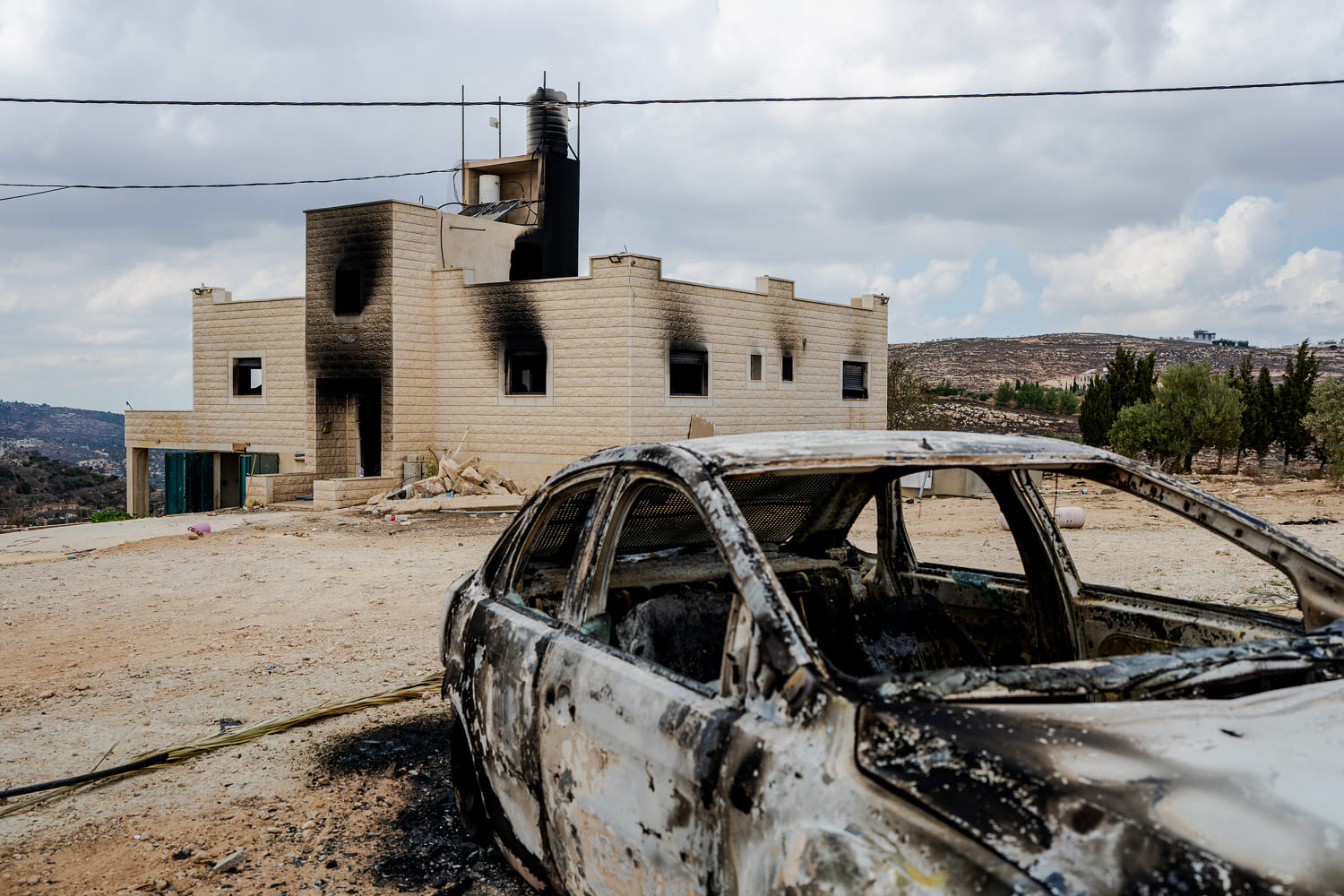
The confrontation between Israeli security forces and nationalist settlers attempting to enforce or prevent a Palestinian family’s return to a West Bank domicile is not merely a localized flashpoint. It is an operational manifestation of competing jurisdictional claims operating within a vacuum of clear, uniform property rights. To understand the mechanics of this friction, one must deconstruct the incentive structures driving civilian mobilization, the operational constraints governing state security apparatuses, and the systemic cost function of contested real estate.
The Tripartite Incentive Structure of Territorial Control
The participants in these localized disputes operate under three distinct behavioral incentives that dictate their tactical choices and resistance to state intervention.
First, ideological claimants view physical occupancy as a compounding asset. In contested jurisdictions, establishing a residential footprint alters the baseline of negotiations or administrative realities over time. The marginal utility of retaining a housing unit outweighs the legal friction of defying state orders because possession creates a path-dependent reality on the ground.
Second, the state security apparatus operates under a mandate of monopoly on violence coupled with administrative continuity. For military and police forces, the objective is not necessarily to resolve the foundational property dispute, but to minimize immediate civil disruption and maintain operational control within a fragmented legal matrix. When settlers mobilize to block the return of a displaced family, security personnel face a split-incentive dilemma: enforcing civil court judgments or administrative decrees risks high-intensity friction with domestic political constituencies, while non-enforcement erodes the state's command structure.
Third, displaced titleholders or claimants rely on international legal frameworks, historical occupancy rights, and administrative petitions to reverse displacement. Lacking direct physical leverage, their strategy depends on external diplomatic pressure and legal compliance by the occupying power or governing authority. This creates an asymmetric tactical environment where physical actors utilize immediate crowd mobilization and structural blockades, while displaced actors rely on protracted judicial timelines.
The Cost Function of Disputed Real Estate
In standard economic and legal systems, property disputes are resolved through a predictable cost function where litigation expenses and transaction costs are weighed against the net present value of the asset. In the West Bank, this standard calculation is distorted by external variables.
The political value of a single residential structure exceeds its intrinsic market value. For nationalist movements, retaining or securing a specific building serves as a tactical node that can disrupt territorial contiguity for opposing populations. Therefore, the expenditure of resources—such as organizing mass mobilizations, constructing makeshift barriers, and absorbing legal penalties—is heavily subsidized by ideological or communal funding networks.
Conversely, the state bears a high political cost for enforcement actions. Every intervention against civilian settlers carries domestic electoral and institutional fallout, creating a systemic hesitancy. This hesitancy alters the perceived probability of enforcement, lowering the expected cost of civil disobedience for the settlers. When the state delays or negotiates enforcement actions, it inadvertently incentivizes further escalation, as actors learn that physical resistance increases the negotiation costs for the authorities.
Institutional Fragmentation and Jurisdictional Overlap
The persistence of these clashes is structurally guaranteed by the coexistence of overlapping legal frameworks. The application of military law alongside civilian administrative regulations creates friction points where no single authority holds undisputed jurisdiction.
When a court orders the restoration of a property to its prior occupants, the execution phase requires operational logistics that must navigate local topography and hostile civilian populations. If the security forces assigned to execute the order sympathize with the demographic identity of the occupying group, enforcement efficiency drops precipitously. This institutional slippage transforms a clear administrative procedure into a protracted tactical standoff.
The absence of a centralized, universally accepted land registry further exacerbates the problem. Historical title deeds often conflict with modern administrative reclassifications, military requisition orders, or claims of abandonment. Without an objective clearinghouse for property verification, every contested threshold becomes an ideological proxy war for broader territorial sovereignty.
Systemic Outcomes and Strategic Forecasting
The recurring cycle of settler mobilization, security force intervention, and eventual enforcement or stalemate points to a permanent structural vulnerability in the administration of the West Bank.
As long as property adjudication remains subordinated to political and security imperatives, physical occupation will remain the primary method of asset acquisition and defense. The state's tactical choices—whether to enforce rulings immediately or defer to political pressures—will continue to modulate the frequency of these confrontations, but they cannot eliminate the underlying volatility.
Resolution requires standardizing property administration under a singular, transparent legal authority with consistent enforcement mechanisms that are insulated from political interference. In the absence of such institutional reform, disputes over individual housing units will continue to function as high-frequency stress tests for the entire security architecture of the region.