The screen glows blue in the dark. It is 3:14 AM in a cramped apartment in Tunis. Amine stares at the calendar matrix of the TLScontact website, his index finger hovering over the mouse. Refresh. The page freezes. Refresh. A CAPTCHA appears, demanding he identify traffic lights. He clicks them with trembling urgency. Refresh.
"No appointments available."
Amine slumps back. His coffee is cold. This has been his ritual every night for four months. He is 28, a software engineer with a job offer in Lyon that expires in six weeks. His entire future—the years of studying, the late-night coding sessions, the dreams of a broader horizon—hinges on securing a single, elusive time slot just to hand over his passport.
But Amine is playing a rigged game. While his human fingers click and refresh, automated software bots are vacuuming up those very slots in milliseconds.
This is the reality of the Schengen visa crisis in Tunisia. What used to be a bureaucratic hurdle has mutated into a predatory black market, a psychological gauntlet, and a source of profound national humiliation. The system designed to regulate travel has instead birthed a parallel economy run by "ghost brokers"—intermediaries who hoard appointments and sell them back to desperate citizens at extortionate prices.
Humiliation has a price tag. In Tunis, it currently ranges from 500 to 2,000 Tunisian dinars. That is up to three times the monthly minimum wage, just for the right to submit an application.
The Digital Gatekeepers
To understand how a sovereign European right became a black-market commodity, one has to look at the outsourcing of diplomacy. Decades ago, you walked into an embassy, spoke to a consular officer, and received a decision. Today, European governments have outsourced the administrative front-end to private companies like TLScontact and VFS Global.
These platforms operate as digital gatekeepers. They are supposed to streamline the process. Instead, they have created a bottleneck that tech-savvy speculators have exploited with ruthless efficiency.
Consider how a ticket scalper uses bots to buy up front-row seats for a stadium concert, leaving genuine fans with nothing but inflated secondary-market options. Now, replace the concert with a medical residency, a family reunion, or a lifeline business contract. The stakes are no longer entertainment; they are human lives put on indefinite hold.
The mechanism is simple yet devastating. Intermediaries use automated scripts to monitor the visa platforms 24/7. The moment the French, German, or Italian embassies release a block of appointments, the bots seize them using dummy identities or stolen data.
Later, when a desperate applicant walks into a neighborhood cybercafé or contacts a "broker" on Facebook, the intermediary cancels one dummy slot and instantly rebooks it using the client’s actual passport number.
It is a digital heist happening in broad daylight.
The Psychology of the Waiting Room
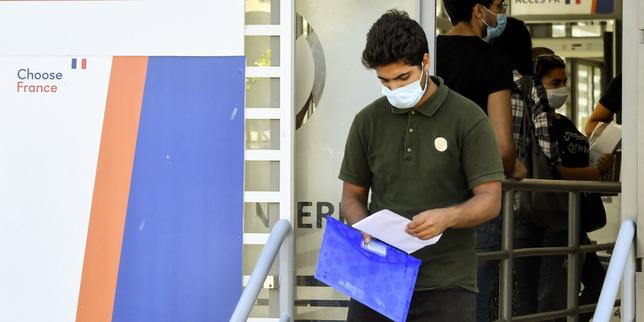
Step outside the visa application centers in the Berges du Lac district of Tunis on any given morning. The atmosphere is thick with anxiety. People stand in lines that snake down the pavement, clutching plastic folders filled with the intimate details of their financial lives: bank statements, property deeds, marriage certificates, birth registries.
There is a vulnerability to this exposure. To ask for a visa is to strip down financially and professionally before a foreign power, pleading your case that you love your homeland enough to return to it.
"They look at us like we are all trying to escape," says Selima, a 42-year-old university professor who missed her sister’s wedding in Marseille because her appointment was delayed. "I have a career here. I have a home. I just wanted to see my family. They make you feel like a suspect before you even open your mouth."
The anger in Tunisia is not merely about the difficulty of getting a visa; it is about the asymmetry of the relationship. Tunisians pay non-refundable visa fees—often equivalent to a week or more of local salary—only to be rejected via standard, automated form letters.
The money vanishes into the coffers of European ministries and private outsourcing giants, while the applicant is left with a passport stamped with refusal and a bank account drained by both official fees and black-market premiums.
In 2023 alone, Tunisians submitted over 160,000 Schengen visa applications. Tens of thousands were rejected. The financial drain on a struggling economy is immense, flowing outward with zero accountability. It feels less like diplomacy and more like a punitive tax on mobility.
The Rise of the Parallel Consulates
Walk down any commercial street in Tunis, Sfax, or Sousse, and you will see them: storefronts bearing signs that read "Services Administratifs" or "Consulting en Visa." These are the physical manifestations of the ghost bureaucracy.
They operate in a legal gray zone. They do not claim to guarantee a visa; they merely guarantee access to the building. They have become the parallel consulates of Tunisia.
The systemic failure has forced even the most law-abiding citizens to compromise their ethics. When a parent needs to travel to Europe for life-saving medical treatment not available domestically, waiting for the website to magically clear is not an option. They pay the broker. When a business owner risks losing a multi-million euro export contract because they cannot attend a trade fair in Frankfurt, they pay the broker.
This creates a bitter irony. The Schengen system was designed, in part, to combat illegal migration and human trafficking. Yet, by creating an impossible, corrupt digital barrier for legal travel, it has normalized the act of paying criminal or semi-legal networks just to cross a border.
The line between a tech-savvy visa fixer and a migrant smuggler operating a boat out of Sfax has become uncomfortably blurred. Both trade in the currency of desperation. Both profit from the closing of horizons.
The Ghost in the Machine
Why haven't the platforms stopped this?
The technical fixes seem obvious to anyone with a rudimentary understanding of modern web architecture. Implementing two-factor authentication tied to a verified national ID, requiring immediate non-refundable payment at the exact moment of booking, or using biometric verification could cripple the bot networks overnight.
Yet, the fixes come at an agonizingly slow pace. The public perception in Tunis is one of profound cynicism: why would the outsourcing companies invest heavily in stopping a problem that doesn't hurt their bottom line? Their waiting rooms remain full. Their fees are paid regardless of whether the slot was booked by a bot or a human.
The European embassies periodically issue statements expressing regret and promising system upgrades. They point to the high volume of fraud and the cleverness of the hackers.
But these technical excuses ring hollow when experienced by a population that sees European tech firms deploying sophisticated AI and cybersecurity measures in every other sector. To many Tunisians, the clunky, vulnerable visa portals feel less like an accident and more like an intentional filter—a digital wall designed to be frustrating enough to make people give up.
But they do not give up. They just get angrier.
The Erosion of a Shared Sea
The Mediterranean was once envisioned as a space of shared prosperity, a bridge between North Africa and Southern Europe. Today, for the youth of Tunisia, it feels like a moat.
The rancor building in Tunis goes deeper than individual frustration over missed holidays or delayed studies. It is eroding the historic, cultural, and linguistic ties that have bound Tunisia to Europe for generations. A young generation of educated Tunisians—doctors, engineers, artists—is growing up with a profound sense of rejection.
When you spend months being treated as an unwanted statistic by a website, your worldview changes. You stop looking north.
The geopolitical consequences are already whispering through the cafes of Tunis. Why learn French when the visa process is an insult? Why court European partners when Chinese, Turkish, or Gulf state enterprises offer pathways to cooperation that do not involve digital degradation?
The blue light finally fades from Amine’s apartment window as the Mediterranean sun begins to rise over the Gulf of Tunis. The city wakes up to the hum of traffic and the smell of jasmine mixed with exhaust.
Amine closed the laptop an hour ago. He didn't get the slot.
Later today, he will walk down to a small, nondescript office near the center of town. He has the phone number of a man named Wissam, passed to him by a colleague who managed to get to Germany last month. Amine has an envelope in his pocket containing fifteen hundred dinars—money his father lent him from his retirement savings.
He hates himself for doing it. He knows he is feeding the machine that is starving his country’s dignity. But his flight leaves in six weeks, and the code he wrote for the company in Lyon is already waiting on a server across the sea, traveling freely through wires under the water where he cannot follow.