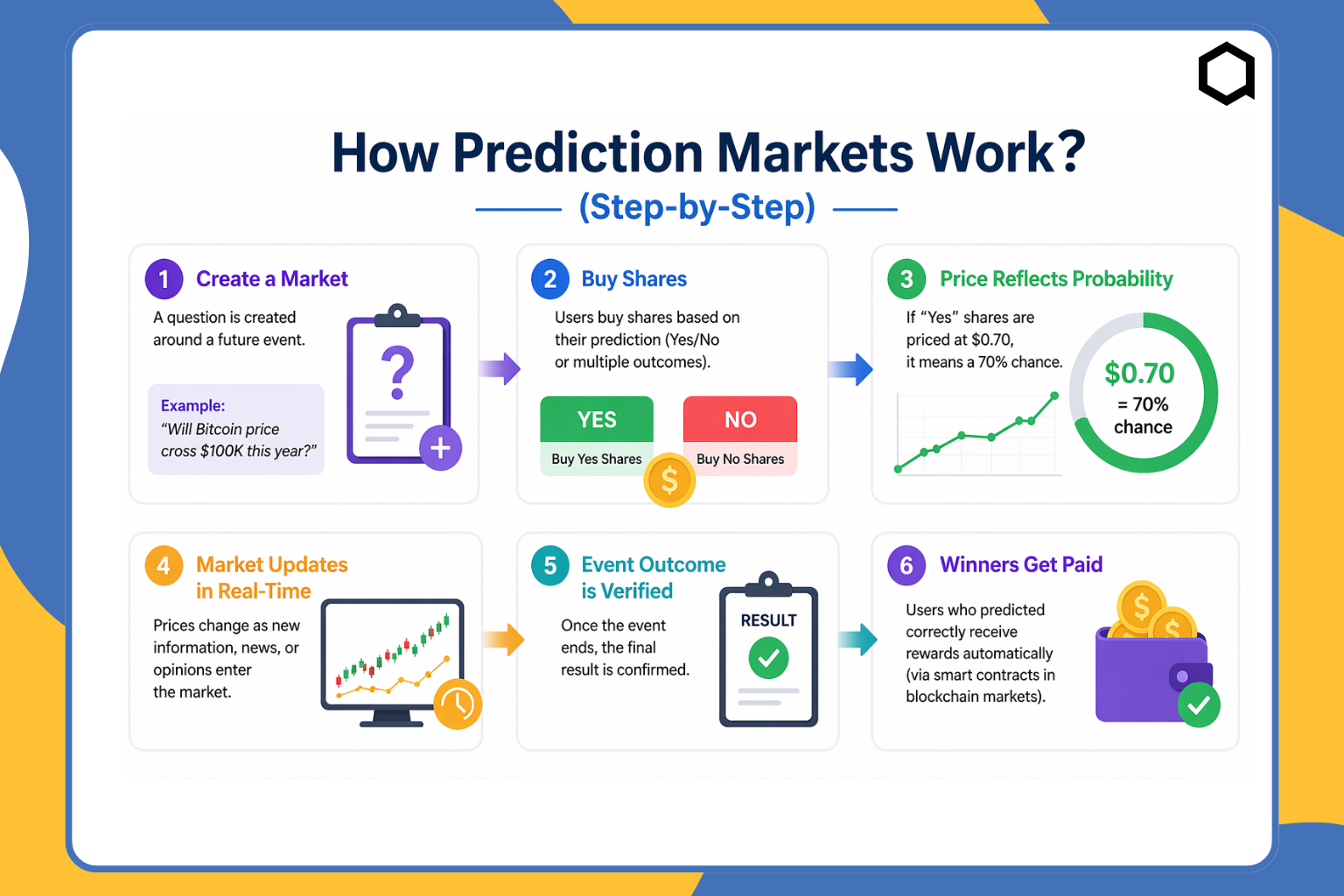
Prediction markets used to feel like a clever loophole where curious outsiders could outthink sleepy crowds. You spotted a narrative nobody else cared about, clicked buy on a fifty-cent contract, and waited for reality to catch up. That era is basically over.
Today, prediction markets attract quantitative traders, automated market makers, and sharp analysts who treat event probabilities like interest rate derivatives. The easy money hasn't just shrunk. It got picked clean while most casual participants were still debating headlines. You might also find this similar story insightful: Supply Chain Latency Reduction The Structural Mechanics of Cadbury Ingredient Lead Time Compression.
That doesn't mean you can't make money here. It means you have to stop treating event contracts like trivia contests and start treating them like thinly traded financial instruments where every edge gets contested.
What Actually Changed Behind the Scenes
Early event venues ran on simple order books or automated formulas designed to keep contracts trading even when volume was tiny. If you brought real domain knowledge—say, how regulatory filings actually move inside a specific agency—you could routinely grab mispriced shares before anyone noticed. As highlighted in recent articles by The Wall Street Journal, the implications are notable.
Once capital poured in, the incentives flipped. Market makers realized that quoting tight spreads on binary outcomes was profitable if they hedged across correlated assets or managed inventory risk systematically. Instead of waiting for someone to wander in with a hot take, professional desks started quoting prices continuously.
Think about what happens when a desk quotes both sides of a contract all day. Every time a retail trader hits a quote with genuine private insight, the market maker loses money on that fill. To survive, the desk widens spreads, trims size, or updates quotes in milliseconds whenever external feeds move. Over time, the crowd's collective price stops looking like a messy poll and starts looking like an institutional consensus.
Why Retail Edge Evaporates First
Most people enter event trading assuming their intuition is enough. Maybe they follow a beat closely, read primary sources, or spend hours on forums. Honestly, that effort still helps you understand what's happening, but understanding a story isn't the same as finding a mispriced probability.
Adverse Selection Eats Casual Bets
Imagine an illustrative example where a policy contract trades at forty cents, implying a forty percent chance of passing by Friday. You read a committee memo and decide the real odds are closer to seventy percent. You buy aggressively. If you're right, you collect sixty cents per share. If you're wrong, you lose forty cents.
Now multiply that dynamic across hundreds of markets. The people who show up with genuine, timely information tend to trade hardest right before prices adjust. Professional liquidity providers know this. They assume that whenever an unfamiliar account sweeps the book, the counterparty might know something they don't. So they pull back, repricing the contract before slower traders even finish reading the news.
Spreads and Fees Quietly Tax Every Trade
Even when your directional call is right, friction can wipe out the gain. On many contracts, a two- or three-cent bid-ask spread doesn't look scary at first glance. Look closer. If a contract sits around fifty cents, crossing the spread once costs you four to six percent of your capital immediately, before accounting for trading fees or settlement friction.
In an illustrative example, suppose you make twenty small trades over a month. Twelve win, eight lose, and your average win is slightly larger than your average loss. On paper, your process looks sharp. After spreads and fees, your net curve might sit flat or slightly negative. Casual traders rarely track net expectancy after costs; they remember the big wins and shrug off the grind.
How Quantitative Desks Price Event Risk
Professional participants don't usually guess whether an event will happen in isolation. They build probability trees. They look at how one outcome constrains another, and they watch adjacent markets for clues.
Cross-Market Arbitrage and Correlated Contracts
Event contracts rarely live in a vacuum. An economic release moves bond yields, equity futures, and currency pairs within seconds. If an event contract lags behind those moves, arbitrage desks step in and flatten the gap.
Even within a single venue, related contracts often get out of sync. If Contract A requires Condition B to happen first, the probability of A cannot logically exceed the probability of B. When human traders post sloppy orders across related markets, automated scripts spot the inconsistency and lock in risk-free or near-risk-free spreads. That kind of structural cleanup happens fast, leaving fewer obvious bargains for manual clickers.
Speed Is Not Everything, Calibration Is
People assume quant shops win purely because their servers are faster. Speed matters for reacting to breaking headlines, sure, but calibration matters more over a full year.
A calibrated forecaster asks uncomfortable questions. When you assign an eighty percent probability to something, does it happen roughly four times out of five? Most humans are terrible at this. We cluster around fifty percent when unsure, and we jump to ninety percent when we like a narrative. Professional desks track Brier scores and log loss obsessively. They cut strategies that look clever in anecdotes if the calibration drifts.
Misconceptions That Trap Smart Beginners
One big myth is that high volume automatically equals high opportunity. More volume usually means tighter spreads and sharper pricing, not looser rules. Low-volume corners can be messy, too, because liquidity vanishes the moment news breaks.
Another trap is confusing confidence with edge. You can be ninety-nine percent sure of an outcome and still have zero edge if the market already prices it at ninety-eight percent. Edge lives in the gap between your calibrated probability and the tradable price, net of all costs.
People also underestimate how much emotional fatigue creeps into binary payoffs. Watching a position swing wildly on ambiguous wording or delayed resolution wears you down. You start chasing losses, sizing up on mediocre setups, or holding losers past your original thesis because admitting you're wrong feels worse than taking a scratch.
Where Real Opportunities Still Hide
Even in a more professionalized environment, markets aren't omniscient. They struggle most where data is fragmented, rules are nuanced, or attention is split.
Niche operational events often get less automated attention than headline macro releases. Think local regulatory deadlines, technical milestones, or multi-step legal processes where reading the underlying filings takes patience rather than raw compute. Machines can parse text quickly, yet ambiguous language still trips up naive models.
There's also room in patience. Many retail traders treat every market like a sprint. They enter early, get bored during quiet stretches, and exit right before the real catalyst arrives. If you can sit on a well-sized position without needing constant action, you avoid paying spread over and over.
Practical Steps Before You Put Money on the Line
If you want to test yourself in these markets without donating tuition to faster desks, start small and treat your first few months like a lab.
- Log your pre-trade probabilities. Write down your exact probability estimate and your main reason before clicking buy or sell. You can't fix calibration you never measure.
- Calculate your break-even win rate after friction. Include spreads and fees in your math before sizing a position. If a trade needs a hero move just to break even, skip it.
- Focus on one narrow corner. Pick a domain where you actually understand the mechanics, such as specific industry filings or schedule-driven events, rather than bouncing across every trending contract.
- Cap position size while learning. Keep individual bets small enough that a string of losses feels annoying, not stressful. Your goal early on is clean data on your own judgment.
The game has grown up, and the easy shortcuts are gone. Keep your expectations grounded, measure your real numbers, and let discipline do the heavy lifting.