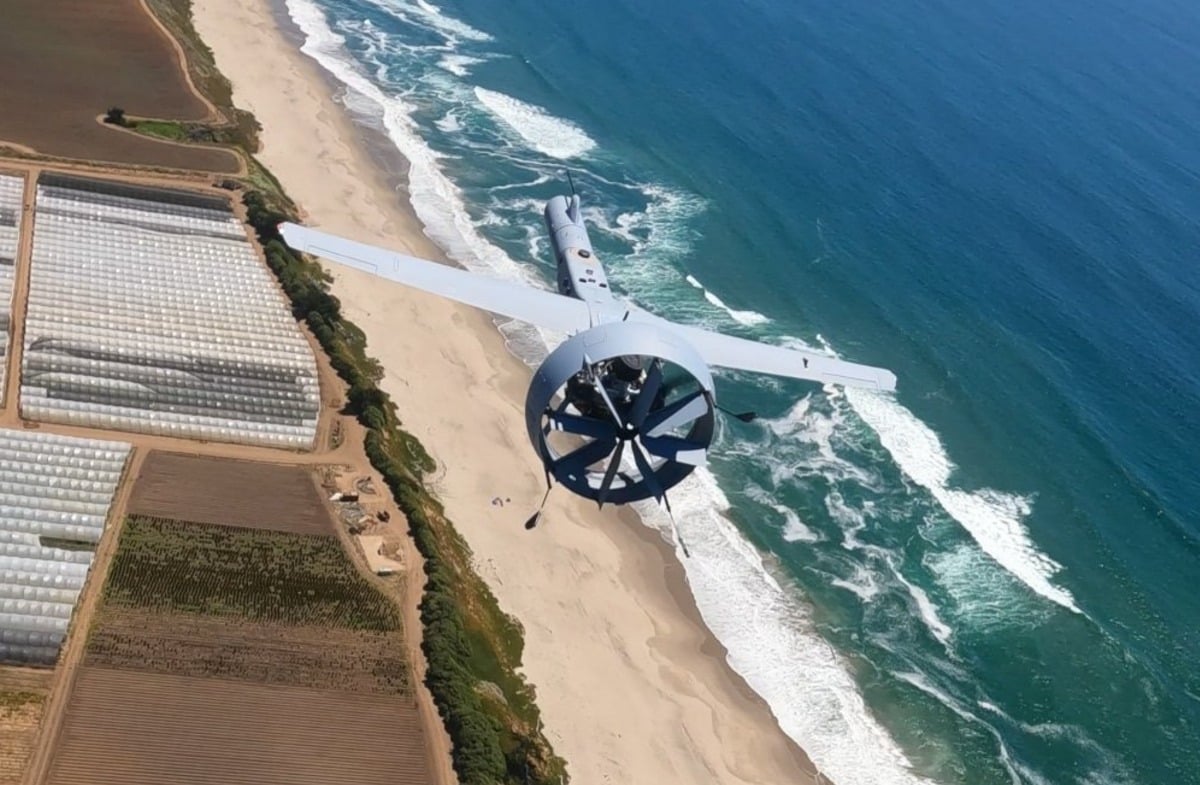
The defense press is currently swooning over Poland’s fresh $16 million contract with Shield AI for the MQ-35 V-BAT. They trumpet it as a tech-forward victory for maritime domain awareness in the Baltic Sea. They call it a force multiplier. They point to its vertical takeoff capability and its fancy Hivemind autonomy software that supposedly shrugs off Russian electronic warfare.
They are looking at the wrong map.
A $16 million deal for "several" tactical drones is a rounding error in modern defense procurement. On the exact same day, Warsaw quietly signed a $988 million deal for Patriot missile interceptors. That is where real defense happens. This drone purchase is not a strategic pivot. It is low-cost security theater masking a high-stakes corporate Trojan horse.
The Bathtub Problem: The Baltic is Not the Black Sea
The current consensus insists that because the V-BAT survived electronic jamming in Ukraine, it will seamlessly secure the Baltic Sea. This ignores basic geography and naval mechanics.
The Baltic is a heavily monitored, congested maritime bottleneck surrounded by hostile kinetic capabilities. The V-BAT is a NATO Class I unmanned aerial system. It weighs just 73 kilograms. Its maximum payload is a meager 18.1 kilograms.
I have watched defense teams burn through millions attempting to scale small tactical platforms into strategic assets. It fails every time. A drone with an 18-kilogram payload capacity cannot carry serious multi-mission payloads. It carries an optical sensor. In a high-intensity conflict, a 3.9-meter wingspan drone puttering around at ten knots over a moving ship deck is not an asset. It is an expensive target.
Furthermore, the V-BAT’s touted ability to protect critical underwater pipelines and communication cables is a mechanical impossibility. A flying camera can observe a pipeline being blown up. It cannot interdict a submarine, drop a depth charge, or engage an asymmetric threat. It offers the illusion of security while delivering nothing but a video feed.
The 50 Crash Reality Check
The marketing brochures promise unassisted launch and recovery in heavy winds. The operational reality tells a vastly different story.
Recent internal leaks revealed that the V-BAT platform recorded more than 50 crashes over a recent 18-month period. Whistleblowers who pointed out these stability and safety issues were reportedly dismissed. This is not an isolated software glitch. It is an inherent risk of a tail-sitter design attempting to land vertically on pitching naval vessels in unpredictable maritime environments.
Look at Romania’s recent experience. Earlier this year, a Romanian Navy official suffered severe finger injuries from a V-BAT propeller during a demonstration. When a platform requires a minimum landing zone of 4.6 by 4.6 meters on a moving warship, the margin for mechanical error shrinks to zero. Greece and the Netherlands have also bitten the bait, buying small batches of these systems. They will soon find out that the logistical burden of maintaining a high-crash-rate platform on a deployed vessel far outweighs the tactical utility of an extra set of eyes.
The True Play: The X-BAT Trojan Horse
Shield AI is not a drone company trying to sell a few scout platforms to Poland. Shield AI is a software powerhouse trying to build the world's first autonomous fighter jet. The V-BAT is merely the loss leader.
Just days before this naval contract was signed, Polish Prime Minister Donald Tusk openly admitted that Shield AI wants to establish a major production and service hub in Poland. They are angling for the X-BAT program—a massive, jet-powered autonomous combat aircraft designed to use the General Electric F110 engine, the same powerhouse found inside F-16 and F-15 fighter jets.
By selling Poland a handful of cheap V-BATs for $16 million, Shield AI secures a beachhead. They embed their Hivemind software into the Polish military ecosystem. They get the Polish Armaments Agency hooked on their architecture. Once the software is integrated, the upsell begins. The end goal is to convince Warsaw to fund and host the unproven, highly speculative X-BAT program as an "unmanned equivalent to the F-35."
Warsaw is falling for a classic tech-sector land-and-expand strategy. They think they bought a maritime surveillance asset. In reality, they just signed up to be the guinea pig and regional service center for an unbuilt, heavy-fuel autonomous fighter program.
Is Hivemind Actually Jam Proof?
The defense establishment constantly asks: "Can AI pilots replace human operators in jammed environments?"
They are asking the wrong question. The real question is: "What happens when the autonomous system makes an unverified target designation without a data link?"
Shield AI emphasizes that Hivemind allows the drone to navigate and execute missions completely stripped of GPS or constant human control. In a sterile training environment, that looks impressive. In the chaotic, gray-zone reality of the Baltic Sea—where commercial shipping lanes intersect with Russian provocations—an armed or even a targeting-capable autonomous drone operating in total communication isolation is an extreme liability. If the drone misidentifies a civilian vessel or a friendly asset while running its local optical algorithm, the lack of a human-in-the-loop data link turns a minor border friction into an international escalation.
Buying into total autonomy before the international rules of engagement are even drafted is a reckless gamble wrapped in tech-savviness.
Stop viewing the $16 million V-BAT acquisition as a major upgrade to Poland's naval posture. It is an operational distraction. It introduces a high-crash-rate platform to tight naval decks, offers zero kinetic deterrence against Baltic threats, and serves primarily as a corporate marketing tool to saddle Poland with the financial risk of an unproven autonomous fighter jet program. Warsaw did not buy a solution. They bought a tech company's sales pitch.