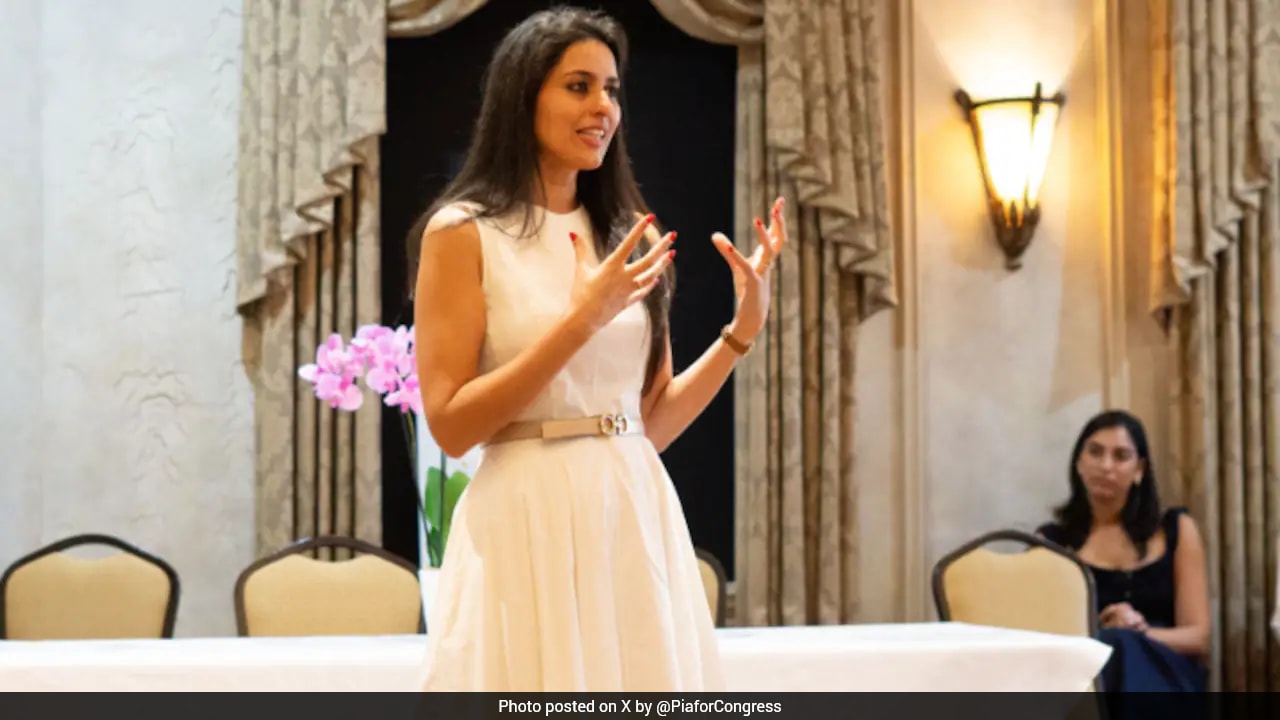
Pia Dandiya is an Indian-origin Democratic strategist, educator, and community organizer who captured a fiercely contested Florida seat during the 2026 midterm elections, breaking a multi-year Republican winning streak in the state. Running on a platform centered on public education funding, property insurance reform, and healthcare access, Dandiya defeated a well-funded incumbent in a suburban district that political analysts had written off as safely red. Her victory did not happen by accident, nor did it rely on national party money. Instead, she dismantled the conventional Democratic playbook in Florida and rebuilt it from the sidewalk up.
For years, national political consultants have treated Florida like a lost cause. After devastating losses in 2022 and 2024, donor money dried up, field offices closed, and local party infrastructure withered into an empty shell. When Dandiya announced her candidacy, the prevailing wisdom in Washington and Tallahassee was simple: save your money. She ignored them. Learn more on a connected topic: this related article.
The Anatomy of an Unlikely Upset
To understand how Pia Dandiya won, you first have to look at the structural rot inside Florida's modern political machine. For the better part of a decade, Democrats in the Sunshine State relied on a top-down, television-heavy strategy. They bought expensive airtime in Miami, Orlando, and Tampa during the final six weeks of an election cycle, hoping generic national talking points would magically turn out suburban voters.
That strategy failed repeatedly because it ignored how Florida demographics actually work. The state is not a monolith. A suburban neighborhood in Central Florida has entirely different economic anxieties than a coastal enclave in Broward County. Additional analysis by Reuters delves into related perspectives on the subject.
Dandiya approached her district like an investigative auditor examining a failing business. Rather than hiring out-of-state media buyers, she spent months analyzing precinct-level voter drop-off data from the previous three cycles. What she found was glaring. Thousands of registered Democrats and independent-leaning voters had not switched parties; they had simply stopped showing up because nobody had bothered to knock on their doors since 2020.
Pocketbook Politics Over Cable News Noise
While her opponent spent hundreds of thousands of dollars running attack ads focused on national culture war grievances, Dandiya refused to take the bait. Every time a reporter asked her about national partisan controversies, she pivoted back to three hyper-local issues that directly drained her constituents' bank accounts.
First was the property insurance crisis. Homeowners across her district were watching their annual premiums double or triple while major carriers pulled out of the state entirely. Dandiya arrived at town halls armed with specific regulatory proposals, explaining in plain English how legislative inaction in Tallahassee had left working families subsidizing corporate risk.
Second was public school funding. As an educator with deep ties to local parent-teacher associations, she did not speak about schools in abstract policy terms. She talked about teacher shortages, overcrowded classrooms, and the diversion of public tax dollars into unaccountable private voucher programs. Parents who normally voted Republican on fiscal issues listened because they saw the physical deterioration of their neighborhood schools firsthand.
Third was healthcare affordability, specifically targeting the state's refusal to expand Medicaid and the rising cost of prescription drugs for seniors on fixed incomes. By framing these issues around basic family stability rather than ideological purity, she neutralized the partisan labels that usually sink Democratic candidates in Florida.
Mobilizing the Overlooked South Asian Vote
The media narrative surrounding Pia Dandiya inevitably focuses on her heritage as an Indian-origin candidate. Representation matters, certainly. Seeing someone with her background win in a historically conservative district sends an unmistakable signal about the changing face of American politics. Yet reducing her win to identity politics misses the far more interesting tactical reality of what happened on the ground.
South Asian Americans represent one of the fastest-growing demographic blocs in Florida, particularly in the suburban corridors stretching from Orlando to Tampa and down into South Florida. Historically, both major political parties have treated this electorate as an afterthought. Consultants assume South Asian voters are either automatically locked into the Democratic column or hopelessly divided along religious and regional lines.
Dandiya treated the South Asian community not as a ceremonial photo opportunity, but as a decisive swing constituency.
She organized multilingual canvassing teams fluent in Hindi, Gujarati, Tamil, and Telugu. Instead of holding generic fundraisers at upscale hotels, her campaign showed up at temples, mosques, gurdwaras, cultural festivals, and local cricket tournaments. More importantly, she recruited hundreds of first-time volunteers from within these communities—small business owners, physicians, engineers, and college students who had never previously been asked to participate in local campaigning.
This grassroots network did more than turn out South Asian voters. It created a self-sustaining fundraising and volunteer engine that kept her campaign solvent when national Democratic committees refused to write checks. When a candidate builds an independent base of small-dollar donors and dedicated door-knockers, party bosses lose their leverage to dictate the message.
Why the Traditional Playbook Failed Her Opponent
In politics, victories are rarely achieved solely by the winner's brilliance; they are almost always aided by the opponent's hubris. Dandiya's Republican rival ran a campaign built entirely on the assumption that Florida's rightward shift was permanent and irreversible.
This is a classic trap in state-level politics. When one party holds a supermajority in the legislature and controls the governor's mansion for years, incumbents grow lazy. They stop holding unscripted town halls. They rely on gerrymandered maps to insulate themselves from accountability. They assume that national tailwinds will carry them across the finish line regardless of their legislative record.
Consider a hypothetical scenario that mirrors what played out across dozens of suburban precincts during this cycle. Imagine a lifelong independent voter—a retired accountant living in a mid-tier subdivision. In 2022, he voted Republican because he was frustrated with inflation and liked the state's low-tax reputation. By 2026, his homeowner's insurance had jumped by four thousand dollars, his property taxes had crept up alongside inflated home valuations, and his local representative refused to answer emails about storm drainage infrastructure. When a volunteer from Dandiya's campaign knocked on his door on a humid Saturday morning and actually listened to his complaints for ten minutes, that voter did not suddenly become a progressive activist. He simply decided to fire an incumbent who took him for granted.
Multiply that exact interaction by five thousand doors, and an "unwinnable" red district flips blue.
The Myth of Permanent Realignment
Political pundits love declaring states permanently dead for one party or another. California is irreversibly blue; Texas and Florida are irreversibly red. These sweeping declarations make for great television segments, yet they ignore the cyclical nature of voter dissatisfaction.
Florida's voter registration advantage for Republicans—which swelled dramatically between 2020 and 2024—convinced national analysts that Democrats were mathematically eliminated from competing in suburban districts. What those raw registration numbers masked was the volatility of no-party-affiliation (NPA) voters. Florida has millions of registered independents who hold no loyalty to either party apparatus. They vote based on immediate material conditions.
Dandiya understood that you do not need to convert die-hard partisans to win a midterm election. You need to persuade pragmatic independents and re-engage disillusioned base voters who stayed home during the previous cycle. Her campaign's internal metrics prioritized contact frequency over media impressions. A single five-minute conversation at a front door proved exponentially more persuasive than fifty digital banner ads.
The Friction Inside the Coalition
It would be dishonest to suggest that Pia Dandiya's path to victory was frictionless or that her blueprint can be copied and pasted onto every race in the country. Her approach exposed real tensions within the Democratic coalition—tensions that will follow her straight into office.
During the primary and early general election stages, some progressive activists criticized her refusal to adopt national activist terminology or lead with high-profile social issues. To the ideological wing of her party, focusing relentlessly on insurance rates, municipal zoning, and school budgets felt overly cautious, even timid. Conversely, moderate donors worried that her strong backing from labor unions and public education advocates would make her vulnerable to "big spender" attacks from conservative groups.
Dandiya walked a tightrope between these competing pressures, and she will have to keep walking it in Tallahassee. Winning a seat as an outsider is one thing; governing inside a legislature dominated by an entrenched opposition supermajority is an entirely different beast.
In Florida's legislative environment, minority-party lawmakers face brutal institutional roadblocks. Bills sponsored by Democrats routinely die in committee without ever receiving a hearing. Budget allocations for their districts are frequently targeted for line-item vetoes. Dandiya's voters elected her to fix tangible problems like insurance costs and school funding, yet she will enter an assembly where she lacks the raw votes to pass legislation on her own.
Navigating Legislative Reality
To deliver actual results rather than symbolic floor speeches, she will have to master the unglamorous mechanics of legislative horse-trading. That means finding quiet common ground with moderate Republicans from coastal districts who face the exact same property insurance crisis as her constituents. It means using committee hearings to expose regulatory failures in ways that force state agencies to act without waiting for new laws.
If she falls into the trap of performing for national cable news cameras instead of grinding through committee work, the very independent voters who put her in office will abandon her in two years. Midterm upsets carry a short shelf life if they are not backed by constituent service.
What Dandiya's Win Means for the Broader Map
The national political establishment is notorious for learning the wrong lessons from upset victories. Within hours of Dandiya's race being called, consultants in Washington were already trying to reverse-engineer her success into a neat, marketable formula. They will inevitably focus on her demographic profile, her digital fundraising numbers, or the specific wording of her television spots.
They will miss the core truth of what happened in Florida.
Pia Dandiya did not win because she discovered a magic messaging trick. She won because she treated politics as a year-round exercise in human trust rather than a seasonal marketing campaign. She proved that when a candidate actually shows up in neglected communities, speaks directly to economic pain points without condescension, and builds an organization rooted in local relationships, partisan registration advantages shrink fast.
For years, the Democratic brand in Florida was synonymous with dysfunction, absentee leadership, and tone-deaf national messaging. Dandiya stripped away the national brand and ran on her own credibility. Whether her victory marks the beginning of a genuine Democratic revival in the Sunshine State or stands as a singular triumph of superior ground organization depends entirely on whether other candidates are willing to do the exhausting, unglamorous work she put in before a single ballot was cast.