The Pocket Microphone Saving Global Wildlife
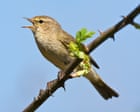
You walk outside, open an app, and point your phone at a bush. Within two seconds, a tiny blue dot flashes next to the words "Eurasian Chiffchaff." You didn't see the bird. You didn't even know what a chiffchaff sounded like until today. But a piece of software trained on millions of audio clips just solved the mystery for you.
For years, the Merlin Bird ID app has felt like magic for millions of casual nature lovers. It turns out that this casual backyard hobby is turning into one of the most significant data collection efforts in environmental history.
The Cornell Lab of Ornithology is rolling out an update that changes everything. Instead of your recordings sitting isolated on your phone, Merlin is linking directly with eBird. This is a massive online database containing more than two billion bird observations. The sounds you catch in your garden will soon automatically help scientists track global biodiversity.
This comes at a brutal time for wildlife. Take the UK as a stark example. The British Trust for Ornithology reports that the region has lost more than 70 million birds over the last 50 years. Entire soundscapes are vanishing. To fix a collapse this massive, researchers need data on an scale that traditional science simply cannot afford. Your morning coffee routine is about to become a frontline tool for global conservation.
How Merlin Decodes the Chaos of the Woods
Most people don't realize how complex bird sound identification actually is. A single forest can have a dozen species singing at the exact same time, overlapping, competing, and mixing with background wind or traffic noise. Human ears struggle to isolate those frequencies.
The app handles this by turning sound into a picture. When you hit record, the software converts the audio into a spectrogram. This visual graph charts the pitch, volume, and rhythm of the sound over time. Every species draws a distinct shape. A robin leaves a completely different visual signature than a blue jay or a chaffinch.
The underlying system uses machine learning models trained on the Macaulay Library archive. This collection holds millions of verified photos and recordings contributed by birdwatchers worldwide. The app compares the visual pattern of your live recording against these millions of reference shapes. It does this almost instantly.
The scale of usage is staggering. The app has passed 40 million downloads across 240 countries. In May alone, nearly two million people in the UK used it to identify birds in their gardens and local woodlands. This is an army of amateur data collectors that traditional research teams could only dream of recruiting.
The Pushback From Traditional Scientists
Not everyone is celebrating this automated data boom. There is a quiet but fierce debate happening between tech-focused citizen scientists and traditional researchers.
The European Bird Census Council currently recommends that people do not use Merlin for official breeding bird surveys. Their concern is straightforward. The software can make mistakes. It might confuse a mimic, like a starling imitating another bird, or get tricked by a faint, distant call distorted by the wind. In professional ecological surveys, a false positive can ruin a data set.
If a piece of software falsely reports an endangered species nesting in an area where it doesn't exist, it can skew conservation funding or halt local land management projects based on bad information.
Prof Richard Gregory of the RSPB takes a more optimistic stance. He notes that the app is introducing an entirely new, younger, and more diverse crowd of people to nature. People are becoming curious. They look out the window instead of down at a screen.
Jessie Barry, one of the leaders of the project at Cornell, recognizes the data quality challenges. But her stance is pragmatic. Research teams are already building automated validation tools to clean up the data. Having a massive ocean of data with a few errors is far better than having no data at all when trying to track a rapid ecological collapse.
What the eBird Integration Actually Means for You
Right now, using Merlin is mostly a personal experience. You record a sound, you find out what bird it is, and it gets added to your personal life list. The upcoming feature changes the pipeline completely.
The eBird mobile platform will allow you to upload your raw audio files directly from your Merlin history. This creates a verified, geolocated record of that bird's presence at that exact minute. By linking the two systems, scientists can use the collective hearing of millions of users to monitor bird population movements in real time.
This matters because climate change is shifting migration patterns faster than field biologists can track them manually. Birds are arriving north earlier in the spring. Some are stopping short of their traditional wintering grounds entirely. When millions of users feed live data into eBird, the map updates dynamically. Scientists see the exact week a species arrives in a specific county. They see when a population starts dwindling in a traditional habitat.
At present, the sound identification tool can recognize over 2,000 species. This covers the vast majority of birds across North America, Canada, and Europe. It also handles the most common species throughout India and Central and South America. The Cornell team is constantly expanding these models, adding hundreds of new species every year as global users submit more training data.
How to Avoid Sending Bad Data to Scientists
If you want your backyard recordings to actually help global conservation projects, you need to practice good data hygiene. Sloppy recordings lead to false identifications, which creates extra work for the verification systems.
First, get closer to the source but keep quiet. Rustling clothes, walking on gravel, or talking over the recording will confuse the audio analyzer. Stand perfectly still for at least 30 seconds to let the background noise settle before you rely heavily on the reading.
Second, don't rely solely on the screen. Use your eyes. If the app tells you a rare warbler is singing in your apple tree, take a look. Do you see it? Does the size match? The app is a guide, not an absolute truth. Combining the acoustic suggestion with visual confirmation makes your data ten times more valuable.
Third, manage your environment. If you live near a busy highway or if it is a incredibly windy day, the microphone on your phone will struggle. The wind slamming into the mic casing creates low-frequency rumbles that mask the high-frequency notes of smaller songbirds. Save your serious recording sessions for calm mornings when birds are most active.
Practical Action Steps for the Next Time You Walk Outside
Stop looking at the app as a video game where you just collect badges. Use it as a tool to contribute to the planet. Here is how you can start making your observations count immediately.
- Download both apps today. Get Merlin Bird ID for identification and download the eBird app to prepare for the data link. Use the same Cornell Lab account for both so your history syncs without a hitch.
- Log your location accurately. Allow the app to use your GPS while recording. A bird identification without an exact location and date is useless for biodiversity mapping.
- Record for longer stretches. Don't just clip a two-second sound. Let the recorder run for one or two minutes. This gives the machine learning model multiple phrases of the song to analyze, which drastically improves accuracy.
- Verify rare birds manually. If the app flags a bird with an uncommon or rare status symbol, check the Macaulay Library audio samples built into the app. Compare the recording you just made with the expert samples to see if they genuinely match before you share the news.
The decline of global bird populations is a massive crisis, but the solution is sitting right in your pocket. Go outside, hit record, and let your phone do the work.