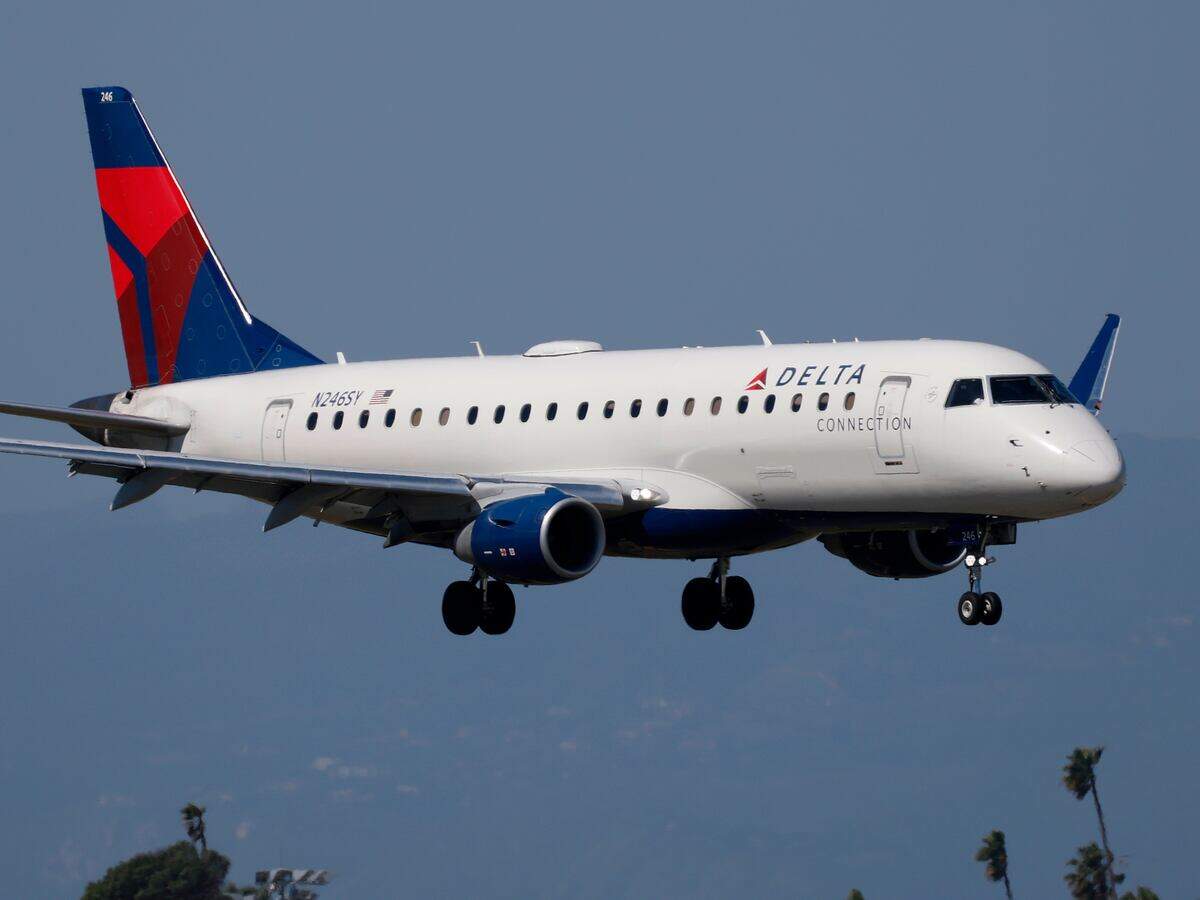
An Israel-bound Delta Air Lines flight originating from New York faced a sudden evacuation following an anonymous bomb threat, throwing airport operations into immediate chaos and underscoring the severe operational fragility governing modern international transit. Security protocols moved swiftly. Passengers exited via emergency slides on the tarmac, local law enforcement swept the aircraft, and schedules across the hub fractured into a domino effect of delays. Yet beneath the surface of the immediate crisis lies a much more pervasive operational vulnerability: the staggering cost and logistical disruption inflicted by malicious hoaxes targeting high-profile international routes.
Commercial aviation operates on razor-thin margins of time, capital, and consumer trust. When a flight carrying hundreds of passengers toward a geopolitical hotspot encounters a security scare, the incident transcends a routine law enforcement response. It becomes an immediate stress test for airport security frameworks, airline crisis response teams, and international intelligence sharing.
The Anatomy of an Aviation Security Scare
Modern aviation security relies on an uncompromising zero-tolerance doctrine. When authorities receive a credible or specific threat targeting a commercial carrier, standard operating procedures dictate that every warning must be treated as absolute reality until proven otherwise. There is no room for probabilistic guessing when human lives are onboard a pressurized tube cruising at thirty thousand feet.
This absolute standard creates an asymmetric weapon for bad actors. Executing a bomb threat requires virtually zero capital, infrastructure, or technical sophistication. A single anonymous phone call, an untraceable email, or a digital message routed through anonymizing networks can instantly paralyze a multi-million-dollar aircraft, trap thousands of travelers in terminal bottlenecks, and drain municipal emergency resources.
Delta Air Lines flight operations, much like any legacy carrier managing heavy international traffic, faced a cascade of secondary consequences immediately after the evacuation order was given. Gate reassignments, crew hour limits, mandatory aircraft sweeps by canine units, and subsequent maintenance checks create massive delays that ripple across global hubs for days. Passengers miss connecting flights, cargo contracts face breach-of-timeline penalties, and the airline absorbs heavy financial losses associated with tarmac delays and alternative travel arrangements.
The Psychology Behind Geopolitical Targets
Flights bound for specific geopolitical friction points face a disproportionate share of malicious targeting. When an aircraft is bound for Tel Aviv, New York, or other high-tension international corridors, external political hostilities routinely bleed into civil aviation spaces. Malicious actors understand that threatening a flight on these routes triggers maximum media visibility and public anxiety.
This dynamic places flight crews and ground personnel on the front lines of international friction. Cabin crews are trained to manage hostile passengers and routine medical emergencies, but they are increasingly forced to operate as crisis managers when external threats disrupt the cabin environment. The psychological toll on travelers is equally severe. Stepping off an aircraft via an emergency slide into a perimeter secured by armed tactical teams leaves a lasting mark, eroding the baseline sense of security that underpins global mobility.
Systemic Vulnerabilities in Global Transit Hubs
JFK International Airport and other major global gateways handle thousands of movements daily. While perimeter security, baggage screening, and biometric checkpoints have evolved significantly over the past two decades, the infrastructure handling communications and external threat verification remains remarkably porous.
Intelligence agencies and airline security operations centers must rapidly triage incoming threats against historical patterns, caller profiles, and geopolitical markers. Often, these assessments happen in a matter of minutes while an aircraft is taxiing toward the runway or cruising over the Atlantic.
- Communication Bottlenecks: Coordinating between local port authority police, federal transportation agencies, airline dispatchers, and foreign intelligence partners introduces latency into critical decision-making.
- Resource Allocation: A single high-priority threat diverts specialized bomb squads, hazmat teams, and emergency medical services away from active coverage areas across the airport complex.
- Information Vacuum: Passengers trapped inside evacuated terminals or holding areas frequently receive conflicting updates, fueling panic and complicating crowd control.
The True Economic Toll
The financial narrative surrounding aviation security threats rarely captures the full picture. Beyond the immediate fuel burn of returning to a gate, missed slot allocations at destination airports, and passenger compensation claims, there is an invisible tax on the entire industry.
Security overhead climbs higher with every incident. Insurance underwriters factor recurring threat frequencies into carrier premiums. Technology vendors push expensive new diagnostic and threat-tracking platforms onto airports, passing capital expenditure down to consumers through higher ticket prices. The system adapts by becoming heavier, more expensive, and more restrictive, yet it remains fundamentally vulnerable to the initial friction of a false alarm.
Redefining Security Protocols for the Digital Age
Protecting international aviation from anonymous disruptions requires moving beyond reactive perimeter defenses. As digital communications become easier to mask and weaponize, investigative focus must shift toward aggressive cyber-forensics and rapid attribution capabilities. When bad actors realize that calling in a phantom bomb threat results in swift international apprehension and severe federal prosecution, the cost-benefit calculus of launching hoaxes begins to shift.
Airlines and regulatory bodies must also refine their internal triage models. Developing more sophisticated data-sharing pipelines between intelligence agencies and airline operational control centers allows for quicker differentiation between genuine hazards and malicious noise. If security teams can isolate the origin of a digital threat before an aircraft reaches a point of no return, they can prevent unnecessary tarmac evacuations and minimize collateral disruption.
The resilience of global travel depends on balancing absolute safety with operational realism. Every time a flight is evacuated over a phantom threat, the disruption serves as a public demonstration of how easily modern mobility can be held hostage by anonymous malice. Closing that gap requires technological precision, international cooperation, and a refusal to let fear dictate the rhythm of global commerce.