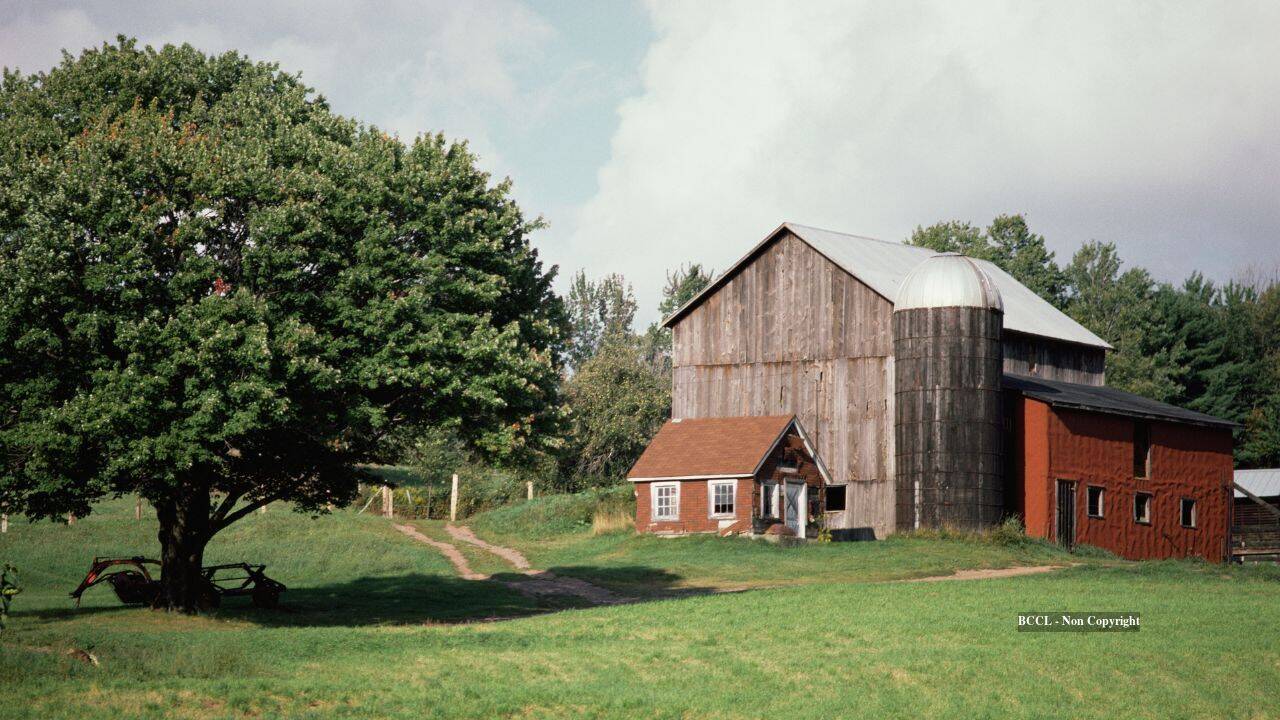
When soil loses its biological engine, the surface looks quiet. The dirt turns pale, crusts over during summer droughts, and washes away in sheets when autumn storms break over the Mid Atlantic Piedmont. Mid century American agriculture treated dirt as an inert medium, a chemical sponge designed to hold synthetic nitrogen and phosphorus while heavy steel implements fractured the subsoil year after year. By the time a Maryland farming family stepped back from intensive cultivation in the autumn of 1954, their acreage was physically exhausted. The organic matter had dropped to single-digit percentages, microbial life was decimated, and the economic return of working the ground no longer justified the physical toll.
What happened next over the subsequent seventy two years offers a rare window into how time, natural succession, and strict legal instruments interact to reshape property ownership. While the narrative surrounding American real estate usually orbits subdivision, zoning variances, and explosive suburban expansion, a quieter countercurrent exists. Permanent conservation easements and long term ecological restoration alter the financial and physical destiny of specific tracts of land. Examining how a single family transformed depleted dirt into a legally protected sanctuary reveals the complex intersection of tax law, soil science, and generational property holding in the United States. You might also find this connected story useful: Inside the Grangetown House Fire Trial Where Accused Pleads Not Guilty.
The Economics Of Exhaustion
Farming marginal land is a losing proposition that accelerates ecological degradation. In the decades following the Second World War, federal agricultural policies encouraged maximum production. Subsidies rewarded volume, pushing operators to plow marginal hillsides and drain seasonal wetlands. When yields plummeted, the standard prescription called for heavier fertilizer applications and deeper tillage.
This cycle creates a trap. As soil structure collapses, water infiltration decreases. Crops become entirely dependent on chemical inputs and irrigation. For families operating small or mid sized holdings, the capital expenditure required to keep pace with industrial agriculture eventually outstrips revenue. As extensively documented in detailed articles by NPR, the implications are worth noting.
Stepping away from intensive production is rarely a romantic choice born of environmental foresight. More often, it represents a calculated retreat from bankruptcy or burnout. When fields are left unworked, an immediate biological shift begins. Without annual disking, weed seeds, native grasses, and pioneer tree species establish root systems that anchor the topsoil. Roots exude carbon compounds, feeding dormant fungal networks. Earthworms and burrowing insects return, slowly rebuilding the pore space that heavy machinery compressed over decades of plowing.
Yet, abandoning land to natural recovery creates its own set of financial pressures. Property taxes continue to accrue based on potential development value rather than agricultural output. In suburbanizing counties across Maryland, the tax burden on uncultivated acreage can easily force a family to sell to developers. Preventing that outcome requires structural intervention far beyond simply walking away from the plow.
Mechanics Of The Permanent Easement
Protecting a property permanently requires navigating a dense thicket of real estate law, tax codes, and land trust bureaucracy. A conservation easement is a voluntary legal agreement between a landowner and a qualified land trust or government agency that permanently restricts future activities on the property to protect its conservation values.
The mechanics of this instrument are deliberately rigid. When a family places an easement on their property, they surrender specific rights. The right to subdivide parcels, build commercial structures, or clearcut mature timber is permanently extinguished. Crucially, these restrictions run with the land, meaning they bind all future owners in perpetuity.
For a property that spent decades recovering from agricultural exhaustion, an easement codifies that recovery into law. It transforms what could be viewed as vacant, underutilized land into a legally protected environmental asset. However, the decision to sign away development rights involves severe financial trade-offs. By stripping away the right to sell the property for housing developments or industrial parks, the immediate market value of the land drops significantly.
Federal tax incentives, such as those governed by Internal Revenue Service regulations regarding conservation contributions, provide partial financial compensation for this loss in value. Yet, securing these deductions demands rigorous documentation. Appraisers must establish the "before and after" value of the property, proving that the easement yields a significant public benefit. State level programs, such as Maryland's agricultural preservation foundation funds, sometimes purchase easements outright from qualifying landowners, injecting capital into families that commit to permanent stewardship. Even so, the bureaucratic hurdles weed out many who wish to protect their holdings.
Ecological Recovery Across Decades
Measuring the biological transformation of land over seventy two years requires looking beneath the surface. When agricultural activity ceases, primary succession unfolds in predictable stages. Annual weeds give way to perennial grasses, followed by briars, softwoods like sweetgum and pine, and eventually a climax forest of oaks, hickories, and poplars.
Soil carbon accumulation is the primary driver of this restoration. In degraded agricultural soil, organic carbon levels often hover below one percent. As roots die and decompose beneath unmanaged growth, organic matter accumulates. By year twenty or thirty of abandonment, topsoil depth begins to measurably increase. Mycorrhizal fungi, which were largely destroyed by synthetic fungicides and continuous tillage, reestablish symbiotic relationships with native tree and shrub roots, creating an underground nutrient trading network that stabilizes the soil against erosion.
Water dynamics shift dramatically during this timeline. Compacted subsoil acts like pavement, shedding heavy rainfall directly into local streams and carrying sediment loads that choke aquatic life. As tree roots penetrate deep clay layers and organic matter builds sponge-like properties, infiltration rates climb. Precipitation is absorbed, recharging local aquifers rather than causing flash floods in nearby watersheds.
Wildlife populations mirror this botanical and hydrological recovery. Species requiring interior forest habitat, such as interior-nesting birds, amphibians sensitive to water quality, and mammals requiring contiguous corridors, return as the ecosystem matures. What was once a sterile monoculture evolves into a complex ecological matrix.
Development Pressures In The Mid Atlantic
The geographic reality of Maryland makes long term land protection a high stakes enterprise. The state sits within the densely populated corridor stretching from Washington D.C. to Baltimore and Philadelphia. Suburban sprawl has consumed hundreds of thousands of acres of forest and farmland since the mid-twentieth century.
Land values near metropolitan edges create enormous temptation for heirs of multi-generational properties. When an aging owner passes away, estate taxes often force the sale of family holdings. Developers offer millions of dollars for acreage that generates modest income through timber or selective leasing.
Families who choose preservation over cash-out face skepticism from neighbors and local economic planners who view unbuilt land as wasted tax potential. County tax assessors frequently penalize landowners who let acreage revert to forest, classifying it as idle or speculative real estate rather than active conservation. This systemic friction forces landowners to become legal advocates for their own properties, fighting zoning changes and infrastructure extensions that threaten to fragment surrounding ecosystems.
Generational Wealth Versus Land Stewardship
Inherited real estate often acts as a wedge within families. When a property passes down through generations, siblings or cousins rarely share identical visions for its future. One heir might desperately need liquid capital to fund retirement or medical expenses, while another views the soil as an ancestral trust that cannot be monetized.
Permanent easements effectively resolve this conflict by removing the development option entirely, though not without creating friction. Once the development value is stripped from the title, the cash value of the inheritance plummets. Heirs who expected a windfall from selling the farm to a subdivision developer find themselves holding an asset that can only be sold to another conservation-minded buyer or kept intact.
This dynamic forces a redefinition of family wealth. Generations accustomed to viewing land as a financial reserve fund must pivot toward valuing non-monetary returns: clean water, unfragmented wildlife habitat, and the knowledge that the family name remains attached to a protected sanctuary. It requires a cultural shift away from liquidation and toward stewardship.
Legal Realities Of Perpetual Restrictions
The word "permanent" carries immense weight in real estate law, yet nothing in human institutions is truly immune to legal challenge or state intervention. Conservation easements are designed to last forever, but they are monitored and defended by land trusts that depend on funding, administrative competence, and public support.
If a land trust dissolves or experiences financial failure, oversight of a protected property can drift. State attorneys general hold legal authority to step in and enforce easement provisions, but overworked state bureaucracies rarely monitor thousands of protected acres proactively. Landowners or subsequent owners sometimes test the boundaries of their restrictions, attempting to build unpermitted structures, run unauthorized commercial operations, or cut timber outside the agreed management plan.
Litigating these violations is expensive and time-consuming. Small local land trusts often lack the legal war chests required to fight deep-pocketed owners in court. Consequently, the long-term integrity of a protected property depends as much on the vigilance of the surrounding community and the institutional health of the holding organization as it does on the initial ink on the deed.
The journey of a worn out parcel transformed over seven decades from an industrial farm into a protected sanctuary demonstrates that recovery is possible, but it is never passive. It requires legal machinery, financial sacrifice, and a willingness to reject short term gain in favor of multi-generational permanence. The trees now standing on those restored acres are tall and thick, their roots locked deep into soil that will never feel a plow blade again.