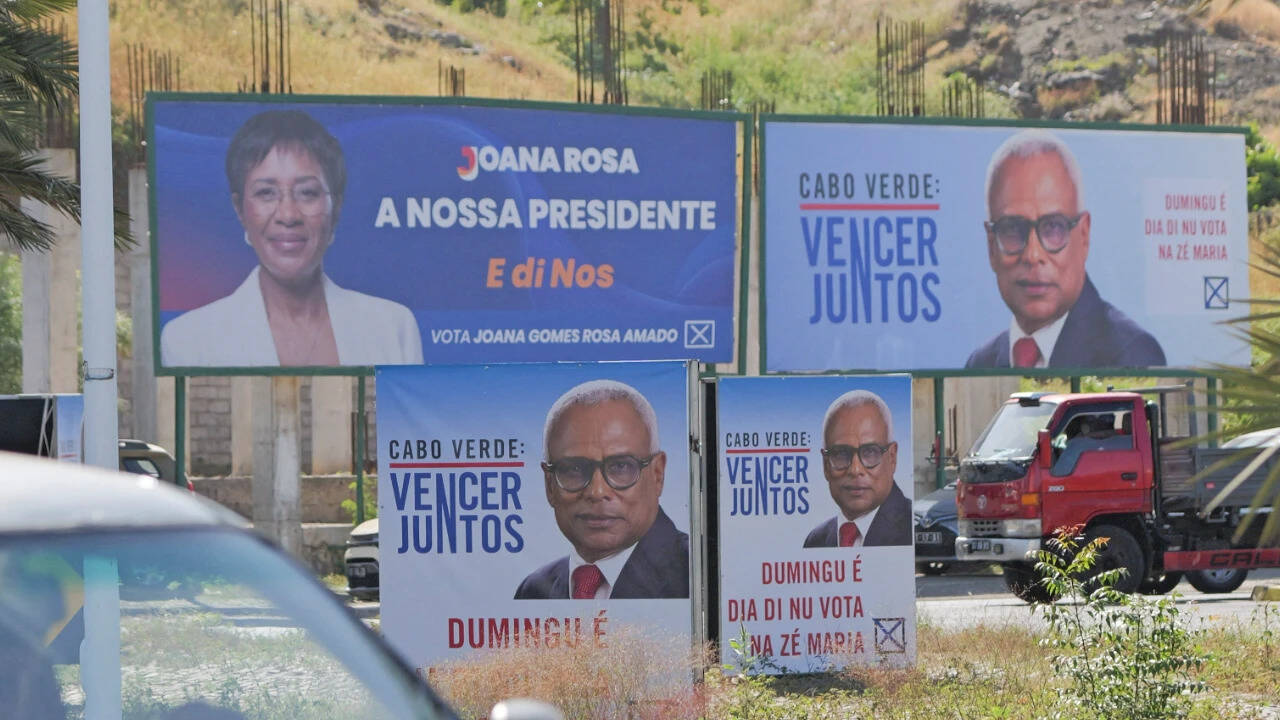
When voters across Cape Verde headed to the polls on November 15, 2026, international headlines zeroed in on one storyline. Former Justice Minister Joana Rosa was making history as the first woman to ever run for president in the Atlantic archipelago since its independence from Portugal in 1975.
It was a genuine milestone. Yet focusing solely on gender misses the real political earthquake that just reshaped the country.
Incumbent President José Maria Neves didn't just win a second five-year term. He crushed the field in the first round with nearly 64% of the valid vote, avoiding a November 29 runoff altogether. Rosa finished a distant second at roughly 31.4%, while four independent challengers barely registered above 1% each. Even bigger than the margin of victory was the silent protest happening outside the polling booths. Roughly two-thirds of registered voters stayed home.
If you want to understand where West Africa's most stable democracy is actually heading, you have to look past the surface-level headlines.
Why Joana Rosa's Historic Run Wasn't Enough
Let's be honest about Joana Rosa's candidacy. At 61, she wasn't a symbolic outsider thrown onto the ballot for optics. She brought two decades of experience in the National Assembly, two terms leading the Municipal Assembly of Maio Island, and a high-profile stint as Cape Verde's Minister of Justice.
During the campaign, Rosa actively pushed back against being treated as a novelty. She told journalists flatly that she didn't want to be judged for being a woman, insisting voters evaluate her competence and ability to deliver results. She pitched herself as a "president of proximity" who would act as a bridge between everyday citizens and state institutions.
So why did she lose by more than 32 percentage points?
Timing and party fatigue killed her momentum before the race even started. Rosa ran with the backing of the Movement for Democracy (MpD), a center-right party that had governed Cape Verde for a full decade before voters booted them out of parliamentary power in May 2026. In that legislative election, Neves's African Party for the Independence of Cape Verde (PAICV) captured 37 of the 72 seats, securing a narrow parliamentary majority.
By November, voters simply weren't interested in handing the presidency back to a party they had rejected six months earlier. Rosa didn't lose because Cape Verde rejected female leadership. She lost because she was carrying the baggage of an outgoing government during an economic squeeze.
The Real Power Shift Nobody Talks About
To grasp why Neves's landslide matters, you need to understand how Cape Verde's semi-presidential system actually works.
Unlike in the United States, the prime minister handles day-to-day governance in Cape Verde. The president acts as head of state, commands the armed forces, mediates political crises, and holds crucial veto power over legislation.
For the past five years, Cape Verde operated under cohabitation. Neves held the presidency for the PAICV while the rival MpD controlled parliament and the prime minister's office. That built-in friction kept both parties in check.
Now, that friction is gone. With PAICV winning the May legislative vote and Neves cruising to reelection in November, one party controls both the presidency and the premiership for the first time in over a decade.
What Single-Party Alignment Means in Practice
- Faster legislative execution: Bills passing through the National Assembly won't face presidential vetoes or constitutional stalling from an opposing head of state.
- Unified foreign policy: Neves, who previously served 15 years as prime minister before becoming president in 2021, can align diplomatic outreach directly with cabinet priorities.
- Zero excuses for economic stagnation: When one party holds every lever of power, voters know exactly who to blame if living costs keep climbing.
Neves, now 66, framed his win as a mandate for "inclusive and sustainable growth" and promised to protect democratic norms. Watchdogs like the Mo Ibrahim Foundation already rank Cape Verde near the very top of African governance—third out of 54 nations in its 2025 index, trailing only Seychelles and Mauritius. Having total institutional alignment will test whether the PAICV uses that strength to reform the economy or grows complacent without an institutional counterweight.
The Elephant in the Polling Booth
If you look closely at the numbers released by the National Elections Commission (CNE), one figure jumps off the page. Out of roughly 419,448 registered voters, only 132,916 cast a ballot.
Turnout sat at just 31.69%. Flip that around, and you're looking at a 68.33% abstention rate—the worst in Cape Verde's presidential history.
Why did nearly seven out of ten registered voters ignore a historic election? Three concrete factors explain the collapse.
1. A Massive Demographic Drain
Cape Verde is an archipelago of ten volcanic islands sitting more than 600 kilometers off the coast of West Africa. Roughly 500,000 people live on the islands. Yet more Cape Verdeans actually live abroad—primarily in the United States and Portugal—than live inside the country itself.
Youth unemployment and rising living costs have triggered a relentless wave of outward migration. Young, working-age citizens aren't waiting around for politicians in Praia to fix the local job market. They're buying plane tickets.
2. Diaspora Disconnection
Nearly 77,000 Cape Verdeans living overseas were registered to vote in the 2026 election, making up roughly 18% of the entire electorate. When those ballots were tallied, abstention among diaspora voters hit a staggering 81%. Long travel distances to consulates, bureaucratic friction, and feeling disconnected from island politics kept overseas citizens away in droves.
3. Broken Voter Rolls
Here's a technical detail most foreign reporters completely overlooked. Cape Verde's electoral registry dates back to 2007. Because thousands of citizens have emigrated or moved between rural islands and the capital city of Praia over the last two decades without updating their records, the official denominator of "registered voters" is artificially inflated. Even the president of the electoral commission admitted after the vote that the rolls desperately need cleaning.
Youth Emigration Dominated Every Debate
Both Neves and Rosa spent weeks campaigning on one overarching anxiety: how to stop Cape Verde from hollowing out its own future.
The islands rely heavily on tourism, service industries, and remittances sent home by workers abroad. While remittances bring in hundreds of millions of euros annually, an economy dependent on exporting its smartest young workers isn't sustainable. Local surveys and economic reports leading up to the vote painted a bleak picture of household finances, showing that the overwhelming majority of families struggle to save money amid inflation and import costs.
On the ground in Praia, voters told reporters from Reuters and the Associated Press that young people felt completely alienated from party slogans. Both frontrunners acknowledged the crisis, though they pitched different remedies:
- Neves's pitch: He promised to convene a dedicated national youth summit during his second term to craft direct solutions for brain drain, alongside commissioning a formal study into why voter participation dropped so sharply.
- Rosa's pitch: She argued that summits weren't enough, calling for immediate structural incentives to help young entrepreneurs build careers at home and stronger institutional backing for women who shoulder household financial burdens.
Neither message broke through the cynicism of twenty-somethings watching their peers leave for Lisbon and Boston. You can't hold a youth summit if the youth have already boarded flights.
What Happens Between Now and 2031
Because Neves cleared the 50% threshold comfortably on November 15, Cape Verde avoided a costly second-round runoff. Rosa conceded gracefully and called to congratulate him the following day, reinforcing the peaceful transfer and continuity norms that separate Cape Verde from coup-plagued neighbors on the West African mainland.
Neves is now constitutionally limited to this second and final five-year term, running from 2026 through 2031. Without another reelection campaign to worry about, he faces zero electoral pressure—which cuts both ways.
If you're tracking Cape Verdean politics, economic investment, or West African governance over the next twelve months, focus on three specific benchmarks rather than campaign rhetoric:
- Voter roll reform ahead of future cycles: Watch whether parliament actually funds and executes an overhaul of the 2007 electoral registry before local elections roll around. Cleaning those rolls will tell you if the government wants accurate democratic participation or prefers the status quo.
- Concrete youth retention policies: Ignore press releases about conferences and summits. Look at the 2027 budget allocations for vocational training, small-business credit, and digital infrastructure aimed at keeping graduates on the islands.
- The evolution of women in executive leadership: Joana Rosa proved a woman can win nearly a third of the national presidential vote even while representing an unpopular opposition party. Expect both PAICV and MpD to elevate female contenders into prime ministerial and presidential pipelines well before 2031.
Cape Verde didn't elect its first female president in November 2026. Instead, voters handed full institutional control back to a veteran statesman while sending an unmistakable warning through their absence at the polls. Stability is secure, democratic institutions remain intact, and the clock is ticking for Praia to give its next generation a reason to stay.