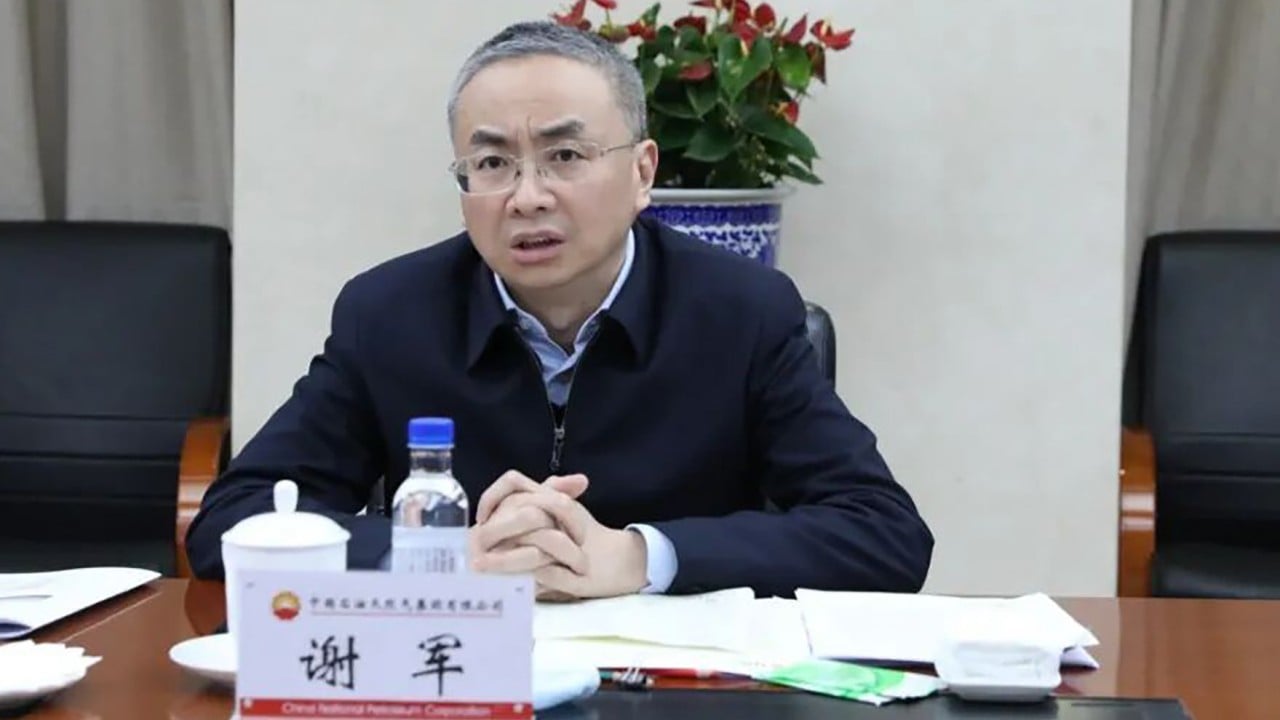
When China's top anti-corruption watchdogs announced on November 22, 2026, that Xie Jun was under investigation, most headlines reduced the story to another routine state-owned enterprise crackdown. That misses the bigger picture. Xie isn't just another bureaucrat shuffling papers in Beijing. He is one of the primary architects behind China's domestic shale gas boom.
If you follow global energy markets, you know that getting gas out of the Sichuan Basin is an engineering nightmare compared to Texas or Pennsylvania. Yet Xie built his reputation by solving those exact geological headaches. Now, the deputy general manager of China National Petroleum Corporation (CNPC) and non-executive director of PetroChina is facing a disciplinary review and supervisory investigation for "serious violations of discipline and law".
Understanding why his downfall matters requires looking past the standard boilerplate announcements from the Central Commission for Discipline Inspection (CCDI) and the National Supervisory Commission. You have to look at where the money flows in unconventional gas extraction, how state-owned energy giants allocate capital, and why technical superstars are uniquely vulnerable when Beijing tightens oversight.
Who Is Xie Jun and Why Did Beijing Trust Him
To grasp the shockwaves running through PetroChina's executive ranks, you first need to understand Xie's pedigree. Unlike career political appointees who rotate through state-owned enterprises without ever wearing a hard hat, Xie came up through the technical trenches.
Before moving to CNPC's Beijing headquarters, he led PetroChina's Southwest Oil and Gas Field Company in Chengdu. That unit sits directly atop the Sichuan Basin, the crown jewel of China's unconventional natural gas ambitions. During the 2010s, Xie was right at the center of the Changning-Weiyuan National Shale Gas Demonstration Zone.
He even co-authored peer-reviewed research on the exact technical challenges of the region. In a 2018 study published in Petroleum Exploration and Development, Xie and his co-author detailed how localized drilling, volumetric fracturing, and factory-style well operations pushed single-well estimated ultimate recovery up by 128 percent across three rounds of optimization. That wasn't academic fluff. Those breakthroughs proved China could commercially extract deep shale gas despite mountainous terrain and fractured rock formations that differ wildly from North American geology.
Beijing rewarded those results. In 2020, CNPC transferred Xie to its head office to run the group's strategic planning department. By January 2022, he was promoted to deputy general manager of CNPC and joined its Leading Party Members Group. A few months later, in June 2022, he took a seat on PetroChina's board as a non-executive director.
The Timeline Before His Disappearance
Up until early November 2026, Xie looked untouchable. Just look at his public schedule right before the axe fell:
- July 2026: Xie publicly urged the industry to speed up the rollout of high-performance extraction technologies for shale fields.
- November 6, 2026: He appeared at the Ninth CNPC International Cooperation Forum in Shanghai, representing the state giant on a global stage.
- November 10, 2026: According to reporting from the Chinese financial outlet Caixin, authorities quietly detained him just four days after the Shanghai forum.
- November 22, 2026: The CCDI and National Supervisory Commission formally confirmed he was under investigation.
That four-day gap between a major international forum in Shanghai and silent detention is classic CCDI operating procedure. Investigators rarely tip their hand while a high-ranking official is performing public duties. They wait until the cameras turn off, move in swiftly, and only publish the one-paragraph notice once preliminary custody is secure.
Why Unconventional Gas Is a Magnet for Graft
Here is what most casual observers miss about anti-corruption sweeps in the energy sector. When people hear "oil and gas corruption," they usually picture crude trading kickbacks or overseas refinery deals. Those happen, sure. But domestic shale gas development carries its own massive financial risks.
Developing shale reserves isn't like tapping a conventional vertical well where pressure does half the work. Shale requires relentless capital expenditure. You have to drill thousands of horizontal wells, pump millions of gallons of water and proppant underground, lay dense networks of gathering pipelines, and constantly contract third-party oilfield service providers.
Think about what happens when Beijing declares energy security a top national priority. Money floods into regional subsidiaries with instructions to hit aggressive production targets fast. In the Sichuan Basin alone, PetroChina scaled up from early experimental wells to hundreds of active production sites spanning thousands of square kilometers.
When billions of yuan move rapidly into specialized engineering, equipment procurement, and subcontracting, oversight gaps open up. Anyone who has worked around large-scale upstream procurement knows how easy it is for preferred vendors to inflate service rates or skim margins on fracturing supplies when a project is classified as urgent.
And remember Xie's career trajectory. He didn't just oversee field operations in the southwest; he later ran CNPC's planning department. In a state-owned conglomerate with total assets exceeding 4.6 trillion yuan, the planning chief holds enormous sway over which multi-billion-yuan projects get greenlit and where capital budgets flow.
What the Official Charges Actually Mean
If you read the official statement from Beijing, you won't find a single dollar figure or specific allegation. The watchdogs simply cited "suspected serious violations of discipline and law".
To an outsider, that phrase sounds vague. Inside China's political and corporate system, it's a very specific legal signal.
- "Violations of discipline" means breaching internal Chinese Communist Party rules—things like hiding personal assets, abusing appointment powers, or failing to report conflicts of interest.
- "Violations of law" means the investigators already suspect criminal offenses under national law, most commonly bribery, embezzlement, or abuse of state authority.
Notice that the investigation is being handled jointly by the CCDI (the Party watchdog) and the National Supervisory Commission (the state anti-graft agency). When both bodies attach their names to an initial announcement on a sitting deputy general manager of a central state-owned enterprise, the survival rate for that executive's career is effectively zero.
At this stage, Xie hasn't been formally convicted in a courtroom. The process typically involves months of closed-door questioning, asset tracing, and cross-checking testimony from subordinates and contractors before the case is handed over to state prosecutors.
The Bigger Pattern Across China's Energy Giants
Xie Jun's detention didn't happen in a vacuum. It lands right in the middle of a sustained campaign targeting China's largest energy conglomerates.
In January 2026, top Party leadership explicitly ordered reinforced anti-corruption sweeps across key state sectors for the 15th Five-Year Plan period covering 2026 through 2030. Energy, finance, and state infrastructure sit at the very top of that target list. Just weeks before Xie's probe went public, another senior executive at CNPC had already come under scrutiny.
Why is Beijing hitting its own energy champions so hard right now? Look at the macro pressures facing PetroChina and CNPC in 2026:
- Tightening margins: Rapid electric vehicle adoption and domestic liquefied natural gas trucking have started eating into traditional gasoline and diesel demand, forcing CNPC to deal with persistent refining overcapacity.
- Harder geology: Mature onshore oil fields are depleting. To keep domestic output high and reduce reliance on imported fuel, CNPC has had to drill ultra-deep wells—some plunging 6,000 meters underground—and push deeper into complex shale formations.
- Zero tolerance for leakage: When extraction costs rise and global energy markets stay volatile, Beijing cannot afford state capital disappearing into private pockets.
Back in the early 2010s, China's oil sector went through a massive purge that took down dozens of senior figures. For a few years afterward, technical specialists who delivered real production growth enjoyed a degree of protection. Xie's fall proves that era is over. Operational brilliance no longer buys immunity if investigators find irregularities in how contracts were awarded or how planning approvals were handled.
Will This Slow Down China's Shale Gas Push
If you're an investor watching PetroChina shares in Hong Kong or Shanghai, or an analyst tracking Asian LNG demand, this is the real question. Does losing a top shale strategist stall China's domestic gas production?
Honestly, the operational impact will probably be smaller than Western headlines suggest, though the short-term bureaucracy will definitely slow down.
CNPC is a massive institution with deep engineering benches. The horizontal drilling techniques, multi-stage fracturing designs, and digital field management systems deployed across the Sichuan Basin are already standardized. Engineers in Chengdu don't need Xie Jun sitting in Beijing to know how to complete a well in the Longmaxi formation.
What does slow down during a high-level corruption probe is decision-making on new capital expenditures. Whenever a deputy general manager and former planning head goes down, mid-level managers freeze. Nobody wants to sign off on a major equipment tender or approve a new joint-venture contract while CCDI inspectors are combing through past procurement files. Expect procurement approvals and new upstream vendor contracts at PetroChina subsidiaries to move at a crawl for the next two quarters while internal compliance teams audit the books.
What to Watch Next in the Investigation
Because Beijing tightly controls information around ongoing supervisory reviews, you shouldn't expect daily updates. Instead, track three specific indicators over the coming months to see how wide this probe spreads:
- Watch the Southwest Oil and Gas Field alumni network: Investigators rarely stop at one executive. Keep an eye on CCDI announcements for regional managers or procurement directors who worked under Xie in Sichuan between 2014 and 2020.
- Monitor PetroChina board filings: Look for formal Hong Kong Stock Exchange announcements removing Xie from his non-executive director seat and reassigning his portfolio responsibilities at CNPC.
- Wait for the expulsion notice: The next major milestone will be a joint statement announcing Xie's expulsion from the Communist Party and dismissal from public office. That document usually reveals the specific categories of misconduct—such as illicitly aiding contractors or taking bribes in project approvals—right before his file moves to the courts.
Until those formal notices drop, treat any rumored figures about the size of the alleged graft with skepticism, and watch how quickly PetroChina moves to fill the leadership gap in its upstream planning division.